Bertogg Ariane, Koos Sebastian
Zukunftskolleg and Department of History, Sociology, Sports Sciences and Empirical Educational Sciences, University of Konstanz, Konstanz, Germany.
Cluster of Excellence "The Politics of Inequality" and Department of History, Sociology, Sports Sciences and Empirical Educational Sciences, University of Konstanz, Konstanz, Germany.
Front Sociol. 2022 Jun 10;7:837968. doi: 10.3389/fsoc.2022.837968. eCollection 2022.
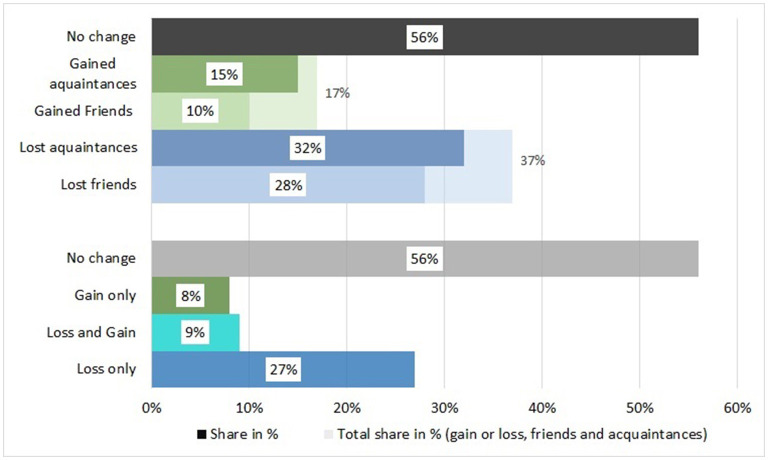
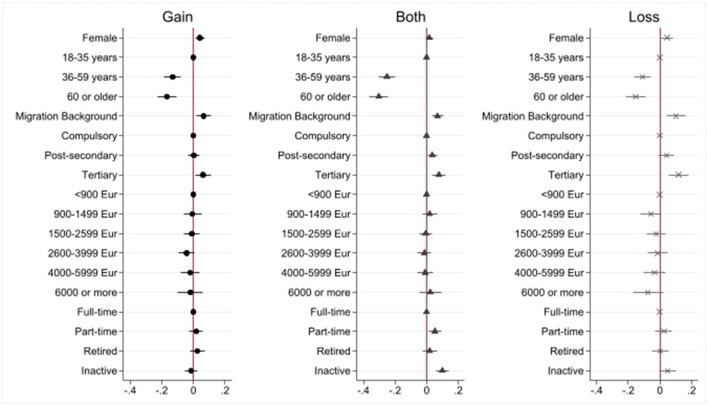
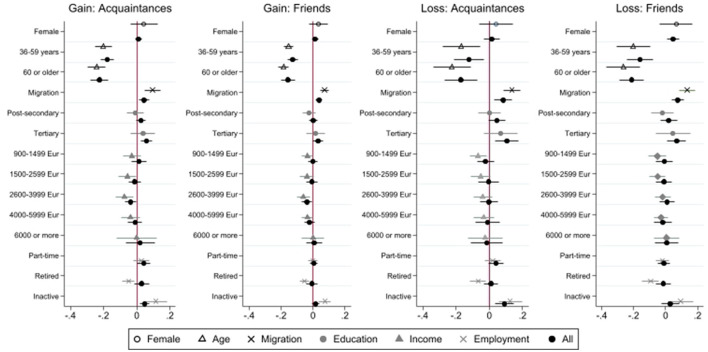
Contact restrictions and distancing measures are among the most effective non-pharmaceutical measures to stop the spread of the SARS-CoV2 virus. Yet, research has only begun to understand the wider social consequences of these interventions. This study investigates how individuals' social networks have changed since the outbreak of the pandemic and how this is related to individuals' socio-economic positions and their socio-demographic characteristics. Based on a large quota sample of the German adult population, we investigate the loss and gain of strong and weak social ties during the pandemic. While about one third of respondents reported losing of contact with acquaintances, every fourth person has lost contact to a friend. Forming new social ties occurs less frequently. Only 10-15% report having made new acquaintances (15%) or friends (10%) during the pandemic. Overall, more than half of our respondents did not report any change, however. Changes in social networks are linked to both socio-demographic and socio-economic characteristics, such as age, gender, education, and migration background, providing key insights into a yet underexplored dimension of pandemic-related social inequality.
接触限制和社交距离措施是阻止新冠病毒传播的最有效非药物措施之一。然而,研究才刚刚开始了解这些干预措施更广泛的社会影响。本研究调查了自大流行爆发以来个人社交网络如何变化,以及这与个人的社会经济地位及其社会人口特征有何关联。基于德国成年人口的大量配额样本,我们调查了大流行期间强社会关系和弱社会关系的损失与获得情况。约三分之一的受访者表示与熟人失去了联系,每四个人中就有一人与朋友失去了联系。建立新的社会关系的情况较少发生。只有10%至15%的人报告在大流行期间结识了新朋友(15%)或交到了新朋友(10%)。然而,总体而言,超过一半的受访者表示没有任何变化。社交网络的变化与年龄、性别、教育程度和移民背景等社会人口和社会经济特征都有关联,这为大流行相关社会不平等这一尚未充分探索的维度提供了关键见解。