Das Sayoni, Taylor Krystyna, Beaulah Simon, Gardner Steve
PrecisionLife, Unit 8b Bankside, Hanborough Business Park, Long Hanborough OX29 8LJ, UK.
Patterns (N Y). 2022 Jun 10;3(6):100496. doi: 10.1016/j.patter.2022.100496.
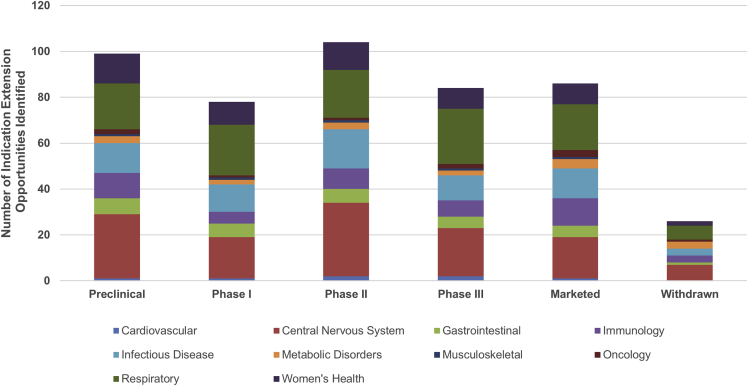
Indication extension or repositioning of drugs can, if done well, provide a faster, cheaper, and derisked route to the approval of new therapies, creating new options to address pockets of unmet medical need for patients and offering the potential for significant commercial and clinical benefits. We look at the promises and challenges of different repositioning strategies and the disease insights and scalability that new high-resolution patient stratification methodologies can bring. This is exemplified by a systematic analysis of all development candidates and on-market drugs, which identified 477 indication extension opportunities across 30 chronic disease areas, each supported by patient stratification biomarkers. This illustrates the potential that new artificial intelligence (AI) and combinatorial analytics methods have to enhance the rate and cost of innovation across the drug discovery industry.
药物适应症扩展或重新定位如果实施得当,可以提供一条更快、更便宜且风险更低的新疗法获批途径,为满足患者未得到满足的医疗需求创造新选择,并带来显著的商业和临床效益潜力。我们探讨了不同重新定位策略的前景与挑战,以及新型高分辨率患者分层方法所能带来的疾病见解和可扩展性。对所有处于研发阶段的候选药物和上市药物进行的系统分析便是例证,该分析在30个慢性病领域中确定了477个适应症扩展机会,每个机会都有患者分层生物标志物的支持。这说明了新的人工智能(AI)和组合分析方法在提高整个药物发现行业创新速度和成本方面的潜力。