Roelofsen L M, Kaptein P, Thommen D S
Division of Molecular Oncology & Immunology, The Netherlands Cancer Institute, Amsterdam, The Netherlands.
Immunooncol Technol. 2022 Mar 1;14:100071. doi: 10.1016/j.iotech.2022.100071. eCollection 2022 Jun.
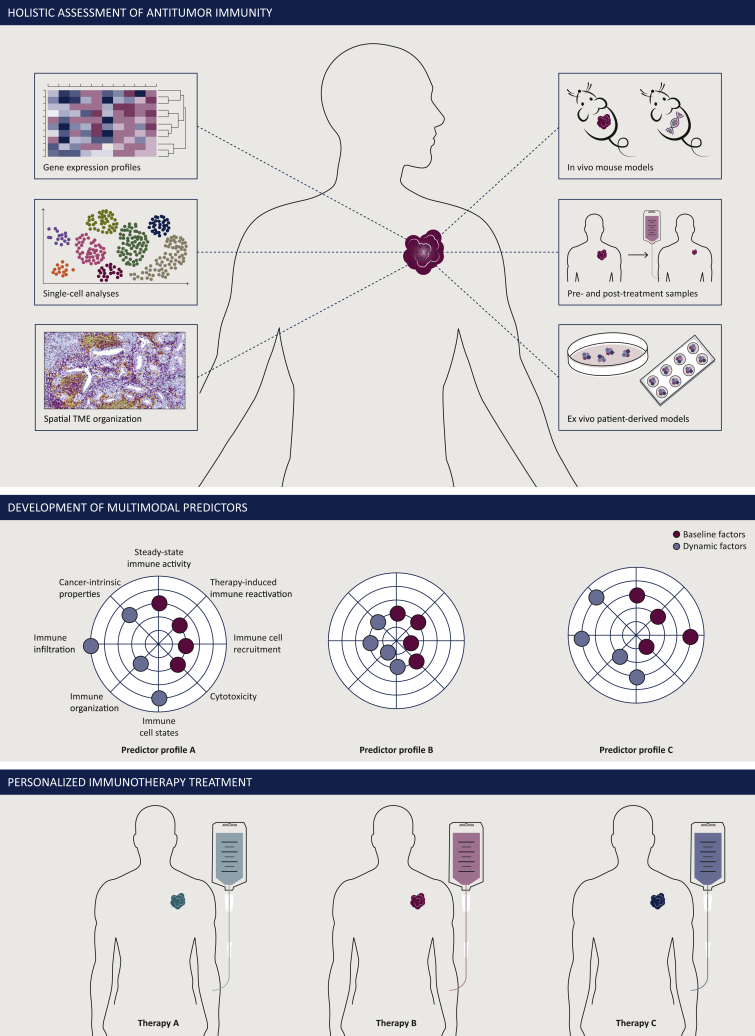
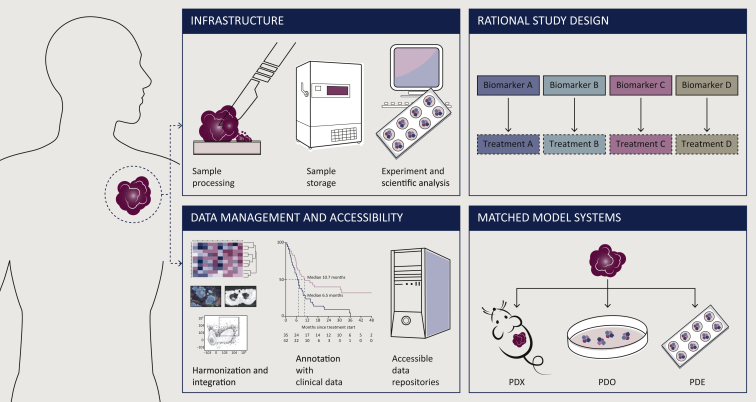
Immune checkpoint blockade (ICB) unleashes immune cells to attack tumors, thereby inducing durable clinical responses in many cancer types. The number of patients responding to ICB is modest, however, and combination treatments are likely needed to overcome the multifaceted suppressive pathways active in the tumor microenvironment (TME). The development of precision immuno-oncology (IO) strategies allowing to identify the optimal treatment of each patient upfront is therefore a pivotal question in the field of cancer immunotherapy. Although single-parameter biomarkers can enrich for response to ICB, their predictive capacity is far from perfect and their clinical utility is complicated by their continuous nature and the difficulty to determine cut-offs that reliably distinguish responding patients from those without clinical benefit. The antitumor immune response that is induced or reinvigorated by immunotherapy is a complex cascade of events requiring the interplay of multiple cell types. To move towards precision IO, it is therefore essential to understand for each individual patient at which level(s) the antitumor immune response failed and how it can be therapeutically restored. Holistic approaches to profile human tumor microenvironments and treatment-induced responses may help to identify critical rate-limiting factors of antitumor immunity. These factors need to be translated into clinically applicable multimodal predictors that allow for the selection of the best IO treatment. This review discusses strategies to (i) create such holistic views of antitumor immunity, (ii) identify measurable parameters capturing the complexity of a patient's immune status, and (iii) facilitate the incorporation of precision IO research in the clinic.
免疫检查点阻断(ICB)可释放免疫细胞来攻击肿瘤,从而在多种癌症类型中诱导持久的临床反应。然而,对ICB有反应的患者数量并不多,可能需要联合治疗来克服肿瘤微环境(TME)中活跃的多方面抑制途径。因此,开发能够预先确定每位患者最佳治疗方案的精准免疫肿瘤学(IO)策略是癌症免疫治疗领域的一个关键问题。尽管单参数生物标志物可以富集对ICB的反应,但其预测能力远非完美,而且其临床应用因具有连续性以及难以确定能可靠区分有反应患者和无临床获益患者的临界值而变得复杂。免疫疗法诱导或重振的抗肿瘤免疫反应是一系列复杂的事件,需要多种细胞类型的相互作用。因此,为了迈向精准IO,了解每位患者的抗肿瘤免疫反应在哪个层面失败以及如何通过治疗恢复至关重要。描绘人类肿瘤微环境和治疗诱导反应的整体方法可能有助于识别抗肿瘤免疫的关键限速因素。这些因素需要转化为临床适用的多模态预测指标,以便选择最佳的IO治疗方案。本综述讨论了以下策略:(i)创建这种抗肿瘤免疫的整体视图,(ii)识别能够捕捉患者免疫状态复杂性的可测量参数,以及(iii)促进精准IO研究在临床中的应用。