Dey Priyadarshini, Malik Anushree, Singh Dileep Kumar, Haange Sven-Bastiaan, von Bergen Martin, Jehmlich Nico
Applied Microbiology Lab, Centre for Rural Development and Technology, Indian Institute of Technology Delhi, New Delhi, India.
Department of Molecular Systems Biology, Helmholtz Centre for Environmental Research, Helmholtz Association of German Research Centres (HZ), Leipzig, Germany.
Front Microbiol. 2022 Jun 3;13:872576. doi: 10.3389/fmicb.2022.872576. eCollection 2022.
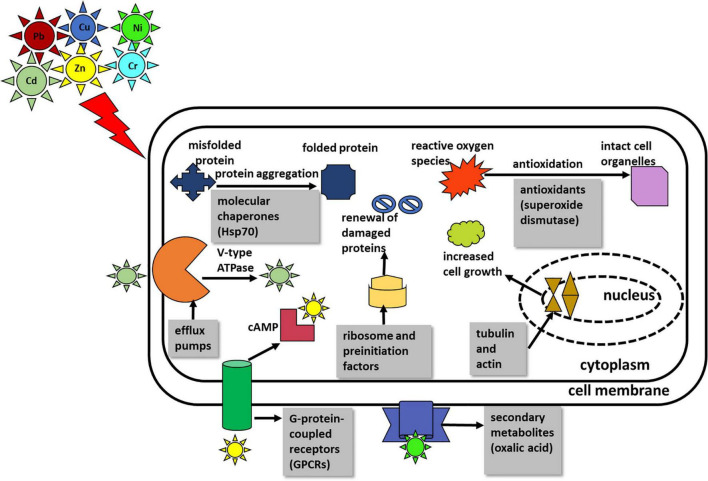
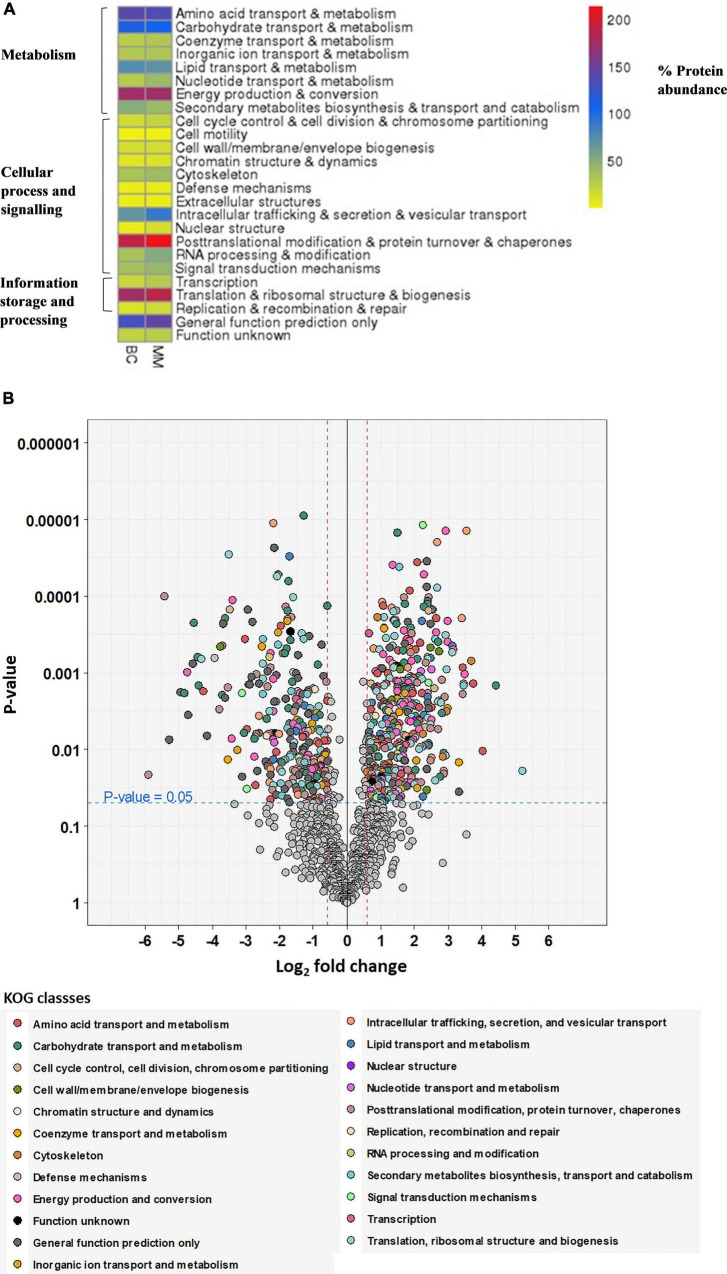
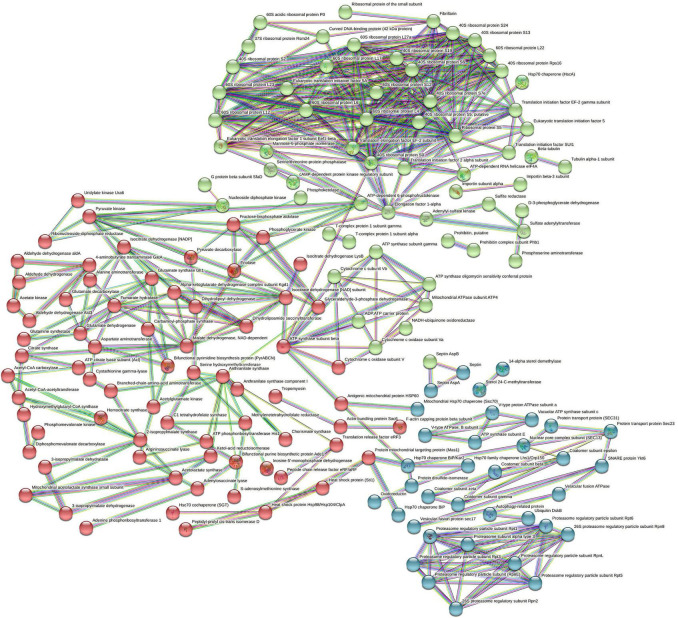
We investigated the fungus PD-18 responses when subjected to the multimetal combination (Total Cr, Cd, Cu, Ni, Pb, and Zn) in synthetic composite media. To understand how multimetal stress impacts fungal cells at the molecular level, the cellular response of PD-18 to 30 mg/L multimetal stress (5 mg/L of each heavy metal) was determined by proteomics. The comparative fungal proteomics displayed the remarkable inherent intracellular and extracellular mechanism of metal resistance and tolerance potential of PD-18. This study reported 2,238 proteins of which 434 proteins were exclusively expressed in multimetal extracts. The most predominant functional class expressed was for cellular processing and signaling. The type of proteins and the number of proteins that were upregulated due to various stress tolerance mechanisms were post-translational modification, protein turnover, and chaperones (42); translation, ribosomal structure, and biogenesis (60); and intracellular trafficking, secretion, and vesicular transport (18). In addition, free radical scavenging antioxidant proteins, such as superoxide dismutase, were upregulated upto 3.45-fold and transporter systems, such as protein transport (SEC31), upto 3.31-fold to combat the oxidative stress caused by the multiple metals. Also, protein-protein interaction network analysis revealed that cytochrome c oxidase and 60S ribosomal protein played key roles to detoxify the multimetal. To the best of our knowledge, this study of PD-18 provides valuable insights toward the growing research in comprehending the metal microbe interactions in the presence of multimetal. This will facilitate in development of novel molecular markers for contaminant bioremediation.
我们研究了真菌PD - 18在合成复合培养基中受到多种金属组合(总铬、镉、铜、镍、铅和锌)作用时的反应。为了了解多金属胁迫如何在分子水平上影响真菌细胞,通过蛋白质组学确定了PD - 18对30 mg/L多金属胁迫(每种重金属5 mg/L)的细胞反应。比较真菌蛋白质组学显示了PD - 18显著的内在细胞内和细胞外金属抗性机制及耐受潜力。本研究报道了2238种蛋白质,其中434种蛋白质仅在多金属提取物中表达。表达最主要的功能类别是细胞加工和信号传导。由于各种应激耐受机制而上调的蛋白质类型和数量包括翻译后修饰、蛋白质周转和伴侣蛋白(42种);翻译、核糖体结构和生物发生(60种);以及细胞内运输、分泌和囊泡运输(18种)。此外,自由基清除抗氧化蛋白如超氧化物歧化酶上调了3.45倍,转运系统如蛋白质转运(SEC31)上调了3.31倍,以对抗多种金属引起的氧化应激。此外,蛋白质 - 蛋白质相互作用网络分析表明,细胞色素c氧化酶和60S核糖体蛋白在多金属解毒中起关键作用。据我们所知,对PD - 18的这项研究为理解多金属存在下的金属 - 微生物相互作用这一不断发展的研究提供了有价值的见解。这将有助于开发用于污染物生物修复的新型分子标记。