Micai Martina, Fulceri Francesca, Salvitti Tommaso, Romano Giovanna, Poustka Luise, Diehm Robert, Iskrov Georgi, Stefanov Rumen, Guillon Quentin, Rogé Bernadette, Staines Anthony, Sweeney Mary Rose, Boilson Andrew Martin, Leósdóttir Thora, Saemundsen Evald, Moilanen Irma, Ebeling Hanna, Yliherva Anneli, Gissler Mika, Parviainen Tarja, Tani Pekka, Kawa Rafal, Pisula Eva, Vicente Astrid, Rasga Célia, Budişteanu Magdalena, Dale Ian, Povey Carol, Flores Noelia, Jenaro Cristina, Monroy Maria Luisa, Primo Patricia García, Charman Tony, Cramer Susanne, Warberg Christine Kloster, Canal-Bedia Ricardo, Posada Manuel, Schendel Diana, Scattoni Maria Luisa
Istituto Superiore di Sanità, Research Coordination and Support Service, Rome, Italy.
Directorate General of Health Prevention, Ministry of Health, Rome, Italy.
Front Psychiatry. 2022 Jun 10;13:919234. doi: 10.3389/fpsyt.2022.919234. eCollection 2022.
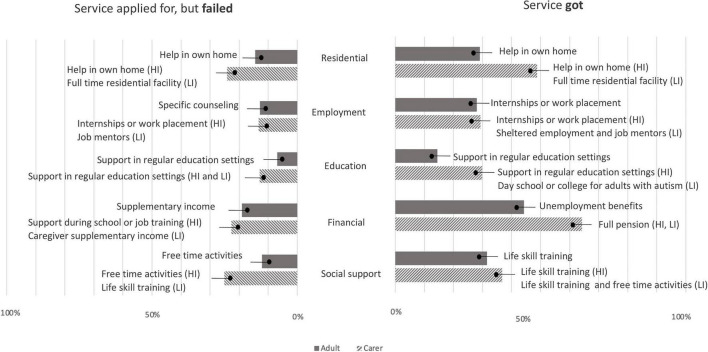
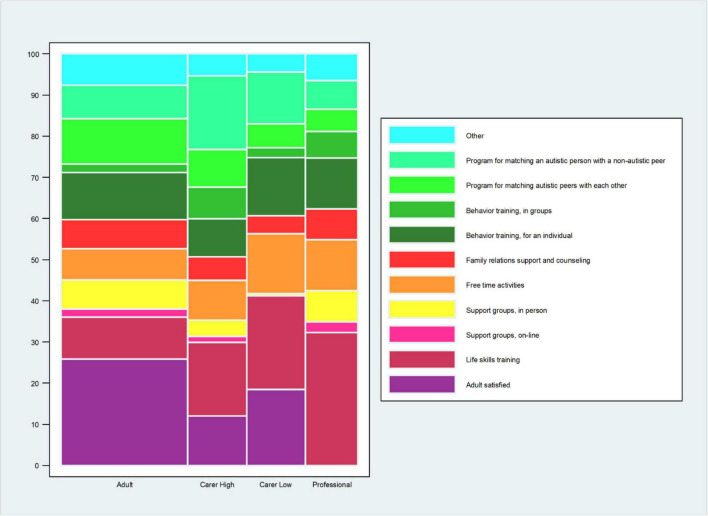
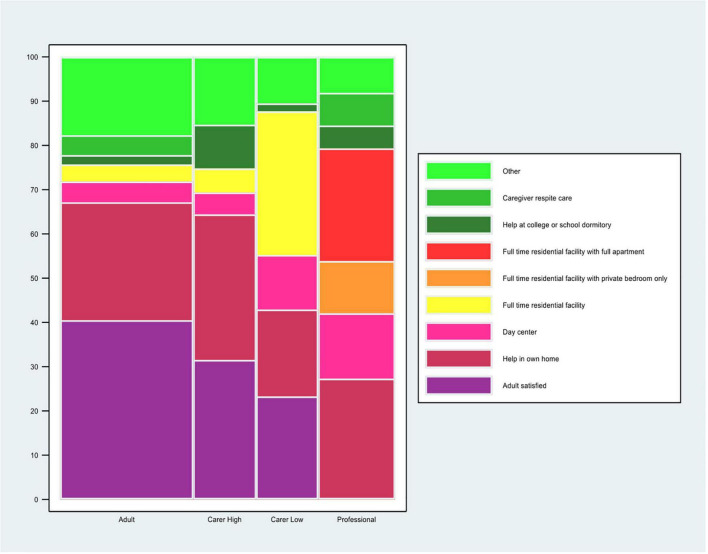
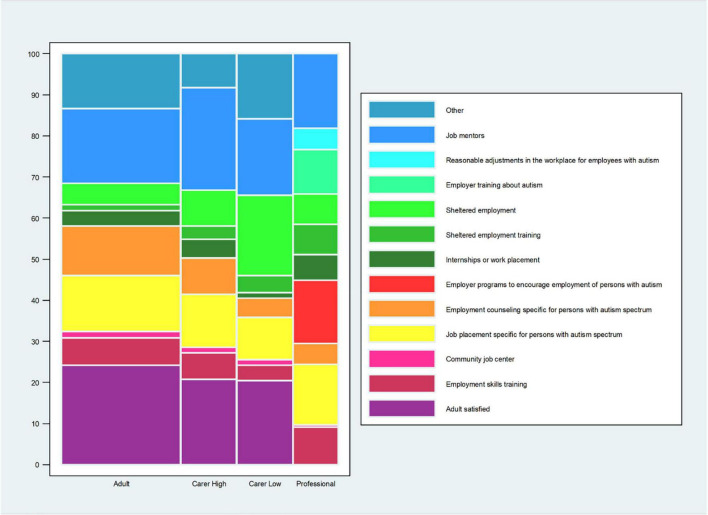
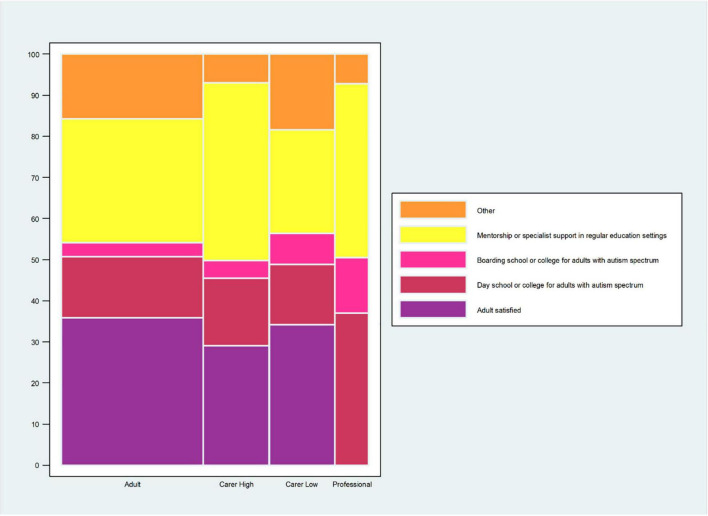
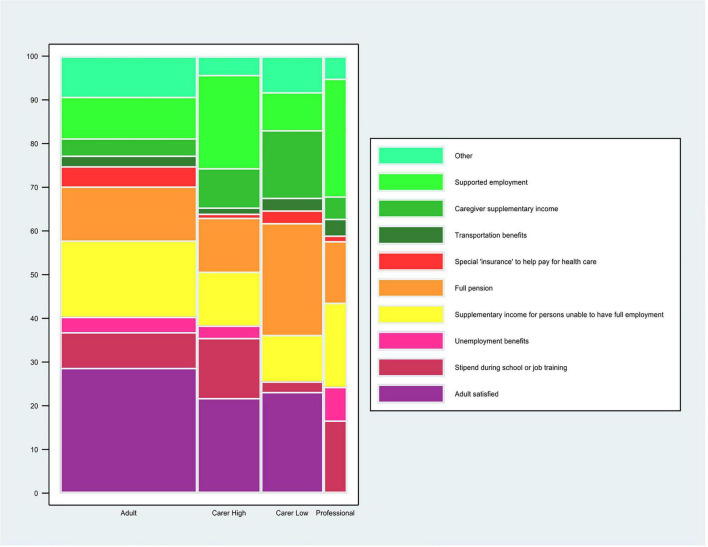
There is very little knowledge regarding autistic adult services, practices, and delivery. The study objective was to improve understanding of current services and practices for autistic adults and opportunities for improvement as part of the Autism Spectrum Disorder in the European Union (ASDEU) project. Separate survey versions were created for autistic adults, carers of autistic adults, and professionals in adult services. 2,009 persons responded to the survey and 1,085 (54%) of them completed at least one of the services sections: 469 autistic adults (65% female; 55% <35 years old), 441 carers of autistic adults (27% female; 6% <35 years old), 175 professionals in adult services (76% female; 67% in non-medical services). Top choices by autistic adults, carers or professionals for services best suiting their current needs were: residential services: "help in own home" (adults, carers of high independent adults, professionals), "fulltime residential facility" (carers of low independent adults); employment services: "job mentors" (adults, carers of high independent adults, professionals), "Sheltered employment" (carers of low independent adults); education services: "support in regular education setting" (all groups); financial services: financial support in lieu of employment ("Supplementary income for persons unable to have full employment" for adults, "full pension" for carers of low independent adults) or to supplement employment earnings for carers of high independent adults and professionals; social services: "behavior training" (adults) and "life skills training" (carers and professionals). Waiting times for specific services were generally < 1 month or 1-3 months, except for residential services which could be up to 6 months; most professionals were uninformed of waiting times (>50% responded "don't know"). Five of seven residential services features recommended for autistic adults were experienced by <50% of adults. The knowledge of good local services models that work well for autistic adults was generally low across all services areas. The variation in services experiences and perceptions reported by autistic adults, carers, or professionals underscore the need to query all groups for a complete picture of community services availability and needs. The results showed areas for potential improvement in autistic adult services delivery in the EU to achieve recommended standards.
关于自闭症成年患者的服务、实践及提供情况,人们了解甚少。本研究的目的是增进对自闭症成年患者当前服务与实践情况的理解,以及作为欧盟自闭症谱系障碍项目(ASDEU)一部分的改进机会。针对自闭症成年患者、自闭症成年患者的照料者以及成人服务领域的专业人员,分别创建了不同版本的调查问卷。2009人回复了该调查问卷,其中1085人(54%)至少完成了一个服务板块:469名自闭症成年患者(65%为女性;55%年龄小于35岁),441名自闭症成年患者的照料者(27%为女性;6%年龄小于35岁),175名成人服务领域的专业人员(76%为女性;67%从事非医疗服务)。自闭症成年患者、照料者或专业人员认为最适合其当前需求的服务首选为:住宿服务:“家中协助”(成年患者、高度独立成年患者的照料者、专业人员),“全日制住宿设施”(低度独立成年患者的照料者);就业服务:“工作导师”(成年患者、高度独立成年患者的照料者、专业人员),“庇护性就业”(低度独立成年患者的照料者);教育服务:“常规教育环境下的支持”(所有群体);金融服务:代替就业的经济支持(成年患者为“无法实现充分就业者的补充收入”,低度独立成年患者的照料者为“全额养老金”)或为高度独立成年患者的照料者及专业人员补充就业收入;社会服务:“行为训练”(成年患者)和“生活技能训练”(照料者和专业人员)。特定服务的等待时间一般小于1个月或1至3个月,但住宿服务的等待时间可能长达6个月;大多数专业人员并不了解等待时间(超过50%回复“不知道”)。针对自闭症成年患者推荐的七项住宿服务特征中,不到50%的成年患者体验过其中五项。在所有服务领域,对于适合自闭症成年患者的良好本地服务模式的了解普遍较少。自闭症成年患者、照料者或专业人员报告的服务体验和看法存在差异,这突出表明需要询问所有群体,以全面了解社区服务的可获得性和需求。结果显示,欧盟在自闭症成年患者服务提供方面有潜在改进空间,以达到推荐标准。