College of Medicine and Public Health, Flinders University, Adelaide, Australia.
Faculty of Health, Southern Cross University, Gold Coast, Australia.
PLoS One. 2022 Jun 27;17(6):e0269840. doi: 10.1371/journal.pone.0269840. eCollection 2022.
Engaging older adults in clinical communication is an essential aspect of high-quality elder care, patient safety and satisfaction in hospitals and GP clinics. However, the factors that influence older adults' participation during their appointments with health professionals from the older patient's perspective remain under-investigated.
We aimed to fill this knowledge gap by reviewing research articles that have examined older patients' involvement in clinical communication. In doing so, we hope to assist healthcare professionals and institutions in developing new strategies to improve older patients' participation and engagement in clinical communication.
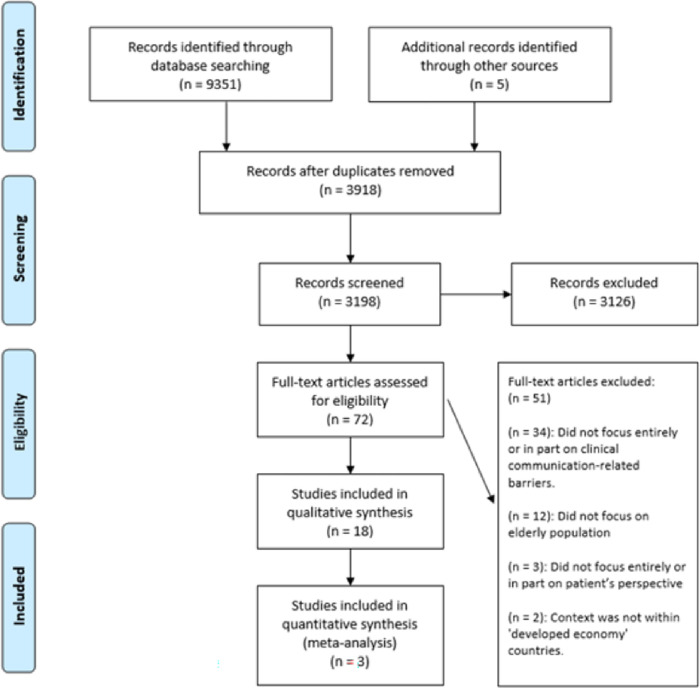
A systematic review of nine databases was conducted for studies reporting identified influences on older patients' participation in clinical communication published from 2010. These studies were then subjected to thematic analysis for stratification.
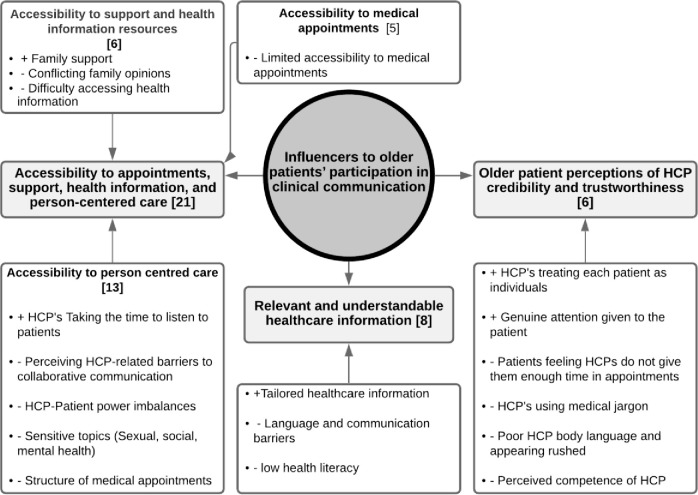
Twenty-one articles with a total of 36,797 participants were included and highlighted three major themes that influenced older patients' participation in the clinical communication. The first theme identified includes accessibility to appointments, support, health information and person-centred care, highlighting that access to appointments, person centred care and health information significantly influences clinical communication participation. Relevant and understandable healthcare information identified that communication factors [i.e. tailored health information, health literacy and patient language barriers, and communication impairments] influences older patients' participation. Older Patient perceptions of HCP credibility and trustworthiness highlighted how patient's perceptions of health professionals influence their willingness to participate in clinical communications.
This review demonstrates that there are several factors that contribute to insufficient or no participation of older patients in clinical communication in hospitals and GP clinics. These include accessibility to relevant and understandable health information, and the perceived health professional credibility and trustworthiness. Identifying ways to address these factors may improve patient participation, doctor-patient collaboration and overall health outcomes for older patients.
让老年人参与临床沟通是高质量老年护理、医院和全科诊所患者安全和满意度的重要方面。然而,从老年患者的角度来看,影响老年人在与卫生专业人员预约期间参与的因素仍未得到充分研究。
我们旨在通过审查研究文章来填补这一知识空白,这些文章研究了老年患者在临床沟通中的参与情况。通过这样做,我们希望帮助医疗保健专业人员和机构制定新的策略,以改善老年患者在临床沟通中的参与度和参与度。
对从 2010 年起发表的报告影响老年患者参与临床沟通的已确定因素的研究文章进行了九项数据库的系统审查。然后对这些研究进行了主题分析分层。
共纳入 21 篇文章,总计 36797 名参与者,其中有三个主要主题影响了老年患者参与临床沟通。第一个主题包括预约的可及性、支持、健康信息和以患者为中心的护理,强调预约的可及性、以患者为中心的护理和健康信息对临床沟通参与有重大影响。相关和可理解的医疗保健信息确定了沟通因素[即量身定制的健康信息、健康素养和患者语言障碍以及沟通障碍]会影响老年患者的参与。老年患者对卫生保健专业人员可信度和可信赖性的看法强调了患者对卫生专业人员的看法如何影响他们参与临床沟通的意愿。
本综述表明,有几个因素导致医院和全科诊所的老年患者在临床沟通中参与不足或不参与。这些因素包括获得相关和可理解的健康信息,以及感知到的卫生专业人员的可信度和可信赖性。确定解决这些因素的方法可能会提高患者的参与度、医患合作以及老年患者的整体健康结果。