State Key Laboratory for Zoonotic Diseases, Key Laboratory for Zoonosis Research of the Ministry of Education, College of Veterinary Medicine, Jilin University, Changchun, China.
Department of Neurosurgery, the First Hospital of Jilin University, Changchun, China.
PLoS Pathog. 2022 Jun 27;18(6):e1010667. doi: 10.1371/journal.ppat.1010667. eCollection 2022 Jun.
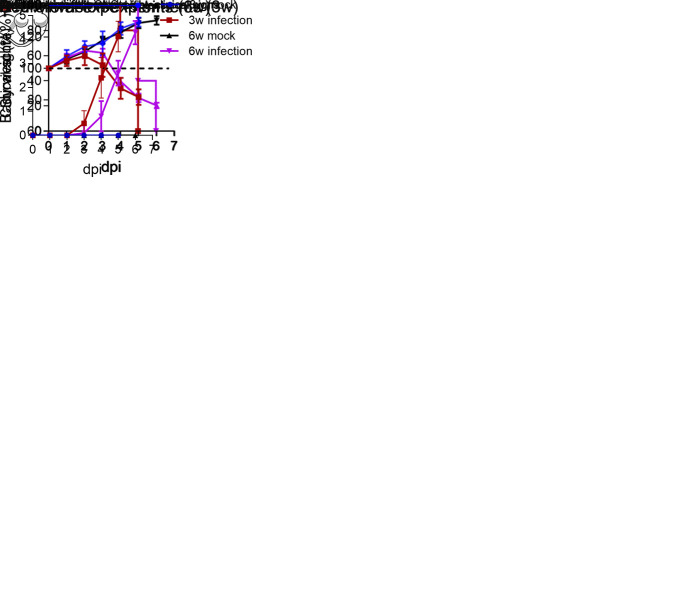
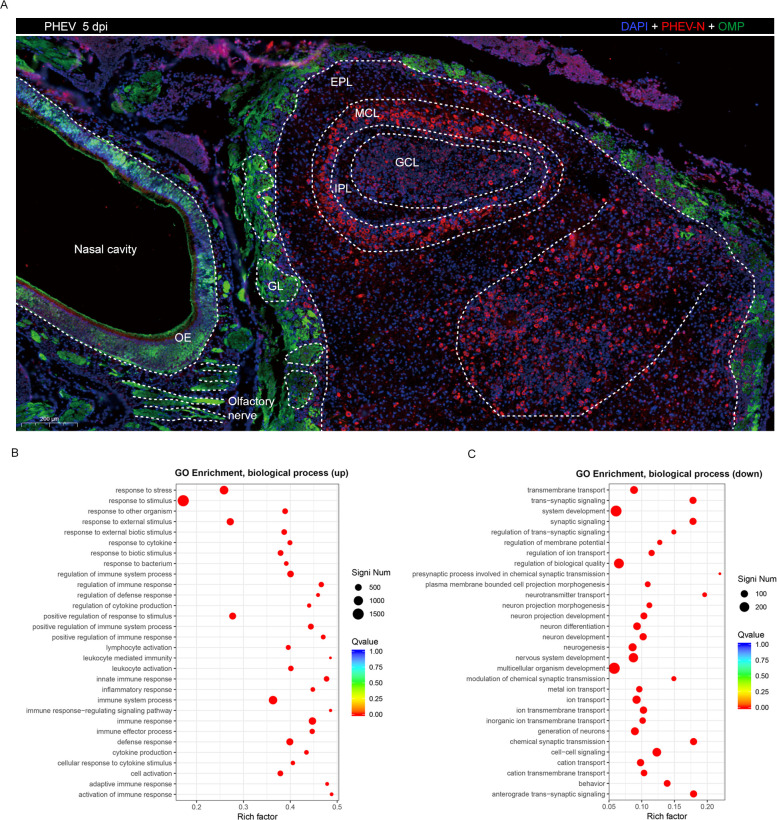
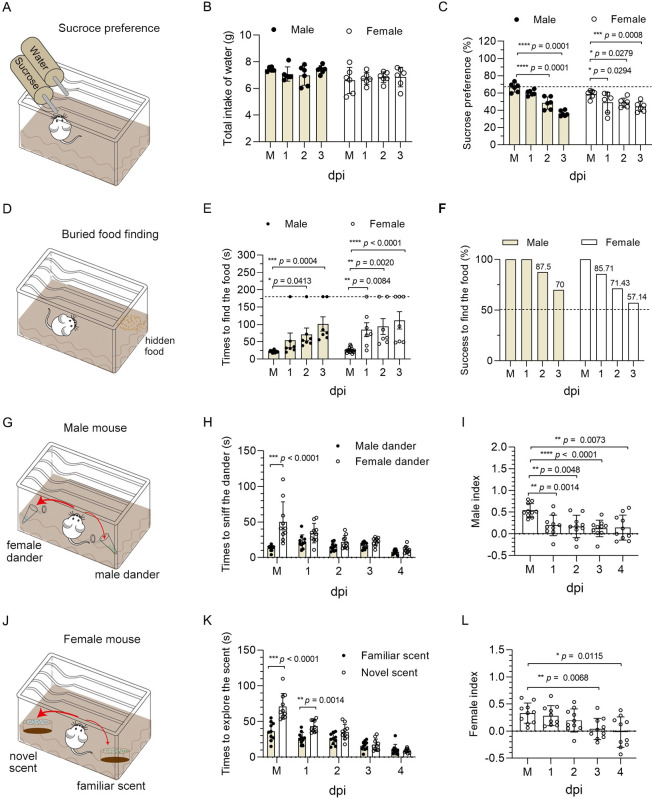
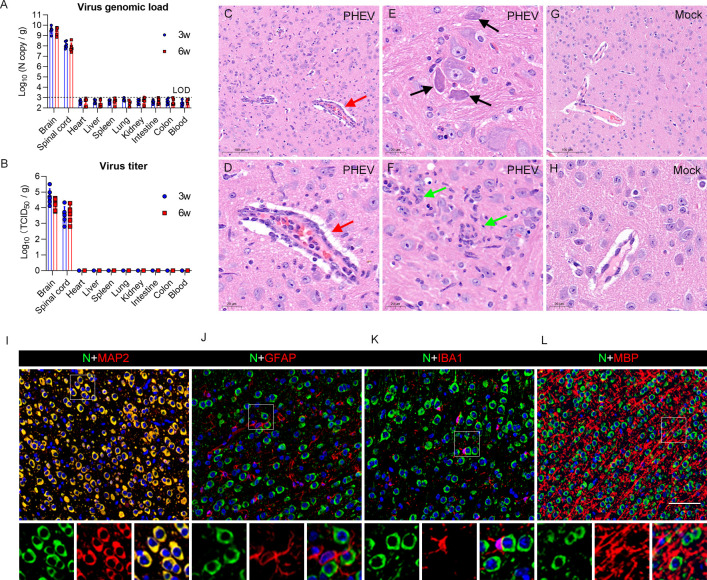
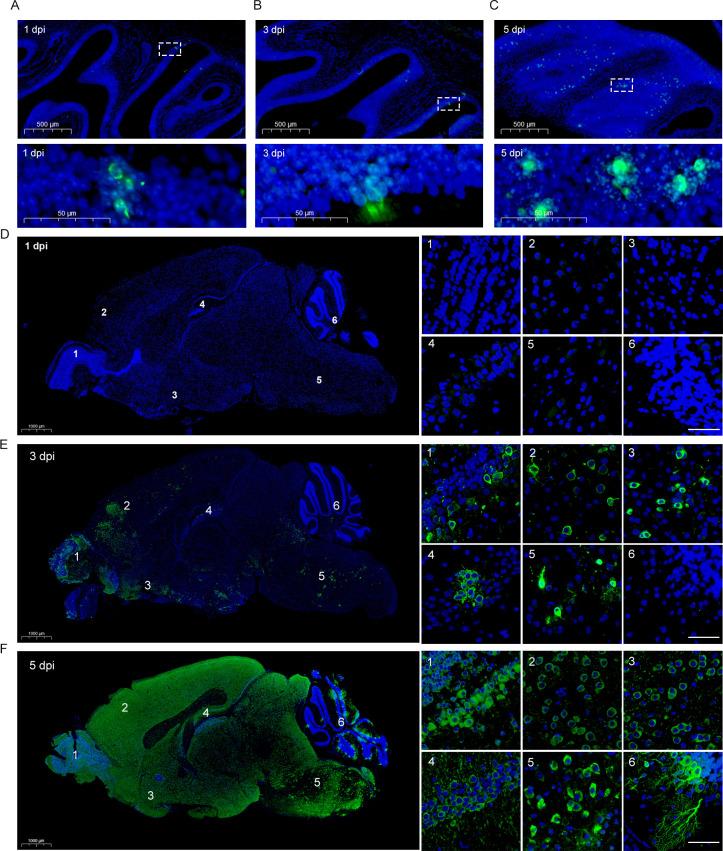
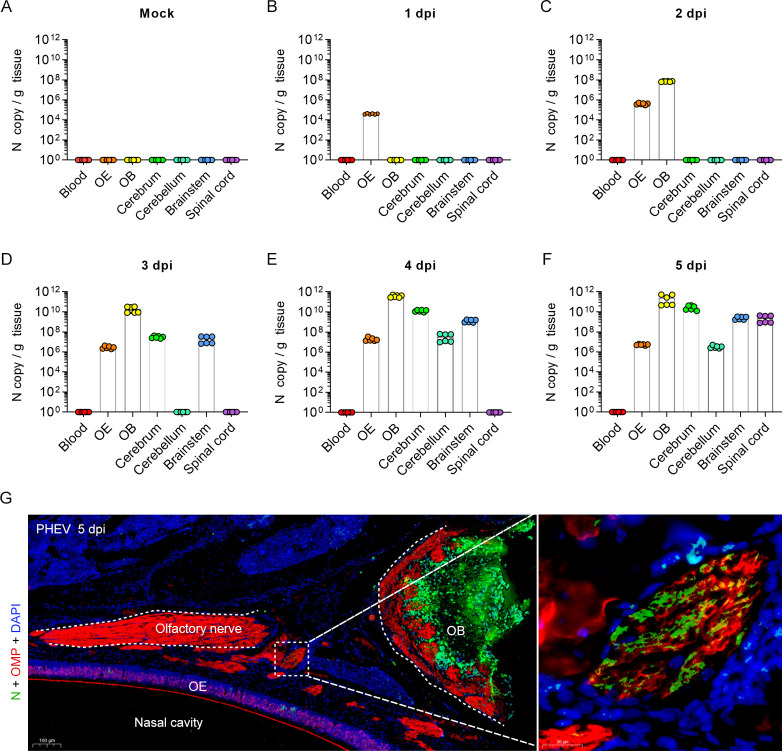
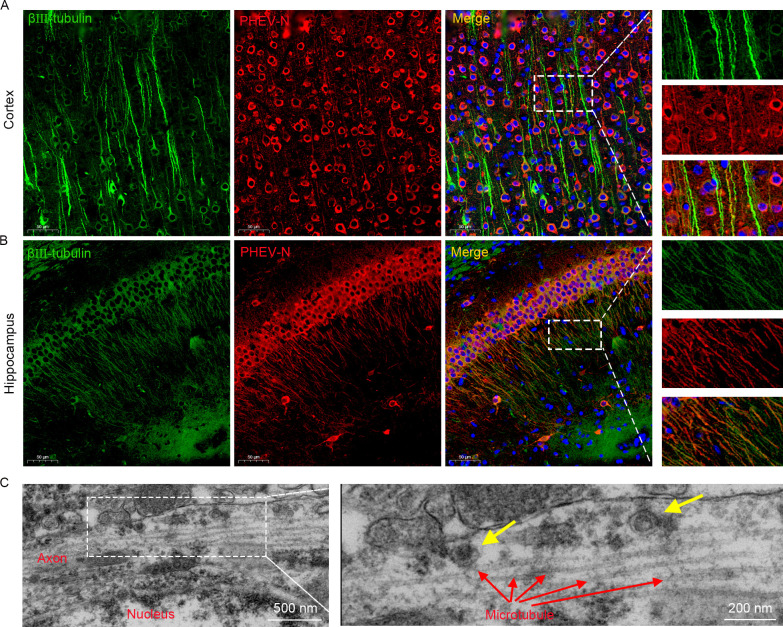
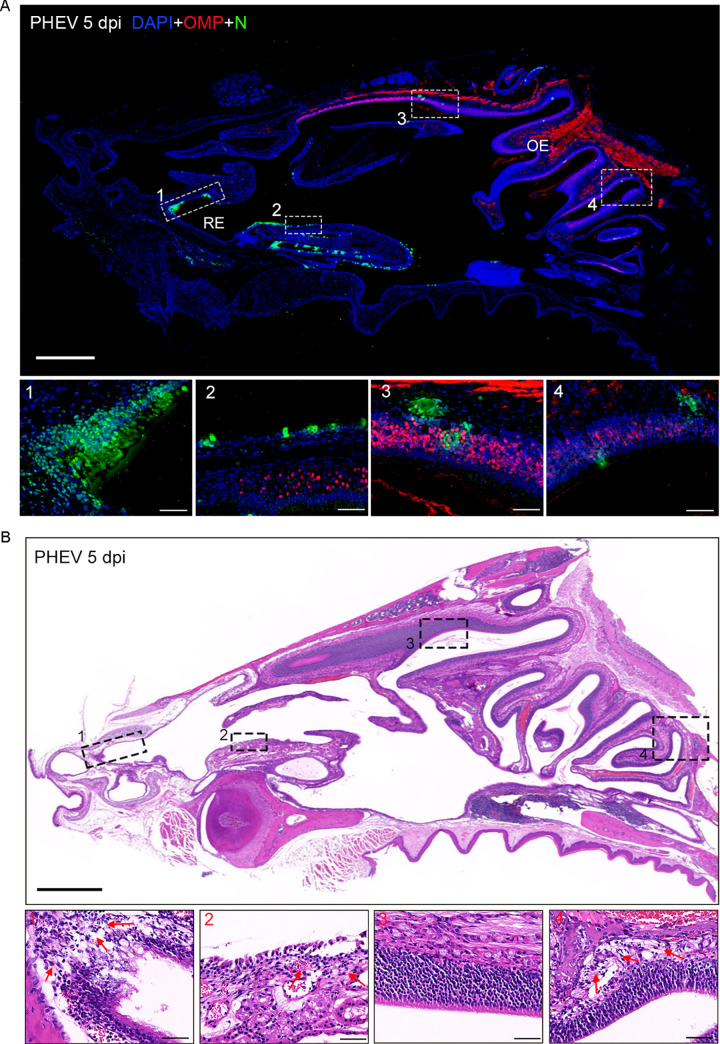
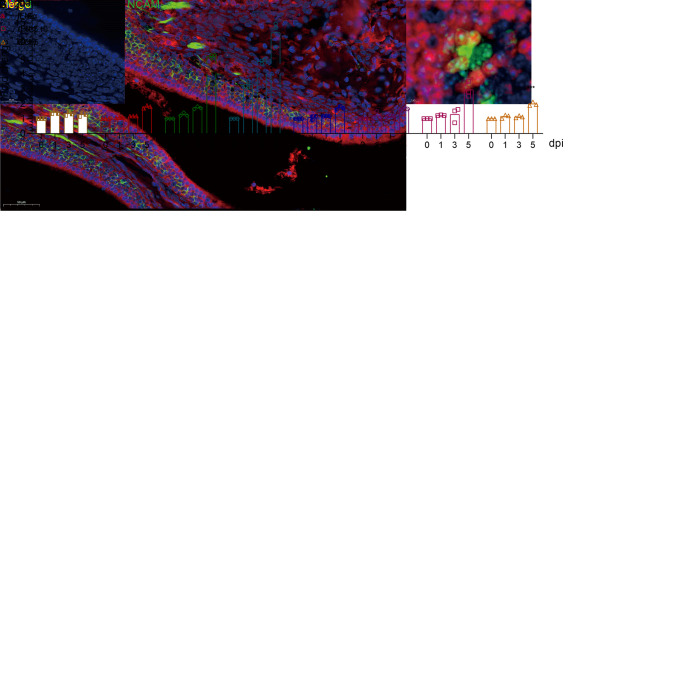
Porcine hemagglutinating encephalomyelitis virus (PHEV) is a highly neurotropic coronavirus belonging to the genus Betacoronavirus. Similar to pathogenic coronaviruses to which humans are susceptible, such as SARS-CoV-2, PHEV is transmitted primarily through respiratory droplets and close contact, entering the central nervous system (CNS) from the peripheral nerves at the site of initial infection. However, the neuroinvasion route of PHEV are poorly understood. Here, we found that BALB/c mice are susceptible to intranasal PHEV infection and showed distinct neurological manifestations. The behavioral study and histopathological examination revealed that PHEV attacks neurons in the CNS and causes significant smell and taste dysfunction in mice. By tracking neuroinvasion, we identified that PHEV invades the CNS via the olfactory nerve and trigeminal nerve located in the nasal cavity, and olfactory sensory neurons (OSNs) were susceptible to viral infection. Immunofluorescence staining and ultrastructural observations revealed that viral materials traveling along axons, suggesting axonal transport may engage in rapid viral transmission in the CNS. Moreover, viral replication in the olfactory system and CNS is associated with inflammatory and immune responses, tissue disorganization and dysfunction. Overall, we proposed that PHEV may serve as a potential prototype for elucidating the pathogenesis of coronavirus-associated neurological complications and olfactory and taste disorders.
猪传染性脑脊髓炎病毒(PHEV)是一种高度嗜神经的冠状病毒,属于β冠状病毒属。与人类易感染的致病性冠状病毒(如 SARS-CoV-2)相似,PHEV 主要通过呼吸道飞沫和密切接触传播,在初次感染部位从外周神经进入中枢神经系统(CNS)。然而,PHEV 的神经入侵途径尚不清楚。在这里,我们发现 BALB/c 小鼠易受鼻内 PHEV 感染,并表现出明显的神经症状。行为研究和组织病理学检查表明,PHEV 攻击中枢神经系统中的神经元,并导致小鼠明显的嗅觉和味觉功能障碍。通过追踪神经入侵,我们确定 PHEV 通过位于鼻腔中的嗅神经和三叉神经入侵中枢神经系统,而嗅觉感觉神经元(OSN)易受病毒感染。免疫荧光染色和超微结构观察显示,病毒物质沿着轴突移动,提示轴突运输可能参与中枢神经系统的快速病毒传播。此外,嗅觉系统和中枢神经系统中的病毒复制与炎症和免疫反应、组织紊乱和功能障碍有关。总的来说,我们提出 PHEV 可能作为阐明冠状病毒相关神经并发症和嗅觉及味觉障碍发病机制的潜在原型。