Cheon So Yeong, Song Juhyun
Department of Biotechnology, College of Biomedical & Health Science, Konkuk University, Chungju, Republic of Korea.
Department of Anatomy, Chonnam National University Medical School, Hwasun, Jeollanam-do, 58128, Republic of Korea.
Cell Biosci. 2022 Jun 28;12(1):99. doi: 10.1186/s13578-022-00836-0.
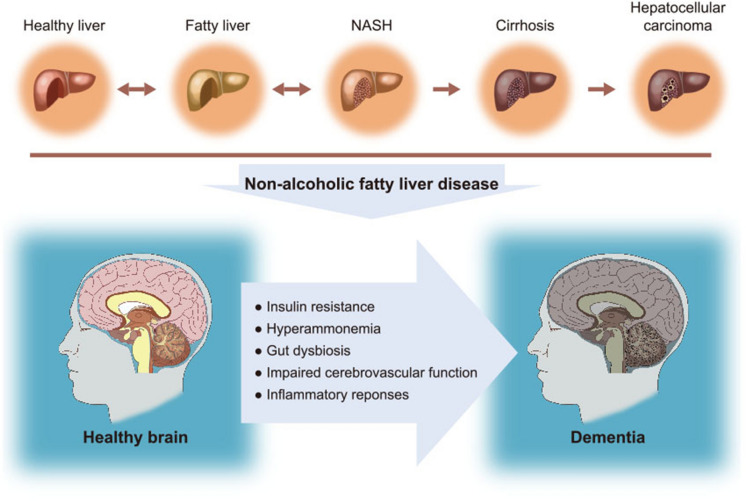
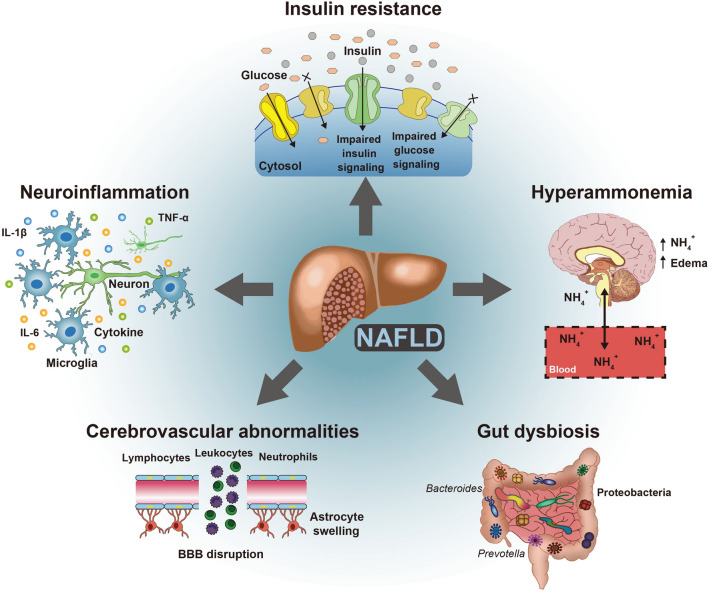
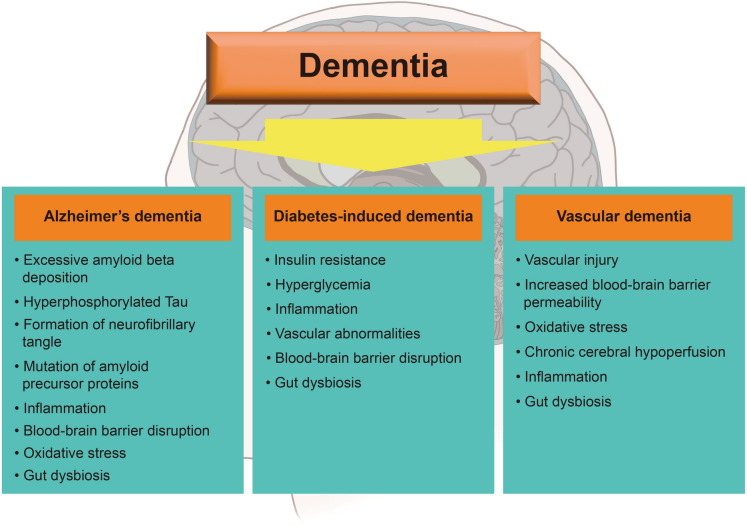
Non-alcoholic fatty liver disease (NAFLD) is a metabolic disease characterized by multiple pathologies. The progression of dementia with NAFLD may be affected by various risk factors, including brain insulin resistance, cerebrovascular dysfunction, gut dysbiosis, and neuroinflammation. Many recent studies have focused on the increasing prevalence of dementia in patients with NAFLD. Dementia is characterized by cognitive and memory deficits and has diverse subtypes, including vascular dementia, Alzheimer's dementia, and diabetes mellitus-induced dementia. Considering the common pathological features of NAFLD and dementia, further studies on the association between them are needed to find appropriate therapeutic solutions for diseases. This review summarizes the common pathological characteristics and mechanisms of NAFLD and dementia. Additionally, it describes recent evidence on association between NAFLD and dementia progression and provides novel perspectives with regard to the treatment of patients with dementia secondary to NAFLD.
非酒精性脂肪性肝病(NAFLD)是一种具有多种病理特征的代谢性疾病。NAFLD伴发的痴呆症进展可能受到多种危险因素的影响,包括脑胰岛素抵抗、脑血管功能障碍、肠道菌群失调和神经炎症。最近许多研究都聚焦于NAFLD患者中痴呆症患病率的上升。痴呆症的特征是认知和记忆缺陷,有多种亚型,包括血管性痴呆、阿尔茨海默病性痴呆和糖尿病性痴呆。考虑到NAFLD和痴呆症的共同病理特征,需要进一步研究它们之间的关联,以找到合适的疾病治疗方案。本综述总结了NAFLD和痴呆症的共同病理特征及机制。此外,还描述了NAFLD与痴呆症进展之间关联的最新证据,并为治疗NAFLD继发的痴呆症患者提供了新的视角。