Department of Chemical Pathology, Southampton General Hospital, University Hospital Southampton, Southampton, UK.
Department of Nutrition and Metabolism, Faculty of Medicine, University of Southampton, Southampton, UK.
Clin Mol Hepatol. 2021 Jan;27(1):22-43. doi: 10.3350/cmh.2020.0129. Epub 2020 Dec 10.
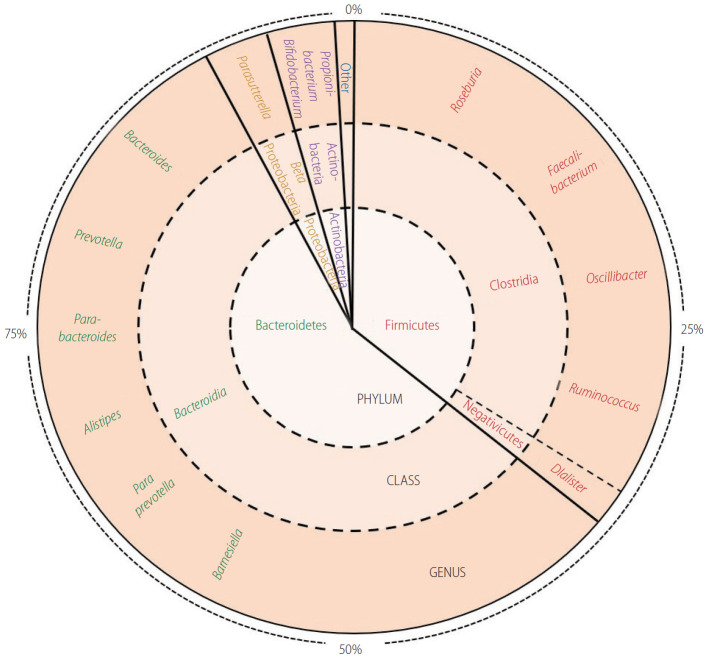
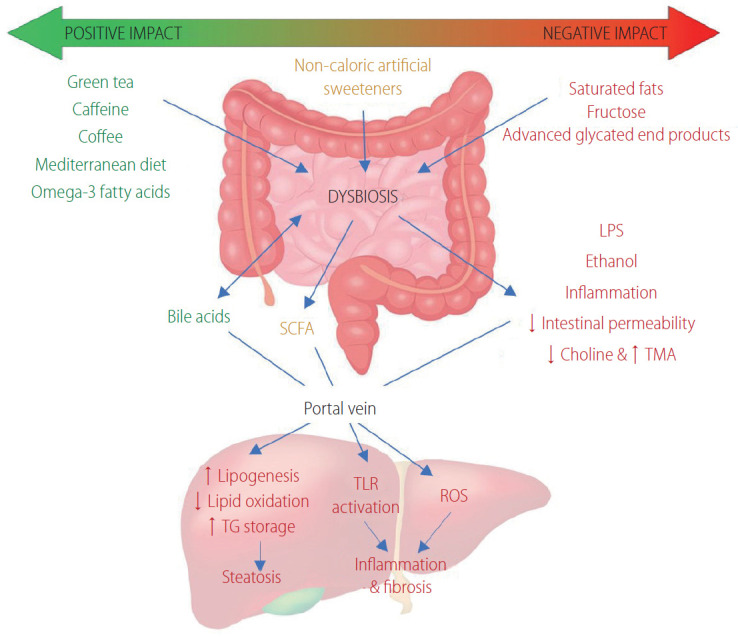
Non-alcoholic fatty liver disease (NAFLD) is the leading cause of chronic liver disease, with a prevalence that is increasing in parallel with the global rise in obesity and type 2 diabetes mellitus. The pathogenesis of NAFLD is complex and multifactorial, involving environmental, genetic and metabolic factors. The role of the diet and the gut microbiome is gaining interest as a significant factor in NAFLD pathogenesis. Dietary factors induce alterations in the composition of the gut microbiome (dysbiosis), commonly reflected by a reduction of the beneficial species and an increase in pathogenic microbiota. Due to the close relationship between the gut and liver, altering the gut microbiome can affect liver functions; promoting hepatic steatosis and inflammation. This review summarises the current evidence supporting an association between NAFLD and the gut microbiome and dietary factors. The review also explores potential underlying mechanisms underpinning these associations and whether manipulation of the gut microbiome is a potential therapeutic strategy to prevent or treat NAFLD.
非酒精性脂肪性肝病(NAFLD)是慢性肝病的主要病因,随着肥胖症和 2 型糖尿病在全球的发病率上升,其患病率也呈平行上升趋势。NAFLD 的发病机制复杂且多因素,涉及环境、遗传和代谢因素。饮食和肠道微生物组作为 NAFLD 发病机制中的一个重要因素正引起人们的关注。饮食因素可引起肠道微生物组的组成改变(失调),通常表现为有益物种减少和致病性微生物增多。由于肠道和肝脏之间的密切关系,改变肠道微生物组会影响肝脏功能;促进肝脂肪变性和炎症。本综述总结了目前支持 NAFLD 与肠道微生物组和饮食因素之间关联的证据。该综述还探讨了这些关联的潜在潜在机制,以及肠道微生物组的操纵是否是预防或治疗 NAFLD 的一种潜在治疗策略。