Institut Curie, PSL Research University, F-75005, Paris, France.
INSERM U932, F-75005, Paris, France.
Nat Commun. 2022 Jun 29;13(1):3739. doi: 10.1038/s41467-022-31504-z.
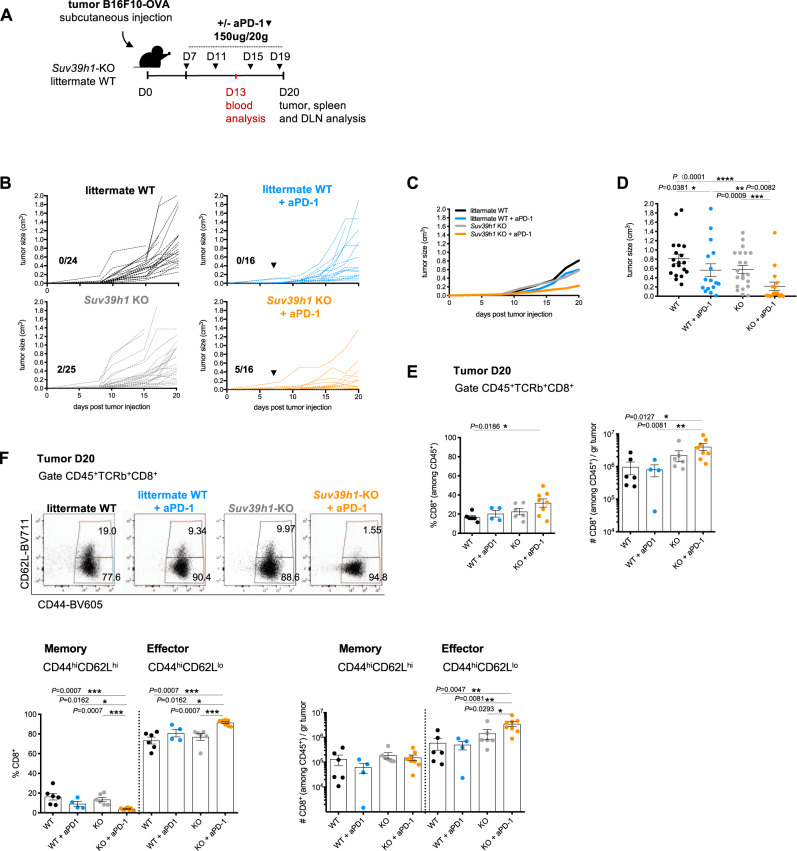
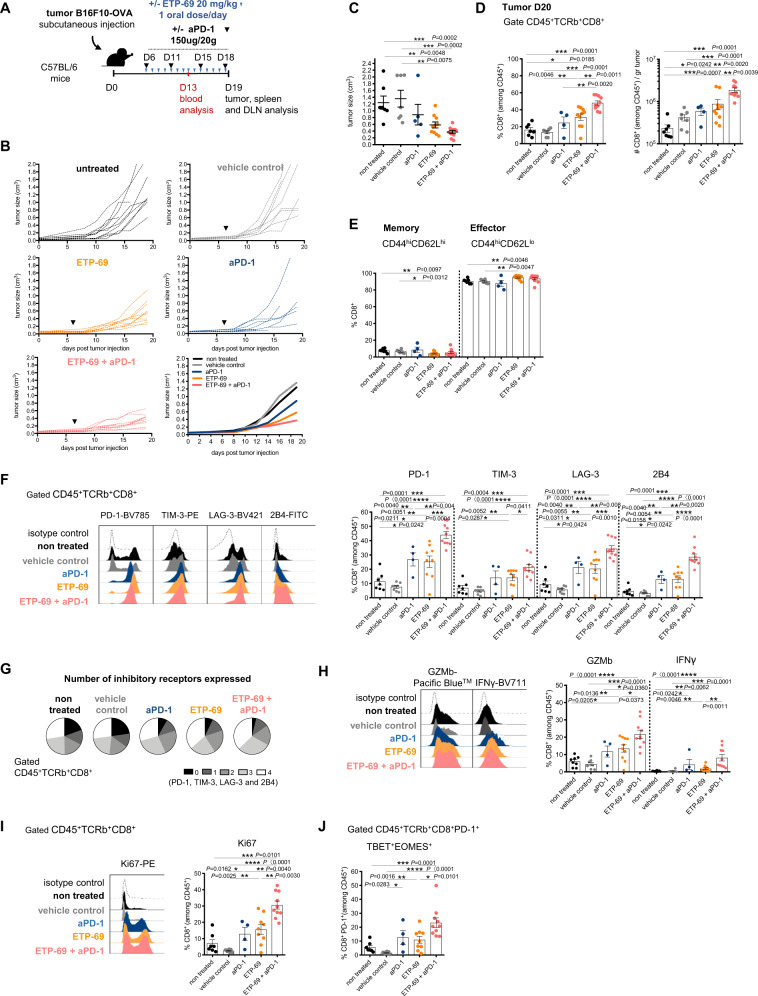
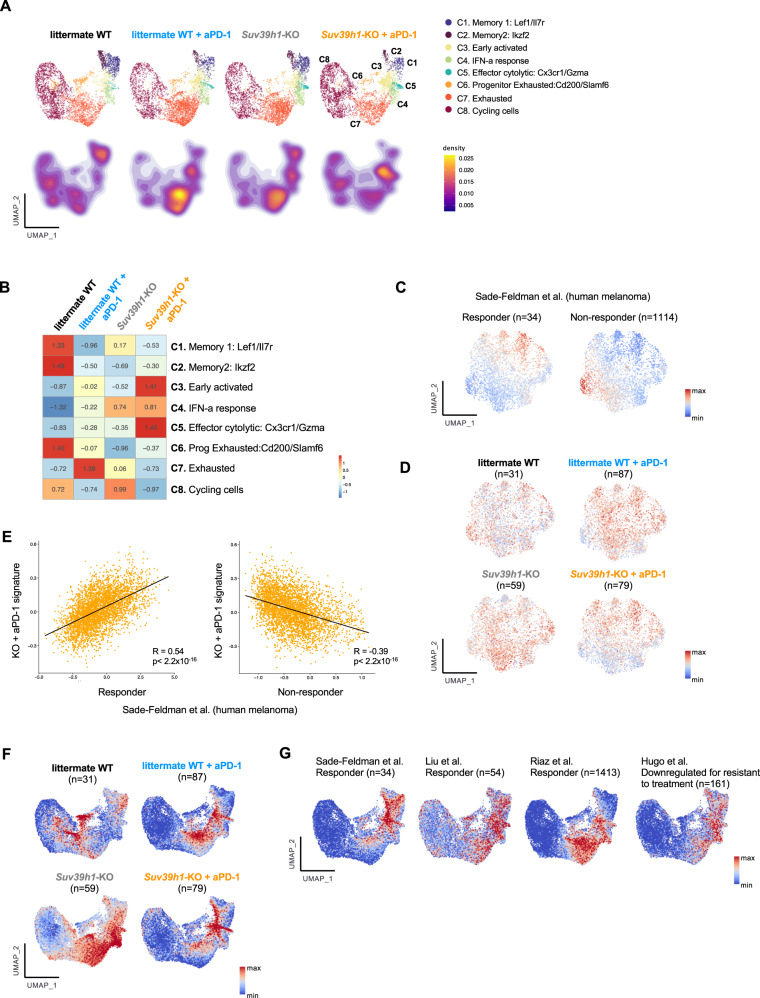
Tumor-infiltrating CD8 + T cells progressively lose functionality and fail to reject tumors. The underlying mechanism and re-programing induced by checkpoint blockers are incompletely understood. We show here that genetic ablation or pharmacological inhibition of histone lysine methyltransferase Suv39h1 delays tumor growth and potentiates tumor rejection by anti-PD-1. In the absence of Suv39h1, anti-PD-1 induces alternative activation pathways allowing survival and differentiation of IFNγ and Granzyme B producing effector cells that express negative checkpoint molecules, but do not reach final exhaustion. Their transcriptional program correlates with that of melanoma patients responding to immune-checkpoint blockade and identifies the emergence of cytolytic-effector tumor-infiltrating lymphocytes as a biomarker of clinical response. Anti-PD-1 favors chromatin opening in loci linked to T-cell activation, memory and pluripotency, but in the absence of Suv39h1, cells acquire accessibility in cytolytic effector loci. Overall, Suv39h1 inhibition enhances anti-tumor immune responses, alone or combined with anti-PD-1, suggesting that Suv39h1 is an "epigenetic checkpoint" for tumor immunity.
肿瘤浸润的 CD8+T 细胞逐渐丧失功能,无法排斥肿瘤。其背后的机制和检查点阻滞剂诱导的重编程还不完全清楚。我们在这里表明,组蛋白赖氨酸甲基转移酶 Suv39h1 的遗传缺失或药理学抑制可延迟肿瘤生长,并增强抗 PD-1 对肿瘤的排斥作用。在没有 Suv39h1 的情况下,抗 PD-1 诱导替代激活途径,允许表达负检查点分子的 IFNγ 和 Granzym B 产生效应细胞存活和分化,但不会达到最终衰竭。它们的转录程序与对免疫检查点阻断有反应的黑色素瘤患者的转录程序相关,并确定了细胞毒性效应肿瘤浸润淋巴细胞的出现是临床反应的生物标志物。抗 PD-1 有利于与 T 细胞激活、记忆和多能性相关的基因座中的染色质开放,但在没有 Suv39h1 的情况下,细胞在细胞毒性效应基因座中获得可及性。总体而言,Suv39h1 抑制增强了单独或与抗 PD-1 联合的抗肿瘤免疫反应,表明 Suv39h1 是肿瘤免疫的“表观遗传检查点”。