Migliaro Michela, Massuh Daniela, Infante María Fernanda, Brahm Ana María, San Martín María Trinidad, Ortuño Duniel
Escuela de Odontología, Facultad de Medicina, Pontificia Universidad Católica de Chile, Santiago, Chile.
Universidad de Los Andes, Santiago, Chile.
Int J Dent. 2022 Jun 20;2022:3191569. doi: 10.1155/2022/3191569. eCollection 2022.
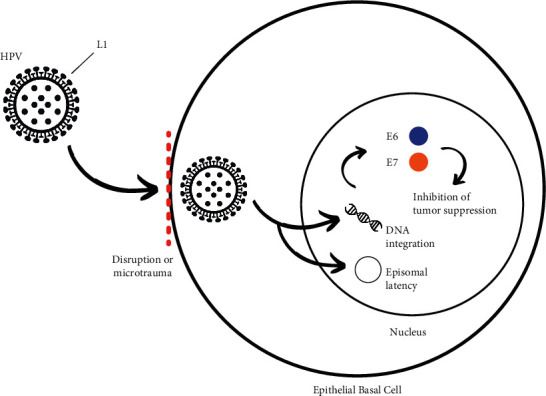
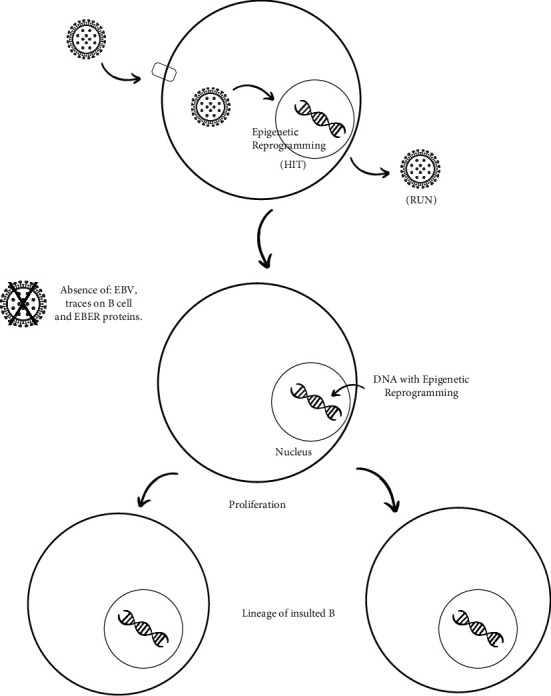
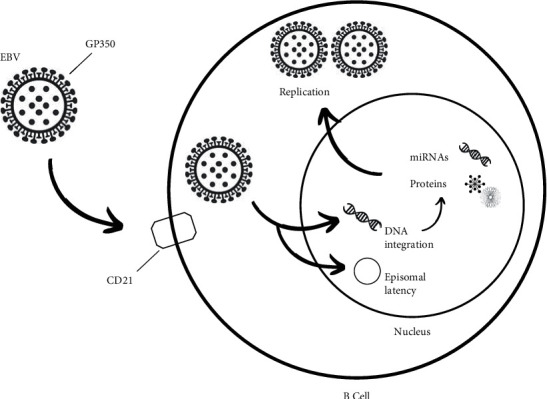
The aim of this review was to describe the association and related mechanisms between HPV, EBV, and the development of oral and oropharyngeal cancer. A search for scientific evidence was carried out in electronic databases (MEDLINE/PubMed, SciELO). It was found that, among the carcinogenic mechanisms of HPV, E6 and E7 proteins are responsible for the malignization process, inhibiting tumor suppressors p53 and pRb. As to EBV, it was noted that its "hit and run" phenomenon manipulates the host epigenetic mechanism, triggering the tumor process without the virus being currently present; a "cellular reprogramming" is essentially generated, causing heritable changes in gene expression without DNA mutation. In conclusion, there is an association between oropharyngeal carcinogenesis and HPV and also between the former and EBV. Further studies are required to clarify the causal mechanisms and impact of both viruses on cancer development and to obtain biomarkers of greater specificity in the case of EBV.
本综述的目的是描述人乳头瘤病毒(HPV)、EB病毒(EBV)与口腔癌和口咽癌发生之间的关联及相关机制。在电子数据库(MEDLINE/PubMed、SciELO)中检索科学证据。研究发现,在HPV的致癌机制中,E6和E7蛋白负责恶性转化过程,抑制肿瘤抑制因子p53和视网膜母细胞瘤蛋白(pRb)。至于EBV,注意到其“打了就跑”现象操纵宿主表观遗传机制,在病毒目前不存在的情况下引发肿瘤过程;本质上产生了一种“细胞重编程”,导致基因表达的可遗传变化而无DNA突变。总之,口咽癌发生与HPV之间以及与EBV之间均存在关联。需要进一步研究以阐明两种病毒对癌症发展的因果机制和影响,并在EBV的情况下获得更具特异性的生物标志物。