Qin Jiangwei, Deng Zhengrong, Tang Changqing, Zhang Yunfan, Hu Ruolan, Li Jiawen, Hua Yimin, Li Yifei
Key Laboratory of Birth Defects and Related Diseases of Women and Children of MOE, Department of Pediatrics, West China Second University Hospital, Sichuan University, Chengdu, China.
Department of Pediatric Cardiology, Children's Hospital of Soochow University, Suzhou, China.
Front Pharmacol. 2022 Jun 13;13:935455. doi: 10.3389/fphar.2022.935455. eCollection 2022.
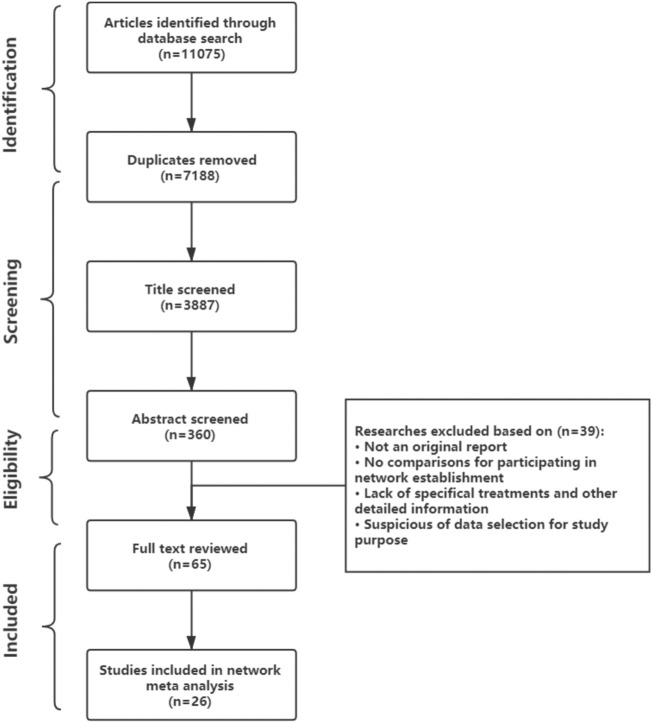
Fetal arrhythmias are common cardiac abnormalities associated with high mortality due to ventricular dysfunction and heart failure, particularly when accompanied by hydrops. Although several types of common fetal tachycardias have been relatively identified medications, such as digoxin, flecainide, and sotalol, there is no first-line drug treatment protocol established for the treatment of various types of fetal tachycardias. We conducted a network meta-analysis using a Bayesian hierarchical framework to obtain a model for integrating both direct and indirect evidence. All tachycardia types (Total group), supraventricular tachycardia (SVT subgroup), atrial flutter (AF subgroup), hydrops subgroup, and non-hydrops subgroup fetuses were analyzed, and five first-line regimens were ranked according to treatment outcomes: digoxin monotherapy (D), flecainide monotherapy (F), sotalol monotherapy (S), digoxin plus flecainide combination therapy (DF), and digoxin plus sotalol combination therapy (DS). Effectiveness and safety were determined according to the cardioversion rate and intrauterine death rate. The pooled data indicated that DF combination therapy was always superior to D monotherapy, regardless of the tachycardia type or the presence of hydrops: Total, 2.44 (95% CrI: 1.59, 3.52); SVT, 2.77 (95% CrI: 1.59, 4.07); AF, 67.85 (95% CrI: 14.25, 168.68); hydrops, 6.03 (95% CrI: 2.54, 10.68); and non-hydrops, 5.06 (95% CrI: 1.87, 9.88). DF and F had a similar effect on control of fetal tachycardias. No significant differences were observed when comparing S, DS with D therapies across the subgroup analyses for the SVT, hydrops, and non-hydrops groups. No significant differences in mortality risks were among the various treatment regimens for the total group. And no significant differences were found in rates of intrauterine death rates at the same cardioversion amount. The flecainide monotherapy and combination of digoxin and flecainide should be considered the most superior therapeutic strategies for fetal tachycardia. (https://www.crd.york.ac.uk/PROSPERO/display_record.php?RecordID=288997), identifier (288997).
胎儿心律失常是常见的心脏异常,由于心室功能障碍和心力衰竭,尤其是伴有水肿时,死亡率很高。尽管几种常见的胎儿心动过速类型已相对明确了药物治疗,如地高辛、氟卡尼和索他洛尔,但尚无针对各种类型胎儿心动过速的一线药物治疗方案。我们使用贝叶斯分层框架进行了网络荟萃分析,以获得一个整合直接和间接证据的模型。分析了所有心动过速类型(总组)、室上性心动过速(SVT亚组)、心房扑动(AF亚组)、水肿亚组和非水肿亚组的胎儿,并根据治疗结果对五种一线治疗方案进行了排名:地高辛单药治疗(D)、氟卡尼单药治疗(F)、索他洛尔单药治疗(S)、地高辛加氟卡尼联合治疗(DF)和地高辛加索他洛尔联合治疗(DS)。根据复律率和宫内死亡率确定有效性和安全性。汇总数据表明,无论心动过速类型或是否存在水肿,DF联合治疗总是优于D单药治疗:总组,2.44(95%CrI:1.59,3.52);SVT,2.77(95%CrI:1.59,4.07);AF,67.85(95%CrI:14.25,168.68);水肿组,6.03(95%CrI:2.54,10.68);非水肿组,5.06(95%CrI:1.87,9.88)。DF和F对控制胎儿心动过速有相似的效果。在SVT、水肿和非水肿组的亚组分析中,比较S、DS与D治疗时未观察到显著差异。总组的各种治疗方案之间在死亡风险方面无显著差异。在相同复律量时,宫内死亡率也未发现显著差异。氟卡尼单药治疗以及地高辛与氟卡尼联合治疗应被视为胎儿心动过速最优越的治疗策略。(https://www.crd.york.ac.uk/PROSPERO/display_record.php?RecordID=288997),标识符(288997)