School of Pharmacy, Department of Health Sciences, University of Eastern Finland, Yliopistonranta 1 C, 70210, Kuopio, Finland.
School of Medicine, Department of Health Sciences, University of Eastern Finland, Yliopistonranta 1 C, 70210, Kuopio, Finland.
Mol Cell Biochem. 2023 Jan;478(1):215-227. doi: 10.1007/s11010-022-04504-2. Epub 2022 Jun 30.
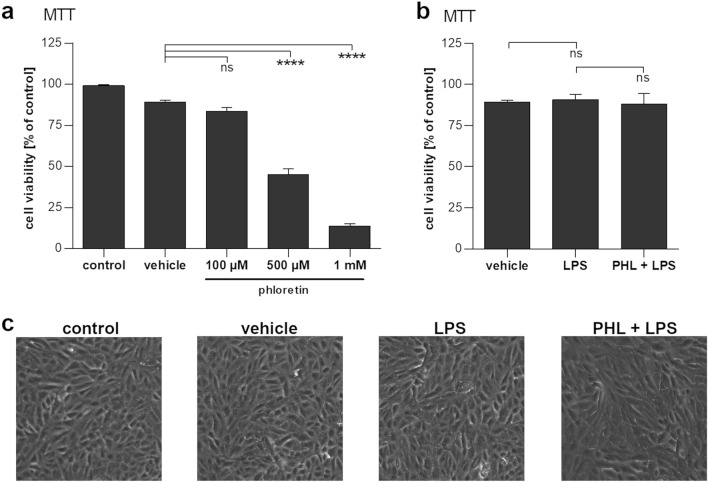
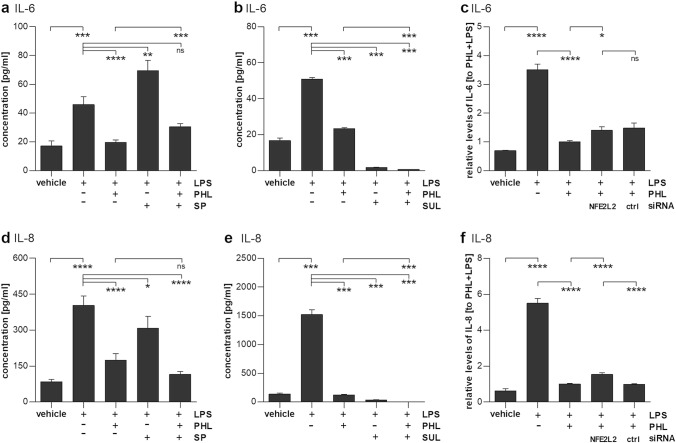
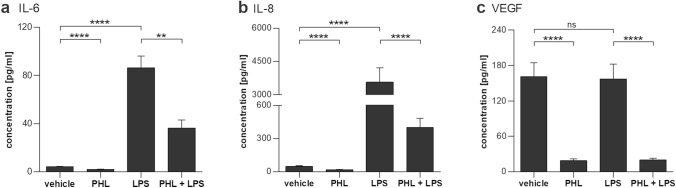
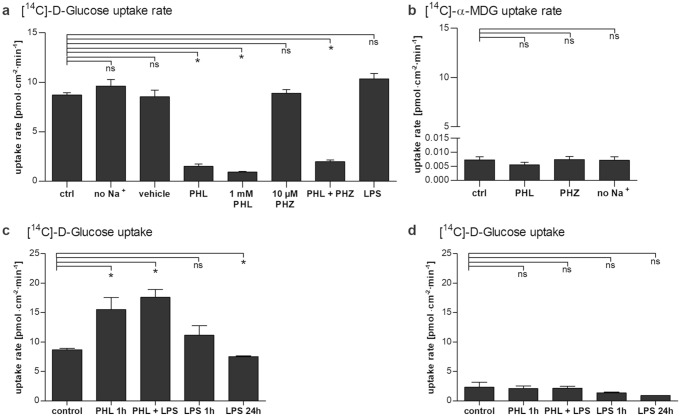
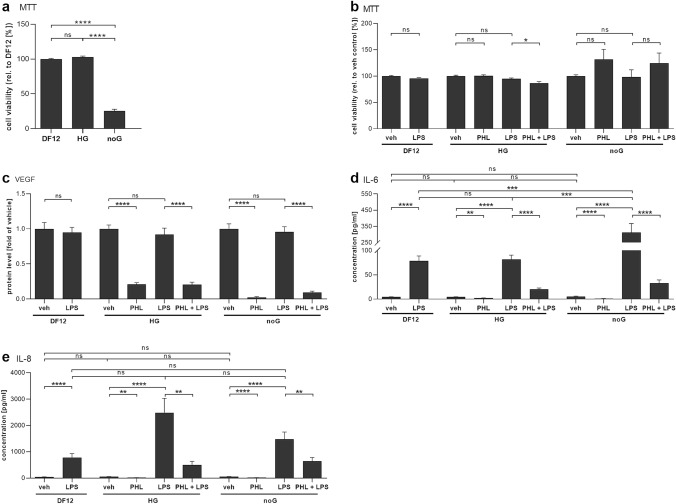
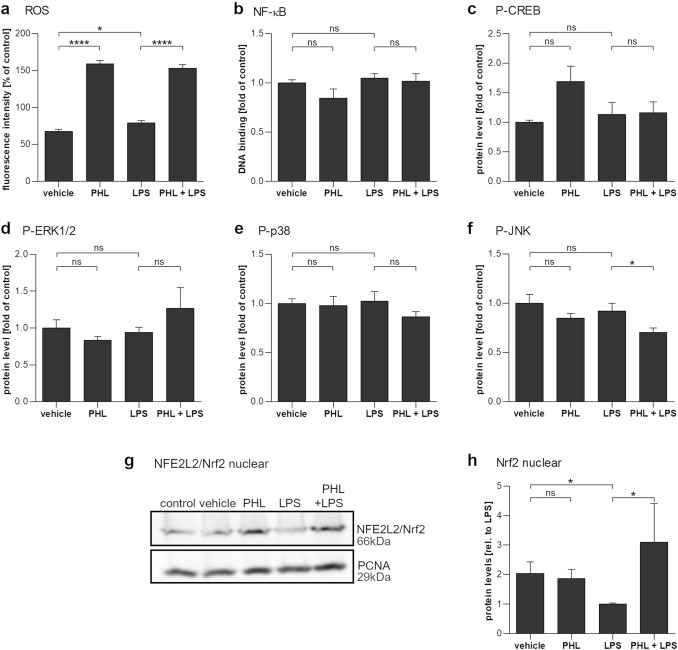
During age-related macular degeneration (AMD), chronic inflammatory processes, possibly fueled by high glucose levels, cause a breakdown of the retinal pigment epithelium (RPE), leading to vision loss. Phloretin, a natural dihydroxychalcone found in apples, targets several anti-inflammatory signaling pathways and effectively inhibits transporter-mediated glucose uptake. It could potentially prevent inflammation and cell death of RPE cells through either direct regulation of inflammatory signaling pathways or through amelioration of high glucose levels. To test this hypothesis, ARPE-19 cells were incubated with or without phloretin for 1 h before exposure to lipopolysaccharide (LPS). Cell viability and the release of pro-inflammatory cytokines interleukin 6 (IL-6), IL-8 and vascular endothelial growth factor (VEGF) were measured. Glucose uptake was studied using isotope uptake studies. The nuclear levels of nuclear factor erythroid 2-related factor 2 (Nrf2) were determined alongside the phosphorylation levels of mitogen-activated protein kinases. Phloretin pretreatment reduced the LPS-induced release of IL-6 and IL-8 as well as VEGF. Phloretin increased intracellular levels of reactive oxygen species and nuclear translocation of Nrf2. It also inhibited glucose uptake into ARPE-19 cells and the phosphorylation of Jun-activated kinase (JNK). Subsequent studies revealed that Nrf2, but not the inhibition of glucose uptake or JNK phosphorylation, was the main pathway of phloretin's anti-inflammatory activities. Phloretin was robustly anti-inflammatory in RPE cells and reduced IL-8 secretion via activation of Nrf2 but the evaluation of its potential in the treatment or prevention of AMD requires further studies.
在年龄相关性黄斑变性(AMD)中,慢性炎症过程,可能由高血糖水平驱动,导致视网膜色素上皮(RPE)的破坏,导致视力丧失。根皮苷,一种在苹果中发现的天然二氢查耳酮,靶向几种抗炎信号通路,并有效抑制转运体介导的葡萄糖摄取。它可能通过直接调节炎症信号通路或通过改善高血糖水平来预防 RPE 细胞的炎症和细胞死亡。为了验证这一假设,在暴露于脂多糖(LPS)之前,将 ARPE-19 细胞用或不用根皮苷孵育 1 小时。测量细胞活力和促炎细胞因子白细胞介素 6(IL-6)、白细胞介素 8(IL-8)和血管内皮生长因子(VEGF)的释放。使用同位素摄取研究研究葡萄糖摄取。测定核红细胞生成素 2 相关因子 2(Nrf2)的核水平以及丝裂原活化蛋白激酶的磷酸化水平。根皮苷预处理可降低 LPS 诱导的 IL-6 和 IL-8 以及 VEGF 的释放。根皮苷增加了细胞内活性氧的水平和 Nrf2 的核易位。它还抑制 ARPE-19 细胞中的葡萄糖摄取和 Jun 激活激酶(JNK)的磷酸化。随后的研究表明,Nrf2,而不是葡萄糖摄取的抑制或 JNK 磷酸化,是根皮苷抗炎活性的主要途径。根皮苷在 RPE 细胞中具有强大的抗炎作用,并通过激活 Nrf2 减少 IL-8 的分泌,但评估其在 AMD 治疗或预防中的潜力需要进一步研究。