Li Zhenmeiyu, Shang Zicong, Sun Mengge, Jiang Xin, Tian Yu, Yang Lin, Wang Ziwu, Su Zihao, Liu Guoping, Li Xiaosu, You Yan, Yang Zhengang, Xu Zhejun, Zhang Zhuangzhi
Institute of Pediatrics, Children's Hospital of Fudan University, state Key Laboratory of Medical Neurobiology and MOE Frontiers Center for Brain Science, Institutes of Brain Science, Fudan University, 200032, Shanghai, China.
Cell Death Discov. 2022 Jun 30;8(1):301. doi: 10.1038/s41420-022-01088-0.
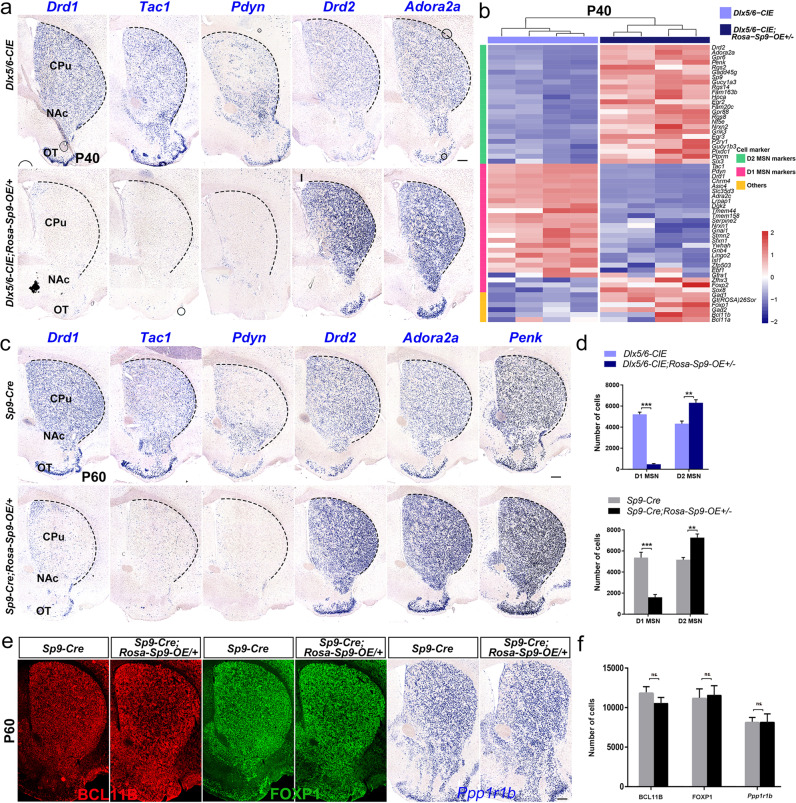
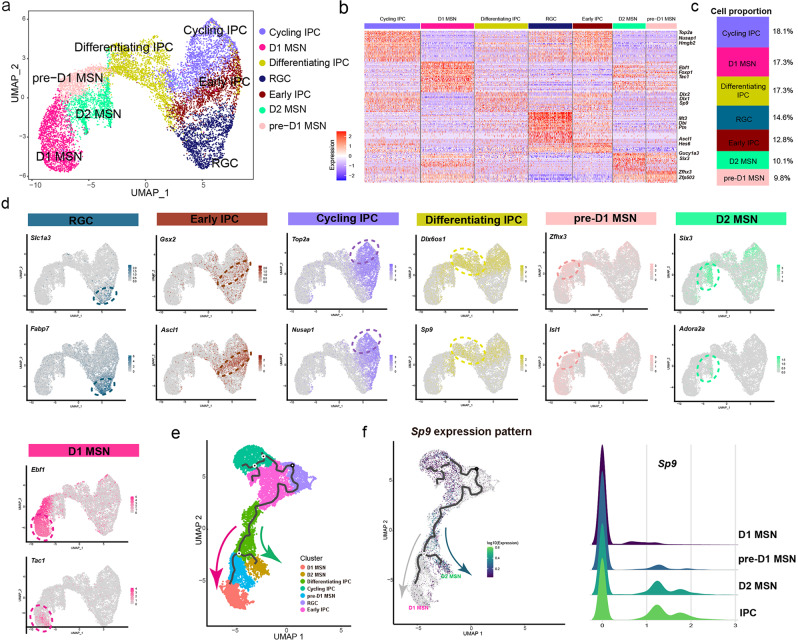
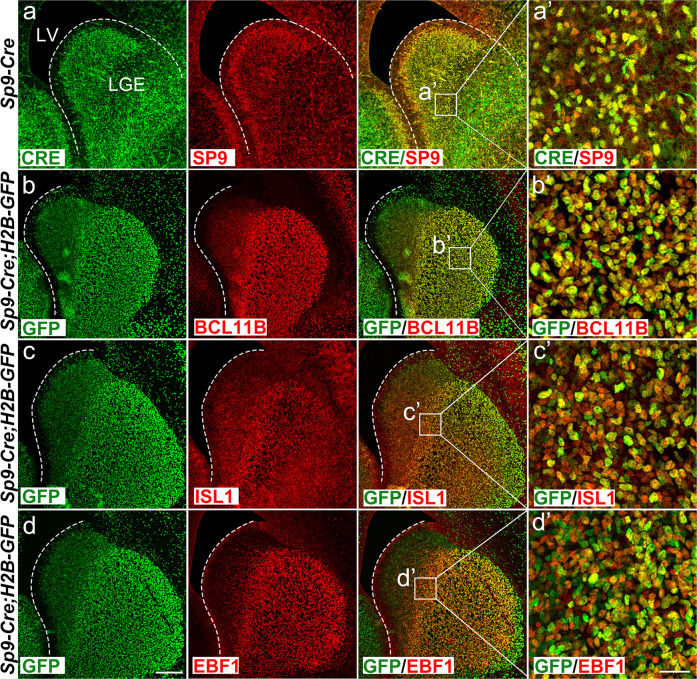
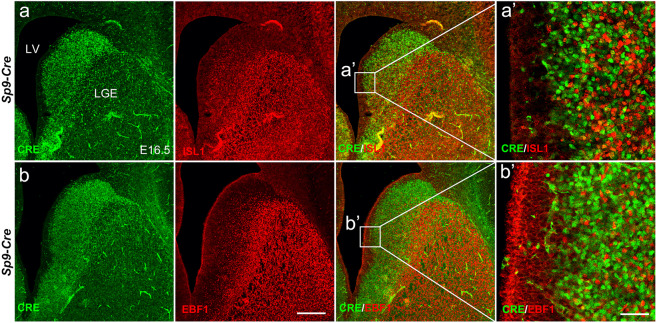
The striatum is the main input structure of the basal ganglia, receiving information from the cortex and the thalamus and consisting of D1- and D2- medium spiny neurons (MSNs). D1-MSNs and D2-MSNs are essential for motor control and cognitive behaviors and have implications in Parkinson's Disease. In the present study, we demonstrated that Sp9-positive progenitors produced both D1-MSNs and D2-MSNs and that Sp9 expression was rapidly downregulated in postmitotic D1-MSNs. Furthermore, we found that sustained Sp9 expression in lateral ganglionic eminence (LGE) progenitor cells and their descendants led to promoting D2-MSN identity and repressing D1-MSN identity during striatal development. As a result, sustained Sp9 expression resulted in an imbalance between D1-MSNs and D2-MSNs in the mouse striatum. In addition, the fate-changed D2-like MSNs survived normally in adulthood. Taken together, our findings supported that Sp9 was sufficient to promote D2-MSN identity and repress D1-MSN identity, and Sp9 was a negative regulator of D1-MSN fate.
纹状体是基底神经节的主要输入结构,接收来自皮层和丘脑的信息,由D1和D2中型多棘神经元(MSN)组成。D1-MSN和D2-MSN对运动控制和认知行为至关重要,并与帕金森病有关。在本研究中,我们证明Sp9阳性祖细胞产生D1-MSN和D2-MSN,并且Sp9表达在有丝分裂后的D1-MSN中迅速下调。此外,我们发现外侧神经节隆起(LGE)祖细胞及其后代中持续的Sp9表达导致在纹状体发育过程中促进D2-MSN特性并抑制D1-MSN特性。结果,持续的Sp9表达导致小鼠纹状体中D1-MSN和D2-MSN之间的失衡。此外,命运改变的D2样MSN在成年期正常存活。综上所述,我们的研究结果支持Sp9足以促进D2-MSN特性并抑制D1-MSN特性,并且Sp9是D1-MSN命运的负调节因子。