Cajal Institute (CSIC), Av Dr Arce 37, 28002, Madrid, Spain.
Drosophila Models for Human Disease Unit, Instituto de Salud Carlos III-IIER, 28220, Madrid, Spain.
Commun Biol. 2022 Jun 30;5(1):644. doi: 10.1038/s42003-022-03600-9.
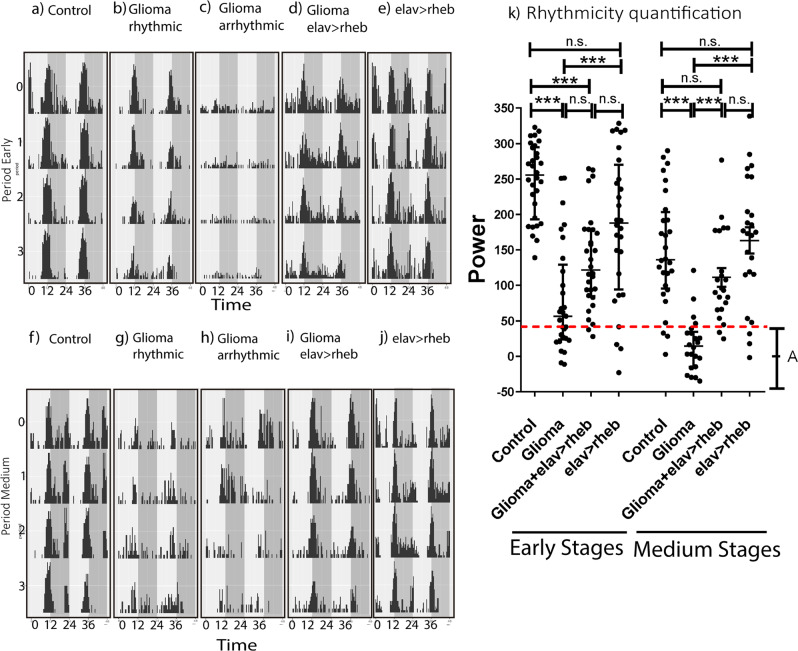
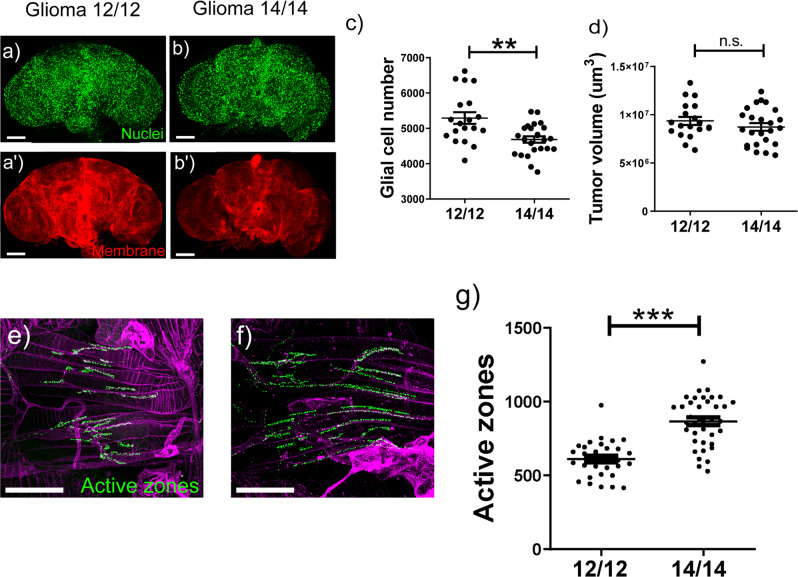
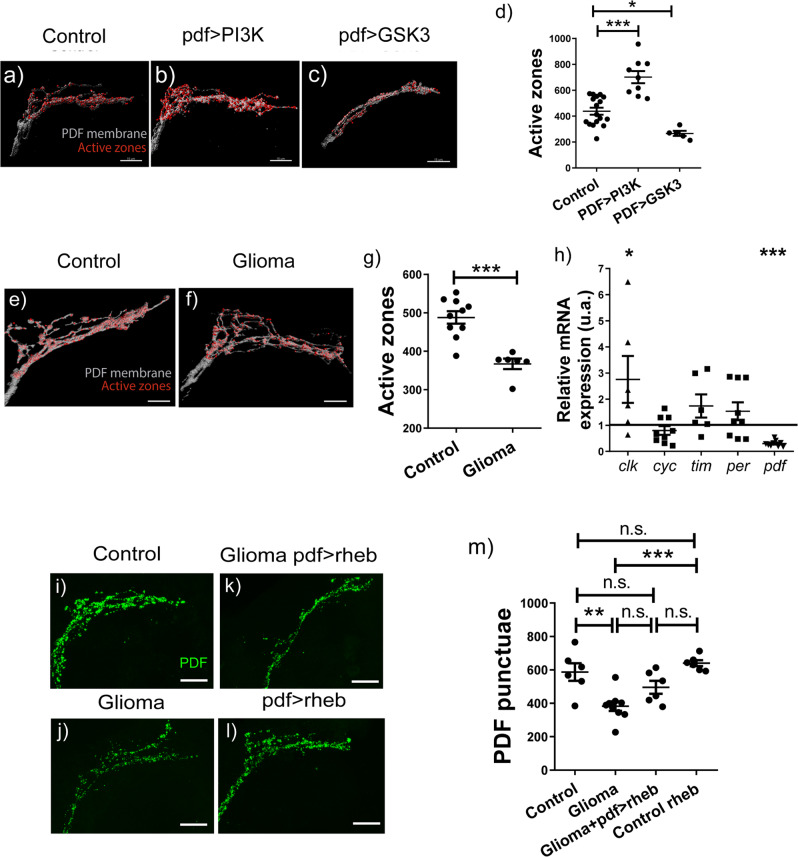
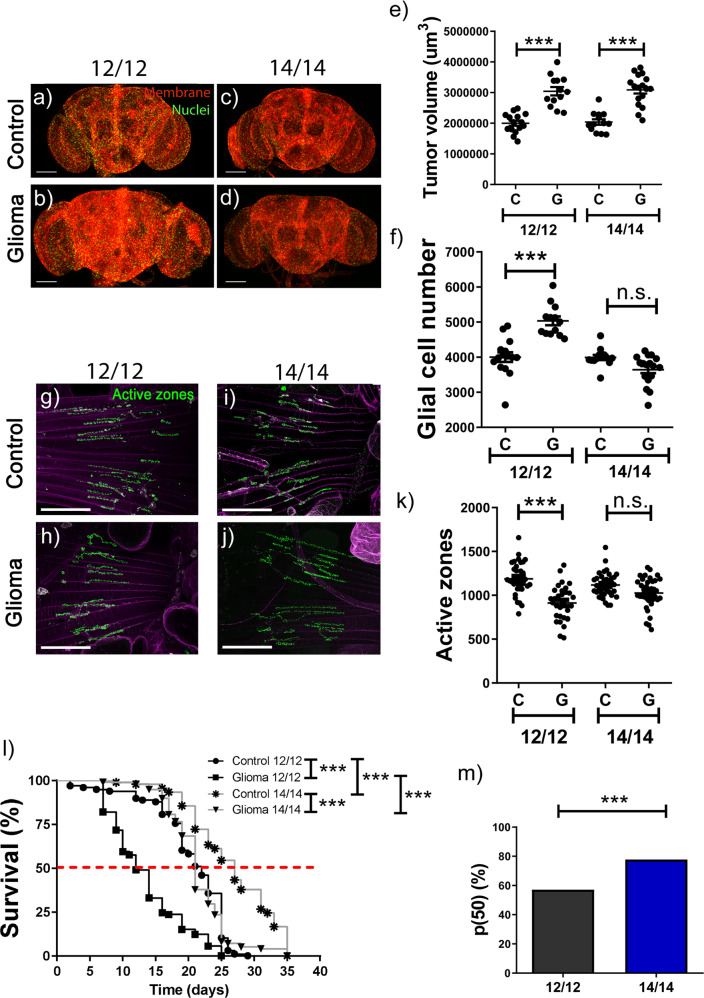
Virtually every single living organism on Earth shows a circadian (i.e. "approximately a day") internal rhythm that is coordinated with planet rotation (i.e. 24 hours). External cues synchronize the central clock of the organism. Consequences of biological rhythm disruptions have been extensively studied on cancer. Still, mechanisms underlying these alterations, and how they favor tumor development remain largely unknown. Here, we show that glioblastoma-induced neurodegeneration also causes circadian alterations in Drosophila. Preventing neurodegeneration in all neurons by genetic means reestablishes normal biological rhythms. Interestingly, in early stages of tumor development, the central pacemaker lengthens its period, whereas in later stages this is severely disrupted. The re-adjustment of the external light:dark period to longer glioblastoma-induced internal rhythms delays glioblastoma progression and ameliorates associated deleterious effects, even after the tumor onset.
地球上几乎每一个生物体都表现出与地球旋转(即 24 小时)协调的昼夜节律(即“大约一天”)内部节奏。外部线索同步生物体的中央时钟。生物节律紊乱的后果已在癌症方面得到广泛研究。然而,这些变化背后的机制以及它们如何促进肿瘤发展在很大程度上仍是未知的。在这里,我们表明神经胶质母细胞瘤诱导的神经退行性变也会导致果蝇的昼夜节律改变。通过遗传手段阻止所有神经元的神经退行性变可重新建立正常的生物节律。有趣的是,在肿瘤发展的早期阶段,中枢起搏器延长了其周期,而在晚期阶段则严重受到干扰。将外部光:暗周期重新调整为更长的神经胶质母细胞瘤诱导的内部节律会延迟神经胶质母细胞瘤的进展,并减轻相关的有害影响,即使在肿瘤发生后也是如此。