Division of Cardiology, Department of Internal Medicine, UT Southwestern Medical Center, 5323 Harry Hines Blvd, Dallas, TX, 75390, USA.
Curr Atheroscler Rep. 2022 Aug;24(8):607-617. doi: 10.1007/s11883-022-01033-7. Epub 2022 Jul 1.
To review the current evidence regarding the impact of the coronavirus disease 2019 (COVID-19) pandemic on cardiometabolic health, with a focus on strategies to help mitigate adverse effects on population health.
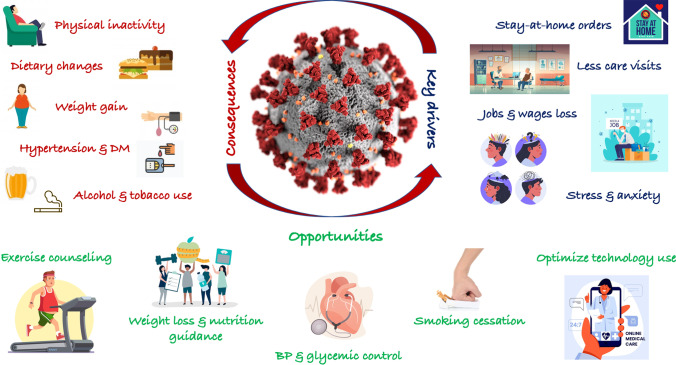
Individuals with cardiometabolic disease are particularly vulnerable to worse outcomes with COVID-19 infection. In addition, the pandemic itself has had significant deleterious impact on the cardiometabolic health of the population, including declines in physical activity, increases in smoking and alcohol use, worsening blood pressure and glycemic control, and detrimental effects on mental health. Targeted interventions at the patient and community level will be needed to mitigate the long-term consequences of the COVID-19 pandemic on population cardiometabolic health. The COVID-19 pandemic has worsened cardiometabolic health, but there are several opportunities and enhanced tools available to counteract these changes.
回顾 2019 年冠状病毒病(COVID-19)大流行对心血管代谢健康的影响,重点关注帮助减轻对人群健康的不良影响的策略。
患有心血管代谢疾病的个体在感染 COVID-19 时尤其容易出现更差的结局。此外,大流行本身对人群的心血管代谢健康产生了重大的有害影响,包括体力活动减少、吸烟和饮酒增加、血压和血糖控制恶化以及对心理健康的不利影响。需要在患者和社区层面采取有针对性的干预措施,以减轻 COVID-19 大流行对人群心血管代谢健康的长期影响。COVID-19 大流行使心血管代谢健康恶化,但有几个机会和增强的工具可用于抵消这些变化。