Borggaard Xenia G, Nielsen Malene H, Delaisse Jean-Marie, Andreasen Christina M, Andersen Thomas L
Research Unit of Pathology, Department of Clinical Research and Department of Molecular Medicine, Molecular Bone Histology Team, Clinical Cell Biology, University of Southern Denmark, Odense, Denmark.
Department of Pathology, Odense University Hospital, Odense, Denmark.
Front Mol Biosci. 2022 Jun 14;9:896841. doi: 10.3389/fmolb.2022.896841. eCollection 2022.
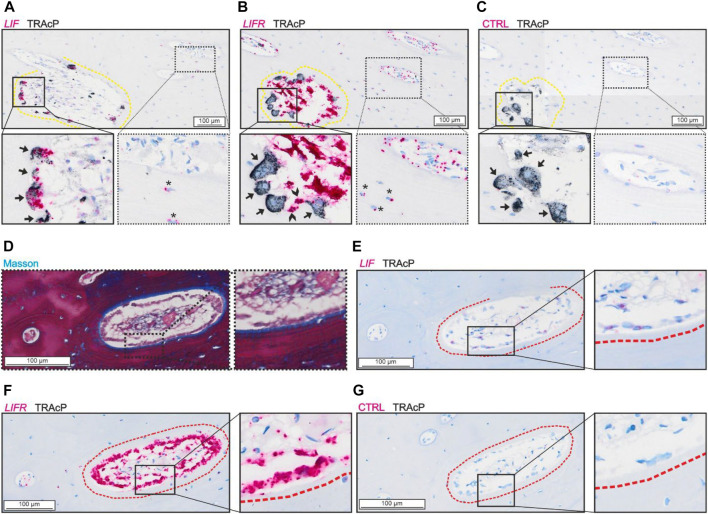
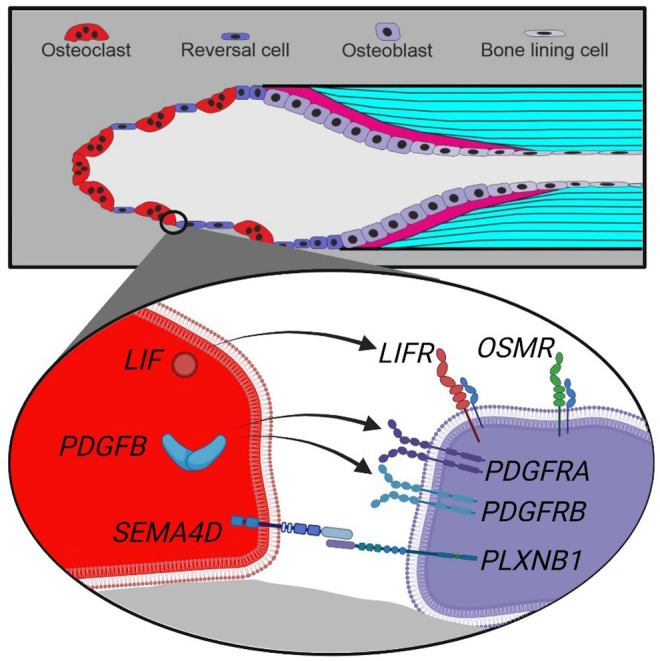
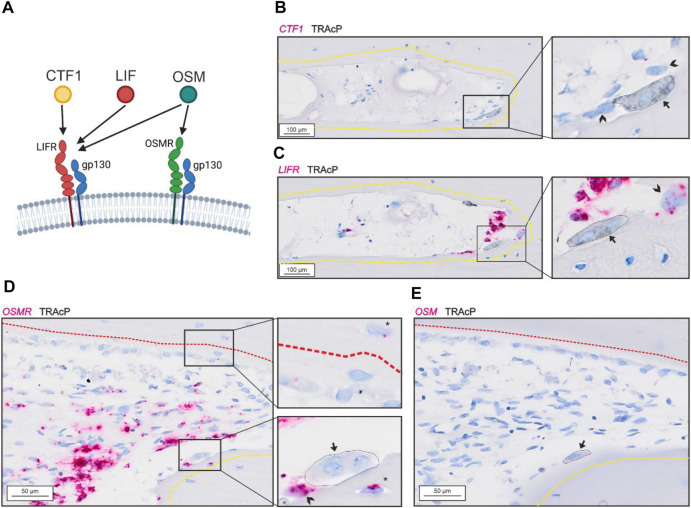
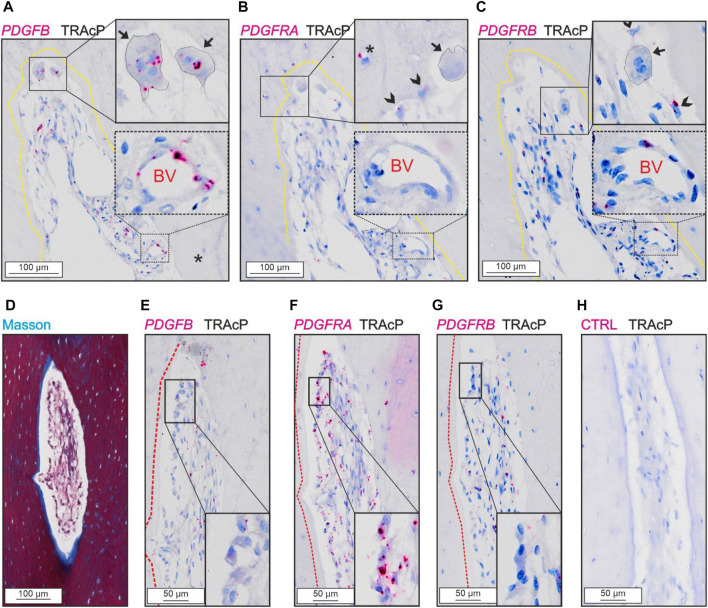
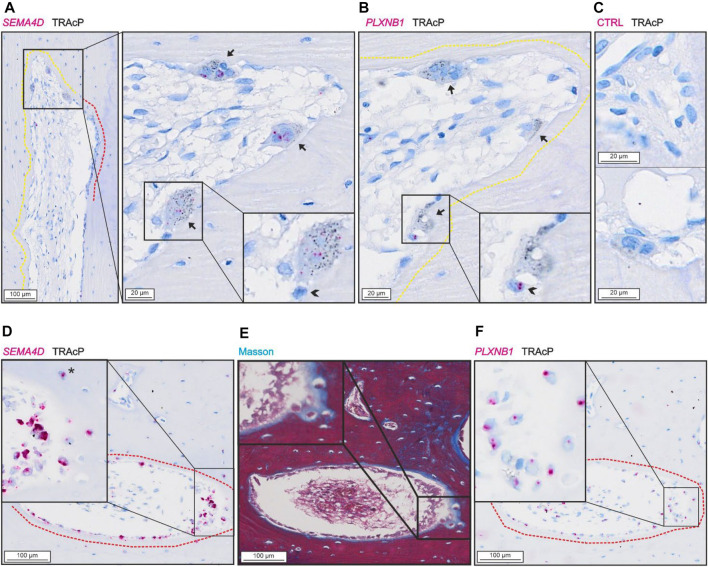
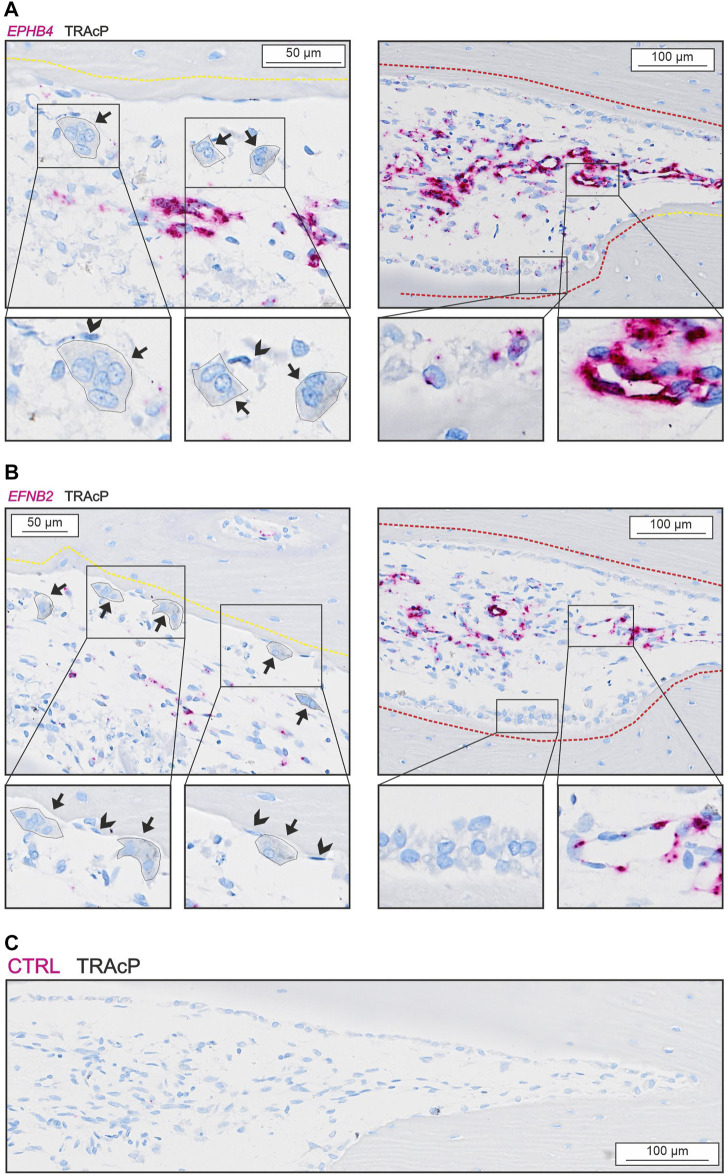
The strictly regulated bone remodeling process ensures that osteoblastic bone formation is coupled to osteoclastic bone resorption. This coupling is regulated by a panel of coupling factors, including clastokines promoting the recruitment, expansion, and differentiation of osteoprogenitor cells within the eroded cavity. The osteoprogenitor cells on eroded surfaces are called reversal cells. They are intermixed with osteoclasts and become bone-forming osteoblast when reaching a critical density and maturity. Several coupling factors have been proposed in the literature, but their effects and expression pattern vary between studies depending on species and experimental setup. In this study, we investigated the mRNA levels of proposed secreted and membrane-bound coupling factors and their receptors in cortical bone remodeling events within the femur of healthy adolescent human controls using high-sensitivity RNA hybridization. Of the proposed coupling factors, human osteoclasts showed mRNA-presence of , , , but no presence of , and . On the other hand, the osteoblastic reversal cells proximate to osteoclasts presented with , and , but not , which are all known receptors of the proposed coupling factors. Although was not present in mature osteoclasts, the mRNA of the ligand-receptor pair were abundant near the central blood vessels within intracortical pores with active remodeling. and were also abundant in mature bone-forming osteoblasts. This study highlights that especially , , may play a critical role in the osteoclast-osteoblast coupling in human remodeling events, as they are expressed within the critical cells.
严格调控的骨重塑过程确保成骨细胞的骨形成与破骨细胞的骨吸收相耦合。这种耦合由一组耦合因子调节,包括促进侵蚀腔内骨祖细胞募集、增殖和分化的破骨细胞因子。侵蚀表面的骨祖细胞称为转化细胞。它们与破骨细胞混合,当达到临界密度和成熟度时成为形成骨的成骨细胞。文献中已经提出了几种耦合因子,但根据物种和实验设置,它们的作用和表达模式在不同研究中有所不同。在本研究中,我们使用高灵敏度RNA杂交技术,研究了健康青少年人类对照组股骨皮质骨重塑事件中,所提出的分泌型和膜结合型耦合因子及其受体的mRNA水平。在所提出的耦合因子中,人类破骨细胞显示有、、的mRNA存在,但没有和的存在。另一方面,靠近破骨细胞的成骨细胞转化细胞呈现出、和,但没有,这些都是所提出的耦合因子的已知受体。虽然在成熟破骨细胞中不存在,但在具有活跃重塑的皮质内孔隙中央血管附近,配体-受体对的mRNA丰富。和在成熟的形成骨的成骨细胞中也很丰富。这项研究强调,特别是、、可能在人类重塑事件中的破骨细胞-成骨细胞耦合中起关键作用,因为它们在关键细胞中表达。