Department of Clinical Sciences, Lund University, Jan Waldenströms gata 15, floor 5, Malmö, Sweden.
Department of Internal Medicine, Skåne University Hospital, Malmö, Sweden.
Cardiovasc Diabetol. 2022 Jul 2;21(1):125. doi: 10.1186/s12933-022-01559-9.
Obesity is strongly associated with the development of cardiovascular disease (CVD). However, the heterogenous nature of obesity in CVD-risk is still poorly understood. We aimed to explore novel CVD biomarkers and their possible association with presumed unhealthy obesity, defined as hospitalized subjects with obesity (HO).
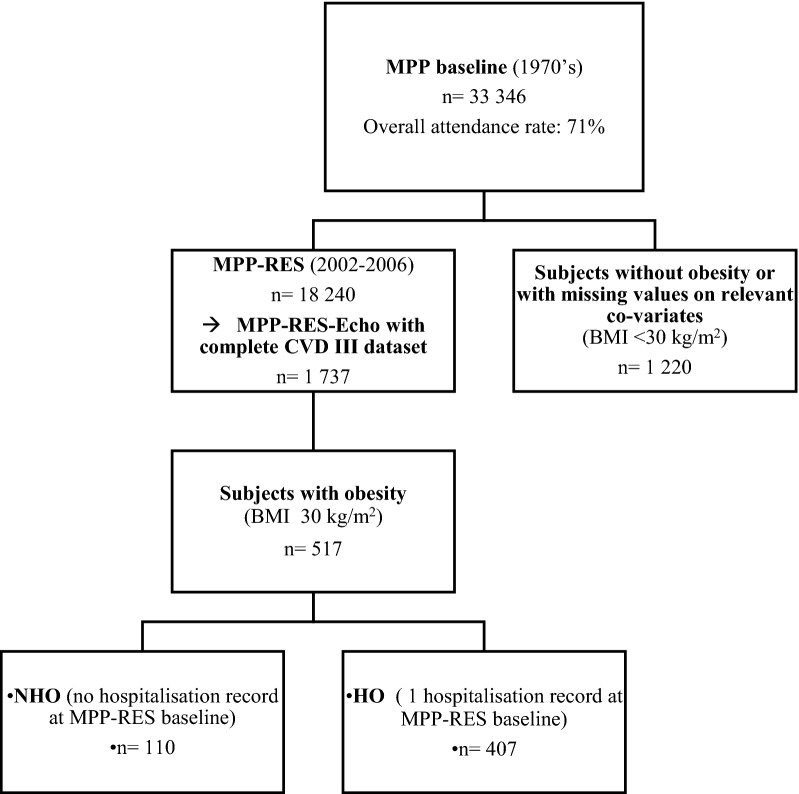
Ninety-two proteins associated with CVD were analyzed in 517 (mean age 67 ± 6 years; 33.7% women) individuals with obesity (BMI ≥30 kg/m) from the Malmö Preventive Project cohort, using a proximity extension array technique from the Olink CVD III panel. Individuals with at least one recorded hospitalization for somatic disease prior to study baseline were defined as HO phenotypes. Associations between proteins and HO (n = 407) versus non-hospitalized subjects with obesity (NHO, n = 110), were analyzed using multivariable binary logistic regression, adjusted for traditional risk factors.
Of 92 analyzed unadjusted associations between biomarkers and HO, increased levels of two proteins were significant at a false discovery rate < 0.05: Galectin-4 (Gal-4) and insulin-like growth factor-binding protein 1 (IGFBP-1). When these two proteins were included in logistic regression analyses adjusted for age and sex, Gal-4 remained significant. Gal-4 was independently associated with the HO phenotype in multivariable logistic regression analysis (OR 1.72; CI95% 1.16-2.54). Post-hoc analysis revealed that this association was only present in the subpopulation with diabetes (OR 2.26; CI95% 1.25-4.07). However, an interaction analysis was performed, showing no significant interaction between Gal-4 and prevalent diabetes (p = 0.16).
In middle-aged and older individuals with obesity, increased Gal-4 levels were associated with a higher probability of HO. This association was only significant in subjects with diabetes only, further implying a role for Gal-4 in diabetes and its complications.
肥胖与心血管疾病(CVD)的发生发展密切相关。然而,肥胖在 CVD 风险中的异质性仍知之甚少。我们旨在探索新的 CVD 生物标志物及其与假定不健康肥胖的可能关联,定义为因肥胖住院的患者(HO)。
使用 Olink CVD III 面板的邻近延伸阵列技术,在来自马尔默预防项目队列的 517 名(平均年龄 67±6 岁;33.7%为女性)肥胖患者(BMI≥30 kg/m)中分析了 92 种与 CVD 相关的蛋白。在研究基线之前至少有一次因躯体疾病住院记录的个体被定义为 HO 表型。使用多变量二项逻辑回归分析,调整了传统危险因素,分析了蛋白与 HO(n=407)与非肥胖住院患者(NHO,n=110)之间的关系。
在未调整的生物标志物与 HO 之间的 92 种关联中,有两种蛋白的水平升高具有统计学意义(错误发现率<0.05):半乳糖凝集素-4(Gal-4)和胰岛素样生长因子结合蛋白 1(IGFBP-1)。当将这两种蛋白纳入调整年龄和性别的逻辑回归分析中时,Gal-4 仍然具有统计学意义。Gal-4 与多变量逻辑回归分析中的 HO 表型独立相关(OR 1.72;95%CI95% 1.16-2.54)。事后分析显示,这种关联仅存在于糖尿病亚组中(OR 2.26;95%CI95% 1.25-4.07)。然而,进行了交互分析,结果显示 Gal-4 与现患糖尿病之间无显著交互作用(p=0.16)。
在中年和老年肥胖患者中,Gal-4 水平升高与 HO 的可能性增加相关。这种关联仅在糖尿病患者中具有统计学意义,进一步表明 Gal-4 在糖尿病及其并发症中发挥作用。