Department of Oncology, Aarhus University Hospital, Palle Juul-Jensens Boulevard 99, 8200, Aarhus N, Denmark.
Department of Cardiology, Aarhus University Hospital, 8200, Aarhus N, Denmark.
Lipids Health Dis. 2022 Jul 2;21(1):56. doi: 10.1186/s12944-022-01666-2.
Heterozygous familial hypercholesterolemia (HeFH) due to low-density lipoprotein receptor (LDLR) mutations predisposes patients to highly elevated levels of cholesterol, and patients are at increased risk of adverse cardiovascular events and other morbidities. Whether the LDLR mutation and high cholesterol levels affect the risk of cancer remains unknown. The purpose of the present study was to assess the long-term cancer risk in HeFH relatives.
Study participants were identified by cascade screening during 1992-1994. A comparison cohort was matched 10:1 to the relatives from the Danish general population based on birth year, gender and address. All participants were followed until a cancer diagnosis, migration, death, or end of follow-up as of December 31, 2019. The primary endpoint was any incident cancer diagnosis.
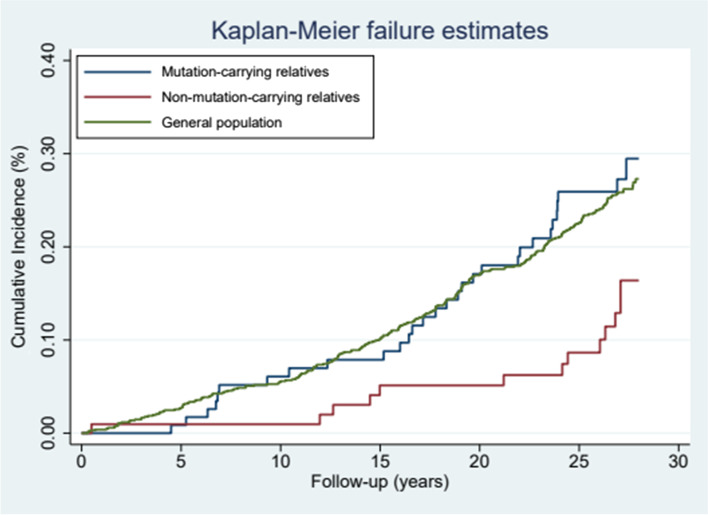
In total, we included 221 relatives with a median age of 37 years (interquartile range: 27-53 years). A total of 117 (53%) of the relatives carried a LDLR gene mutation. The crude hazard ratio of our primary endpoint did not reveal any differences in cancer incidence in mutation-carrying relatives compared with the general population cohort (1.18; 95% CI, 0.81-1.71). Nonmutation-carrying relatives however had a lower cancer incidence than the general population (0.45: 95% CI, 0.26-0.80). Thus, the risk among mutation-carrying HeFH relatives compared with nonmutation-carrying HeFH relatives was increased (HR: 2.39; 95% CI, 1.24-4.61).
In Denmark, LDLR mutation-carrying HeFH relatives did not have a different cancer risk than the general population. In contrast, nonmutation-carrying relatives had a lower risk of cancer.
由于低密度脂蛋白受体 (LDLR) 突变导致的杂合家族性高胆固醇血症 (HeFH) 使患者的胆固醇水平显著升高,且患者发生不良心血管事件和其他并发症的风险增加。LDLR 突变和高胆固醇水平是否会影响癌症风险尚不清楚。本研究旨在评估 HeFH 亲属的长期癌症风险。
研究参与者通过 1992-1994 年的级联筛查确定。根据出生年份、性别和地址,与丹麦一般人群的亲属进行 10:1 配对,以确定对照队列。所有参与者均随访至癌症诊断、移民、死亡或截至 2019 年 12 月 31 日的随访结束。主要终点为任何癌症诊断。
共纳入 221 名年龄中位数为 37 岁(四分位间距:27-53 岁)的亲属。共有 117 名(53%)亲属携带 LDLR 基因突变。携带突变的亲属与一般人群队列相比,原发性终点的癌症发病率无差异(HR:1.18;95%CI,0.81-1.71)。然而,未携带突变的亲属的癌症发病率低于一般人群(HR:0.45;95%CI,0.26-0.80)。因此,携带突变的 HeFH 亲属与未携带突变的 HeFH 亲属相比,风险增加(HR:2.39;95%CI,1.24-4.61)。
在丹麦,携带 LDLR 突变的 HeFH 亲属的癌症风险与一般人群无差异。相比之下,未携带突变的亲属癌症风险较低。