Tarry-Adkins Jane L, Robinson India G, Reynolds Rebecca M, Aye Irving L M H, Charnock-Jones D Stephen, Jenkins Benjamin, Koulmann Albert, Ozanne Susan E, Aiken Catherine E
Department of Obstetrics and Gynaecology, The Rosie Hospital and NIHR Cambridge Biomedical Research Centre, University of Cambridge, Cambridge, United Kingdom.
Queen's Medical Research Institute, Centre for Cardiovascular Science, University of Edinburgh, Edinburgh, United Kingdom.
Front Cell Dev Biol. 2022 Jun 17;10:935403. doi: 10.3389/fcell.2022.935403. eCollection 2022.
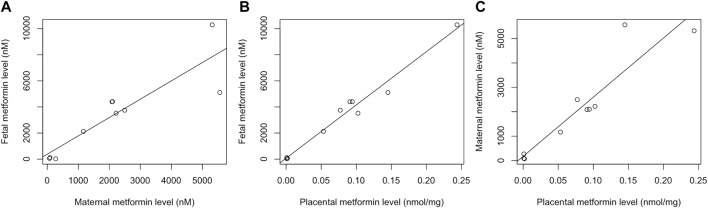
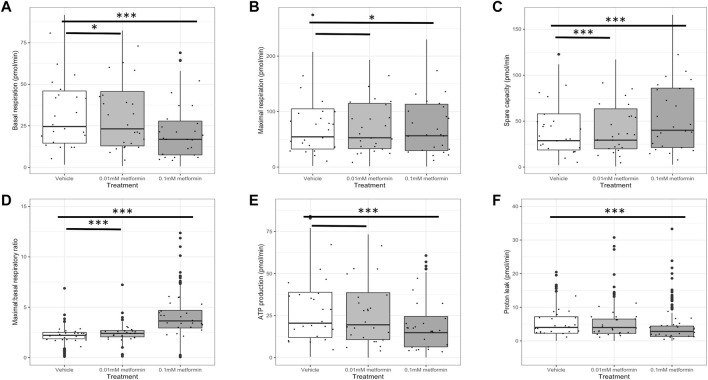
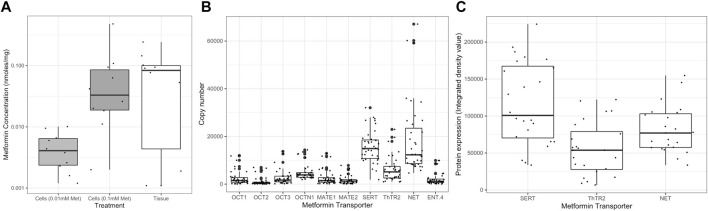
Metformin is increasingly prescribed in pregnancy, with beneficial maternal effects. However, it is not known how metformin-treatment impacts metabolism and energy production in the developing feto-placental unit. We assessed the human placental response to metformin using both and treated samples. trophoblasts were derived from placentas collected from non-laboured Caesarean deliveries at term, then treated with metformin (0.01 mM, 0.1 mM or vehicle). Metformin-concentrations were measured using liquid-chromatography mass-spectrometry. Oxygen consumption in cultured-trophoblasts was measured using a Seahorse-XF Mito Stress Test. Markers of oxidative-stress were assayed using qRT-PCR. Metformin-transporter mRNA and protein-levels were determined by quantitative RT-PCR and Western-blotting respectively. Metformin concentrations were also measured in sample trios (maternal plasma/fetal plasma/placental tissue) from pregnancies exposed to metformin on clinical-grounds. Maternal and fetal metformin concentrations were highly correlated over a range of concentrations (R = 0.76, < 0.001; average fetal:maternal ratio 1.5; range 0.8-2.1). Basal respiration in trophoblasts was reduced by metformin treatment (0.01 mM metformin; < 0.05, 0.1 mM metformin; < 0.001). Mitochondrial-dependent ATP production and proton leak were reduced after treatment with metformin ( < 0.001). Oxidative stress markers were significantly reduced in primary-trophoblast-cultures following treatment with metformin. There is a close linear relationship between placental, fetal, and maternal metformin concentrations. Primary-trophoblast cultures exposed to clinically-relevant metformin concentrations have reduced mitochondrial-respiration, mitochondrial-dependent ATP-production, and reduced markers of oxidative-stress. Given the crucial role of placental energy-production in supporting fetal growth and well-being during pregnancy, the implications of these findings are concerning for intrauterine fetal growth and longer-term metabolic programming in metformin-exposed pregnancies.
二甲双胍在孕期的处方量日益增加,对母体有有益作用。然而,尚不清楚二甲双胍治疗如何影响发育中的胎儿 - 胎盘单位的代谢和能量产生。我们使用二甲双胍处理和未处理的样本评估了人胎盘对二甲双胍的反应。滋养层细胞取自足月非临产剖宫产的胎盘,然后用二甲双胍(0.01 mM、0.1 mM或赋形剂)处理。使用液相色谱 - 质谱法测量二甲双胍浓度。使用海马XF线粒体应激试验测量培养的滋养层细胞中的氧气消耗。使用qRT - PCR检测氧化应激标志物。分别通过定量RT - PCR和蛋白质印迹法测定二甲双胍转运蛋白的mRNA和蛋白质水平。还对因临床原因接触二甲双胍的孕妇的样本三联体(母体血浆/胎儿血浆/胎盘组织)中的二甲双胍浓度进行了测量。在一系列浓度范围内,母体和胎儿的二甲双胍浓度高度相关(R = 0.76,P < 0.001;胎儿与母体的平均比值为1.5;范围为0.8 - 2.1)。二甲双胍处理可降低滋养层细胞的基础呼吸(0.01 mM二甲双胍;P < 0.05,0.1 mM二甲双胍;P < 0.001)。用二甲双胍处理后,线粒体依赖性ATP产生和质子泄漏减少(P < 0.001)。二甲双胍处理后,原代滋养层细胞培养物中的氧化应激标志物显著降低。胎盘、胎儿和母体的二甲双胍浓度之间存在密切的线性关系。暴露于临床相关二甲双胍浓度的原代滋养层细胞培养物的线粒体呼吸、线粒体依赖性ATP产生降低,氧化应激标志物减少。鉴于胎盘能量产生在孕期支持胎儿生长和健康方面的关键作用,这些发现对二甲双胍暴露妊娠中的宫内胎儿生长和长期代谢编程具有重要意义。