Faculty of Mathematics, Natural Sciences and Information Technologies, University of Primorska, Koper, Slovenia.
Department of Family Medicine, Faculty of Medicine, University of Ljubljana, Ljubljana, Slovenia.
Cancer Med. 2023 Jan;12(2):1685-1708. doi: 10.1002/cam4.5003. Epub 2022 Jul 4.
In recent years, authors have repeatedly reported on the significance of social support in cancer survival. Although overall the studies appear to be convincing, little is known about which types of social support promote better survival rates, and which subgroups of cancer patients are more susceptible to the benefits of it. The aim of this study was to identify, organize, and examine studies reporting on the significance of social support in cancer survival.
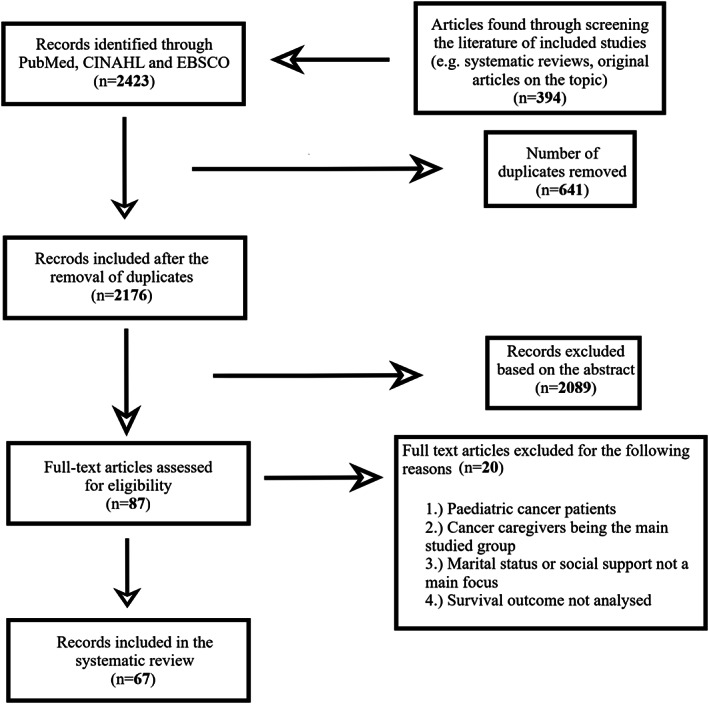
The PubMed, CINAHL and EBSCO databases were searched using the keywords social support/marital status, cancer, and survival/mortality. Where possible we used a meta-analytical approach, specifically a random effect model, in order to combine the results of the hazard ratios in studies from which this information could be obtained. When interpreting clinical relevance, we used the number needed to treat (NNT).
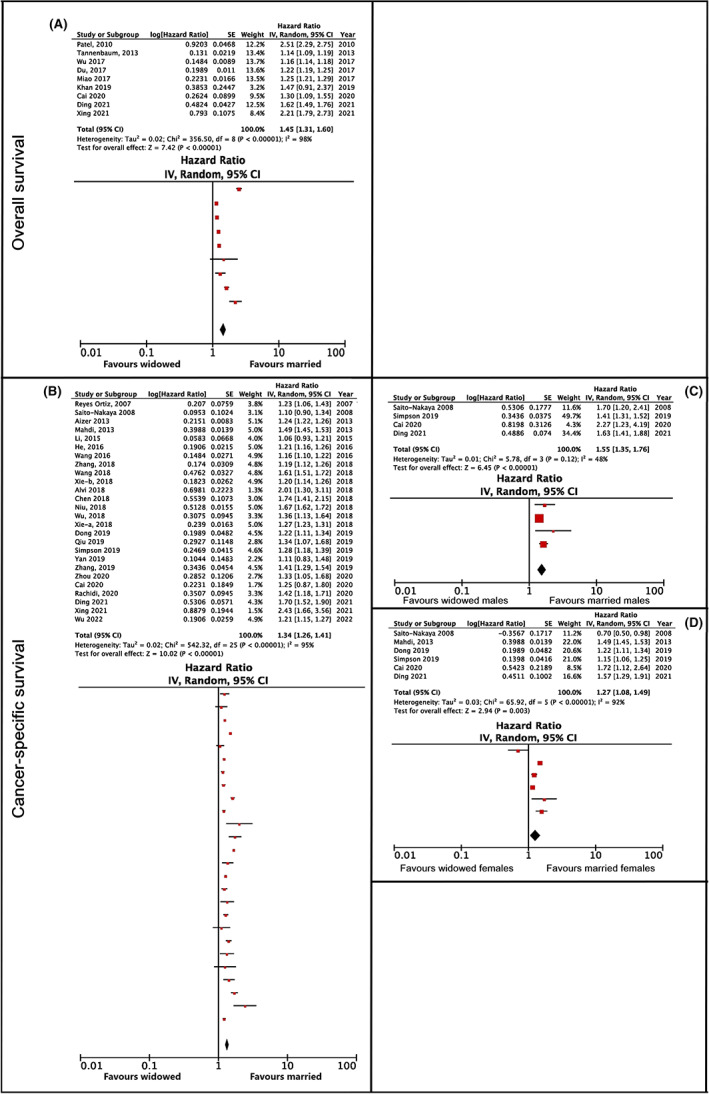
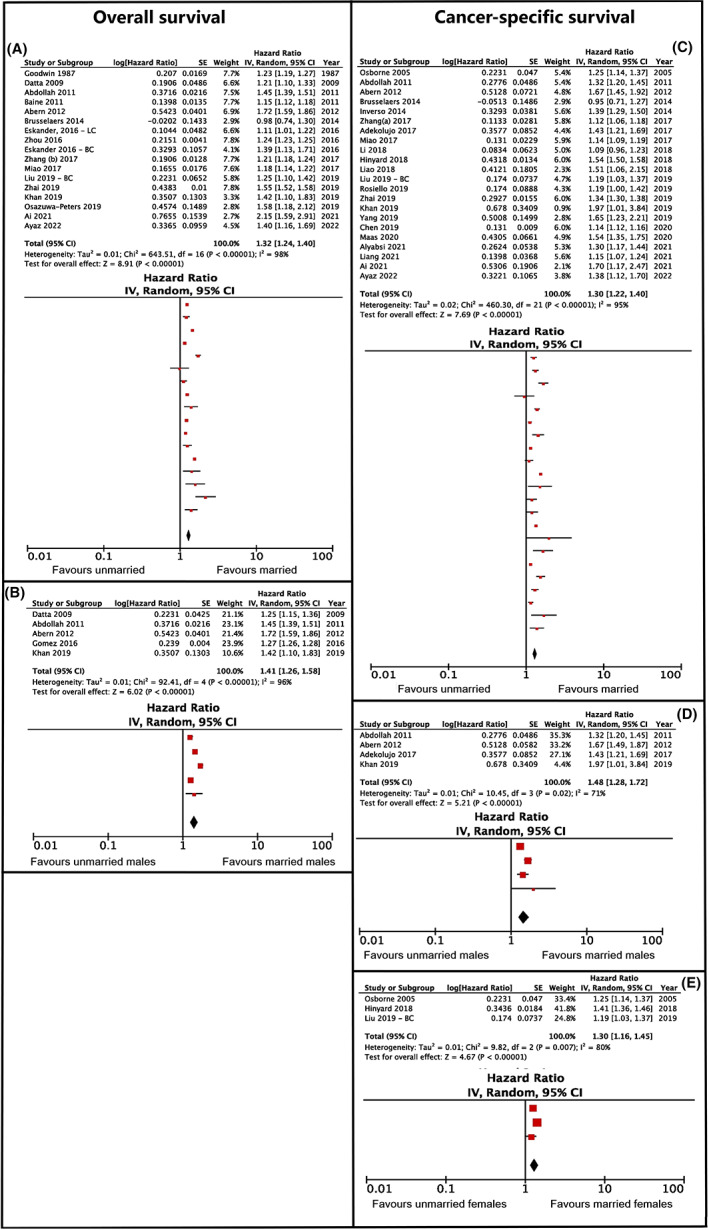
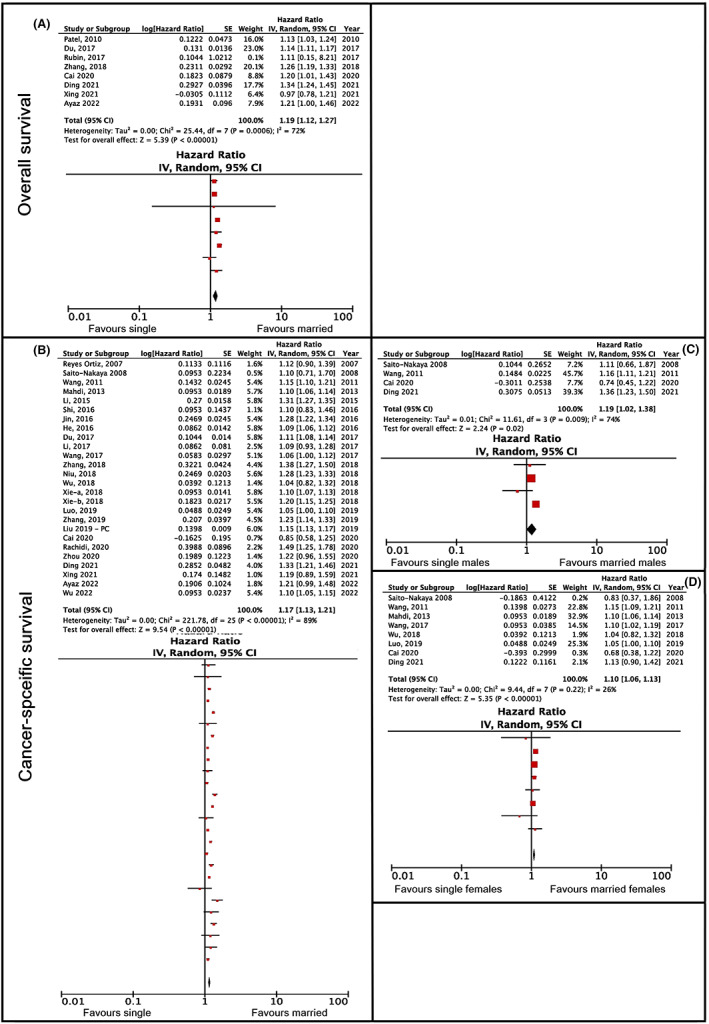
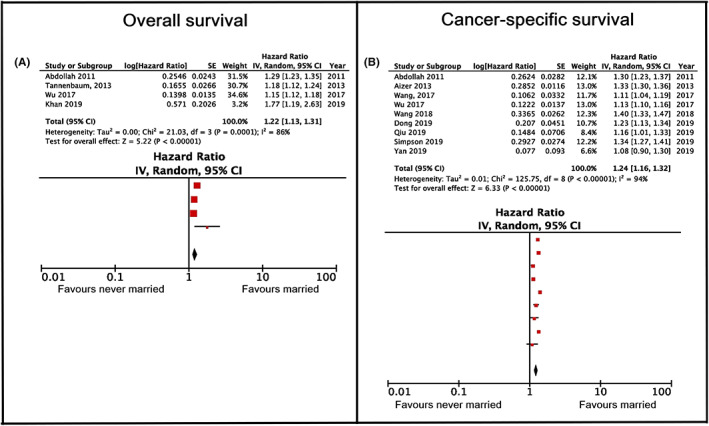
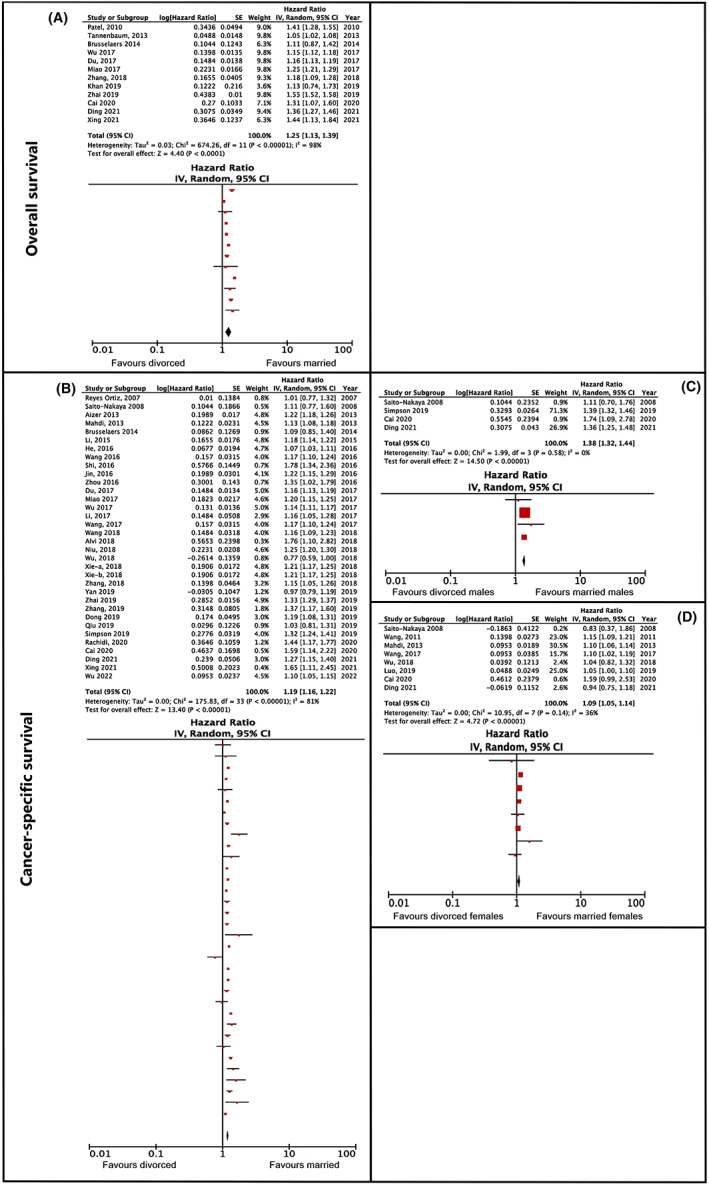
Better survival was observed in married patients when compared to unmarried (single, never-married, divorced/separated, and widowed) in overall and cancer-specific survival. Gender group differences showed that the association was statistically significant only in cancer-specific survival when comparing divorced/separated male and female cancer patients (p < 0.001), thus confirming results from the previous meta-analysis.
Being unmarried is associated with significantly worse overall and cancer-specific survival. The most vulnerable group found in our study were divorced/separated men. The results of this review can motivate physicians, oncologists, and other healthcare professionals to be aware of the importance of patients' social support, especially in the identified sub-group.
近年来,作者反复报告社会支持在癌症生存中的意义。尽管总体而言,这些研究似乎令人信服,但对于哪些类型的社会支持能提高生存率,以及哪些癌症患者亚组更容易受益,知之甚少。本研究旨在确定、组织和检查报告社会支持对癌症生存意义的研究。
使用关键词“社会支持/婚姻状况、癌症和生存/死亡率”,在 PubMed、CINAHL 和 EBSCO 数据库中进行搜索。在可能的情况下,我们使用了一种荟萃分析方法,特别是随机效应模型,以便合并可以从中获得危险比信息的研究结果。在解释临床相关性时,我们使用了需要治疗的人数(NNT)。
与未婚(单身、未婚、离婚/分居和丧偶)相比,已婚患者的总生存率和癌症特异性生存率更高。性别组差异表明,只有在比较离婚/分居的男性和女性癌症患者的癌症特异性生存率时,这种关联才具有统计学意义(p<0.001),从而证实了之前荟萃分析的结果。
未婚与总生存率和癌症特异性生存率显著降低相关。在我们的研究中,最脆弱的群体是离婚/分居的男性。本综述的结果可以促使医生、肿瘤学家和其他医疗保健专业人员意识到患者社会支持的重要性,特别是在确定的亚组中。