Department of Medicine (Anand, Bowdish, Punthakee, Schulze, Williams), McMaster University; Population Health Research Institute (Anand, Bangdiwala, de Souza, Desai, F. Khan, Z. Khan, Limbachia, Punthakee), Hamilton, Ont.; Department of Biochemistry, Microbiology and Immunology (Arnold, Langlois, Nakka, Pelchat), University of Ottawa, Ottawa, Ont.; Department of Health Research Methods, Evidence and Impact (Bangdiwala, de Souza, Kandasamy, Loeb, Manoharan), McMaster University, Hamilton, Ont.; Public Health Ontario (Bolotin); Dalla Lana School of Public Health (Bolotin, Loh), University of Toronto, Toronto, Ont.; Department of Pediatrics (Chanchlani, Wahi), McMaster University, Hamilton, Ont.; Faculty of Health Sciences (Lear), Simon Fraser University, Vancouver, BC; Department of Pathology and Molecular Medicine (Loeb), McMaster University, Hamilton, Ont.
CMAJ Open. 2022 Jul 5;10(3):E599-E609. doi: 10.9778/cmajo.20220031. Print 2022 Jul-Sep.
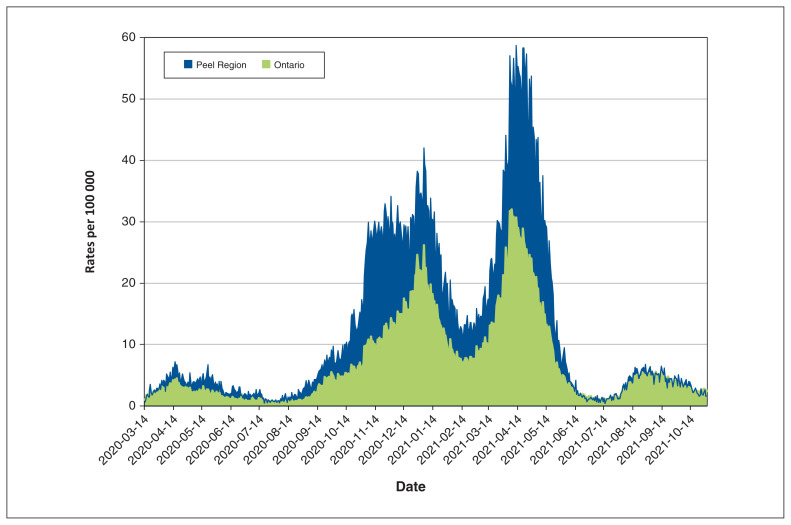
Early in the COVID-19 pandemic, the South Asian community in the Greater Toronto Area (GTA) was identified as having risk factors for exposure and specific barriers to accessing testing and reliable health information, rendering them particularly vulnerable to SARS-CoV-2 infection. We sought to investigate the burden of SARS-CoV-2 infection among South Asian people in the GTA, and to characterize the demographic characteristics, risk perceptions and trusted sources of health information in this group.
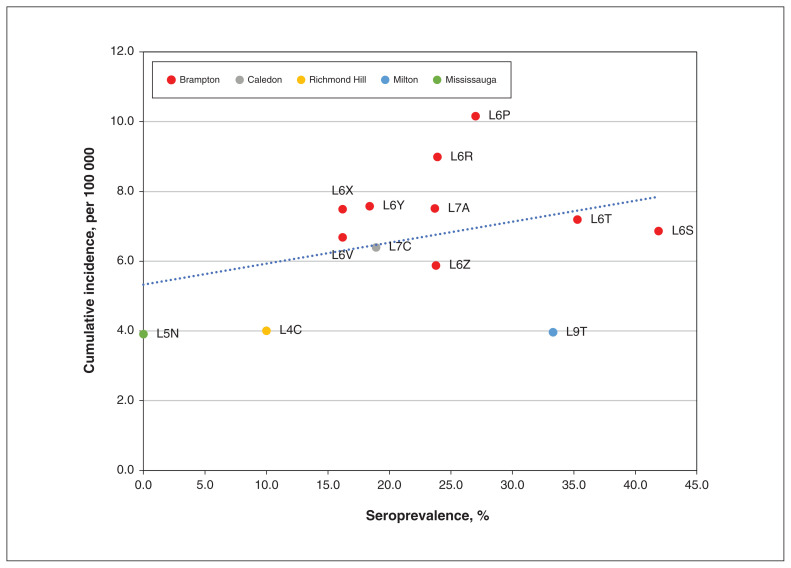
We conducted a cross-sectional analysis from the baseline assessment of participants in a prospective cohort study. Participants from the GTA were enrolled from Apr. 14 to July 28, 2021. Seropositivity for antispike and antinucleocapsid antibodies was determined from dried blood spots, and estimates of seropositivity were age and sex standardized to the South Asian population in Ontario. Demographic characteristics, risk perceptions and sources of COVID-19 information were collected via questionnaire and reported descriptively.
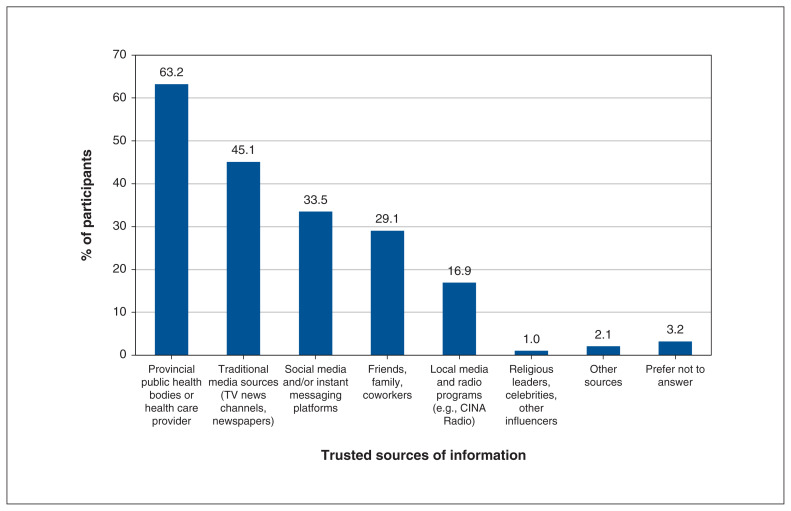
Among the 916 South Asian participants enrolled (mean age 41 yr), the age- and sex-standardized seropositivity was 23.6% (95% confidence interval 20.8%-26.4%). Of the 693 respondents to the questionnaire, 228 (32.9%) identified as essential workers, and 125 (19.1%) reported living in a multigenerational household. A total of 288 (49.4%) perceived that they were at high COVID-19 risk owing to their geographic location, and 149 (34.3%) owing to their type of employment. The top 3 most trusted sources of information related to COVID-19 included health care providers and public health, traditional media sources and social media.
By the third wave of the COVID-19 pandemic, about one-quarter of a sample of South Asian individuals in Ontario had serologic evidence of prior SARS-CoV-2 infection. Insight into factors that put certain populations at risk can help future pandemic planning and disease control efforts.
在 COVID-19 大流行早期,大多伦多地区(GTA)的南亚社区被认为具有接触风险因素和获得检测和可靠健康信息的特定障碍,使他们特别容易感染 SARS-CoV-2。我们试图调查 GTA 南亚人群中 SARS-CoV-2 感染的负担,并描述该人群的人口统计学特征、风险认知和信任的健康信息来源。
我们对一项前瞻性队列研究的基线参与者进行了横断面分析。2021 年 4 月 14 日至 7 月 28 日,从 GTA 招募参与者。通过干血斑测定抗刺突和抗核衣壳抗体的血清阳性率,并根据安大略省南亚人口对血清阳性率进行年龄和性别标准化。通过问卷收集人口统计学特征、风险认知和 COVID-19 信息,并进行描述性报告。
在纳入的 916 名南亚参与者中(平均年龄 41 岁),年龄和性别标准化的血清阳性率为 23.6%(95%置信区间 20.8%-26.4%)。在回答问卷的 693 名受访者中,228 名(32.9%)认为自己是基本工人,125 名(19.1%)报告居住在多代同堂的家庭中。共有 288 名(49.4%)认为由于地理位置而处于高 COVID-19 风险,149 名(34.3%)认为由于就业类型而处于高 COVID-19 风险。与 COVID-19 相关的前 3 个最受信任的信息来源包括医疗保健提供者和公共卫生部门、传统媒体来源和社交媒体。
在 COVID-19 大流行的第三波期间,安大略省南亚人群中有大约四分之一的样本具有 SARS-CoV-2 既往感染的血清学证据。了解使某些人群处于风险之中的因素有助于未来的大流行规划和疾病控制工作。