Deanery of Biomedical Sciences, University of Edinburgh, Edinburgh EH8 9XD, UK.
Biol Open. 2022 Jul 15;11(7). doi: 10.1242/bio.059459. Epub 2022 Jul 6.
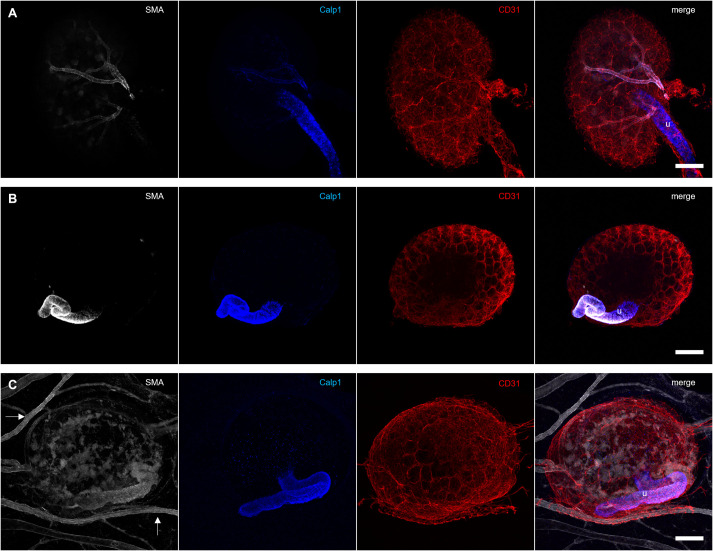
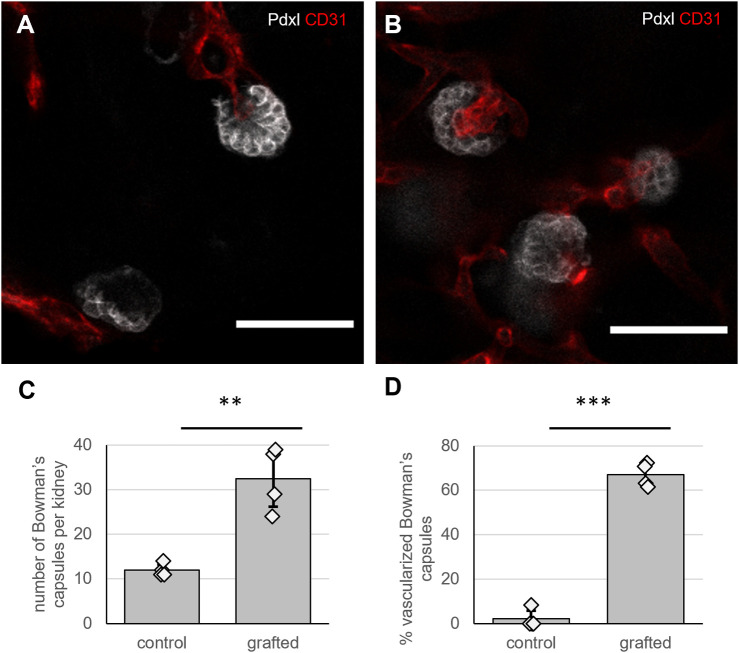
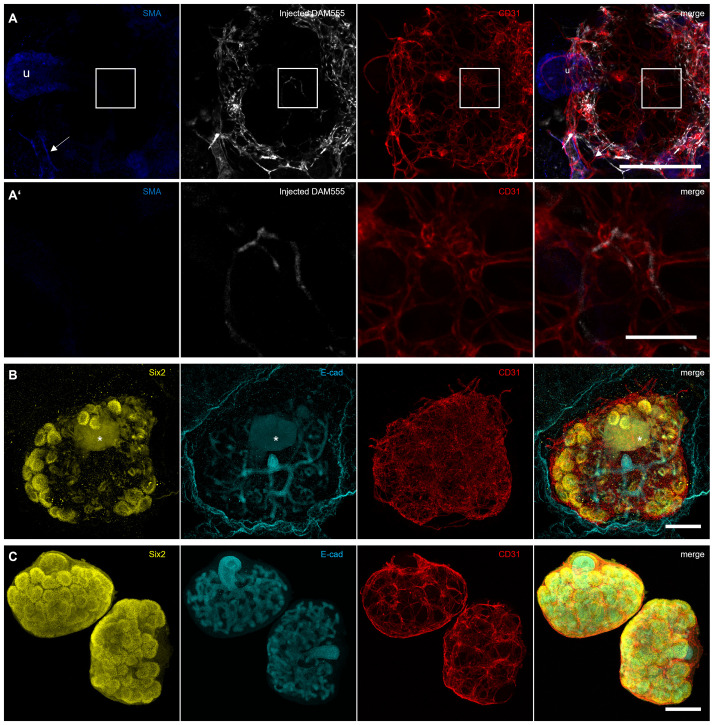
Kidney explant cultures are an important tool to gain insights into developmental processes, insights that can be used to develop strategies for engineering kidneys from stem cells. However, explants are not connected to a perfused vascular system. This limits their survival and limits physiological studies, for example of blood filtration, the main function of the kidney. Previous studies have shown that grafting kidneys onto avian chorioallantoic membrane (CAM) can establish perfusion and enable glomerular vascularization, but the realism and maturity of the resultant vasculature has not been examined. Here, we show that vasculature of kidney explants grafted onto CAM is very different from natural kidney vasculature, showing excessive growth of endothelial cells, absence of a hierarchical arterio-venous network and no vascular smooth muscle cell recruitment. The model therefore has serious limits.
肾组织外植体培养是深入了解发育过程的重要工具,这些知识可用于开发从干细胞工程肾脏的策略。然而,外植体与灌注的脉管系统没有连接。这限制了它们的存活并限制了生理研究,例如肾脏的主要功能——血液过滤。以前的研究表明,将肾脏移植到禽类绒毛尿囊膜(CAM)上可以建立灌注并使肾小球血管化,但尚未检查所得脉管系统的现实性和成熟度。在这里,我们表明,移植到 CAM 上的肾外植体的脉管系统与天然肾脏脉管系统非常不同,表现出内皮细胞的过度生长、不存在分层的动静脉网络以及没有血管平滑肌细胞募集。因此,该模型具有严重的局限性。