Donated Laboratory for Synthetic Biology, Graduate School of Medicine, Osaka Metropolitan University, Osaka 545-8585, Japan.
BioIntegrence Co., Graduate School of Medicine, Osaka Metropolitan University, Osaka 545-8585, Japan.
J Biochem. 2022 Sep 30;172(4):205-216. doi: 10.1093/jb/mvac054.
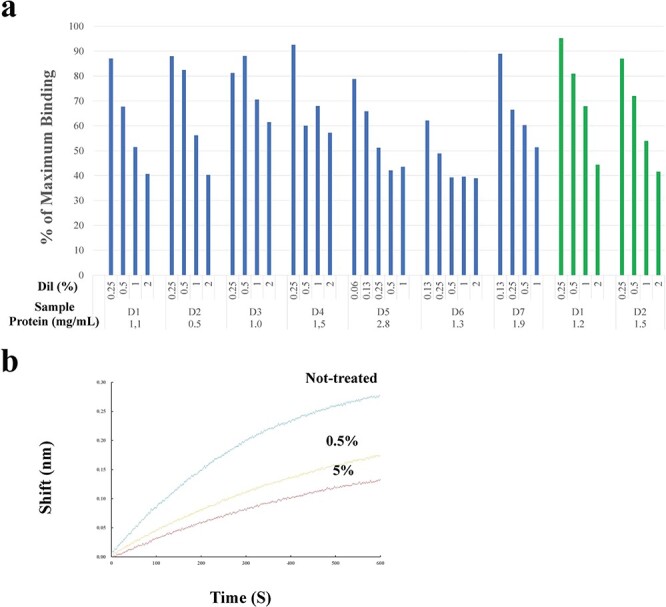
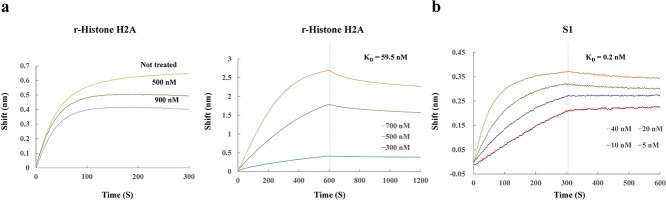
Saliva contributes to the innate immune system, which suggests that it can prevent SARS-CoV-2 entry. We studied the ability of healthy salivary proteins to bind to angiotensin-converting enzyme 2 (ACE2) using biolayer interferometry and pull-down assays. Their effects on binding between the receptor-binding domain of the SARS-CoV-2 spike protein S1 (S1) and ACE2 were determined using an enzyme-linked immunosorbent assay. Saliva bound to ACE2 and disrupted the binding of S1 to ACE2 and four ACE2-binding salivary proteins were identified, including cationic histone H2A and neutrophil elastase, which inhibited the S1-ACE2 interaction. Calf thymus histone (ct-histone) also inhibited binding as effectively as histone H2A. The results of a cell-based infection assay indicated that ct-histone suppressed SARS-CoV-2 pseudoviral invasion into ACE2-expressing host cells. Manufactured polypeptides, such as ε-poly-L-lysine, also disrupted S1-ACE2 binding, indicating the importance of the cationic properties of salivary proteins in ACE2 binding. Overall, we demonstrated that positively charged salivary proteins are a barrier against SARS-CoV-2 entry by cloaking the negatively charged surface of ACE2 and provided a view that the cationic polypeptides represent a preventative and therapeutic treatment against COVID-19.
唾液有助于先天免疫系统,这表明它可以阻止 SARS-CoV-2 的进入。我们使用生物层干涉法和下拉实验研究了健康唾液蛋白与血管紧张素转换酶 2(ACE2)结合的能力。使用酶联免疫吸附试验测定它们对 SARS-CoV-2 刺突蛋白 S1(S1)受体结合域与 ACE2 之间结合的影响。唾液与 ACE2 结合,破坏了 S1 与 ACE2 的结合,鉴定出四种与 ACE2 结合的唾液蛋白,包括阳离子组蛋白 H2A 和中性粒细胞弹性蛋白酶,它们抑制了 S1-ACE2 的相互作用。小牛胸腺组蛋白(ct-组蛋白)也像组蛋白 H2A 一样有效地抑制结合。基于细胞的感染实验结果表明,ct-组蛋白抑制了 SARS-CoV-2 假病毒进入表达 ACE2 的宿主细胞。合成多肽,如 ε-聚-L-赖氨酸,也破坏了 S1-ACE2 结合,表明唾液蛋白的正电荷性质在 ACE2 结合中的重要性。总的来说,我们证明了带正电荷的唾液蛋白通过掩盖 ACE2 的负电荷表面成为阻止 SARS-CoV-2 进入的屏障,并提供了一种观点,即阳离子多肽是预防和治疗 COVID-19 的治疗方法。