Bahar Enas, Shamarina Daria, Sergerie Yan, Mukherjee Piyali
Modis C/O GSK, Avenue Fleming 20, 1300, Wavre, Belgium.
GSK, Avenue Fleming 20, 1300, Wavre, Belgium.
Infect Dis Ther. 2022 Oct;11(5):1821-1838. doi: 10.1007/s40121-022-00668-y. Epub 2022 Jul 6.
Following the introduction of pertussis vaccination during infancy, the age-related demographics of pertussis epidemiology have changed.
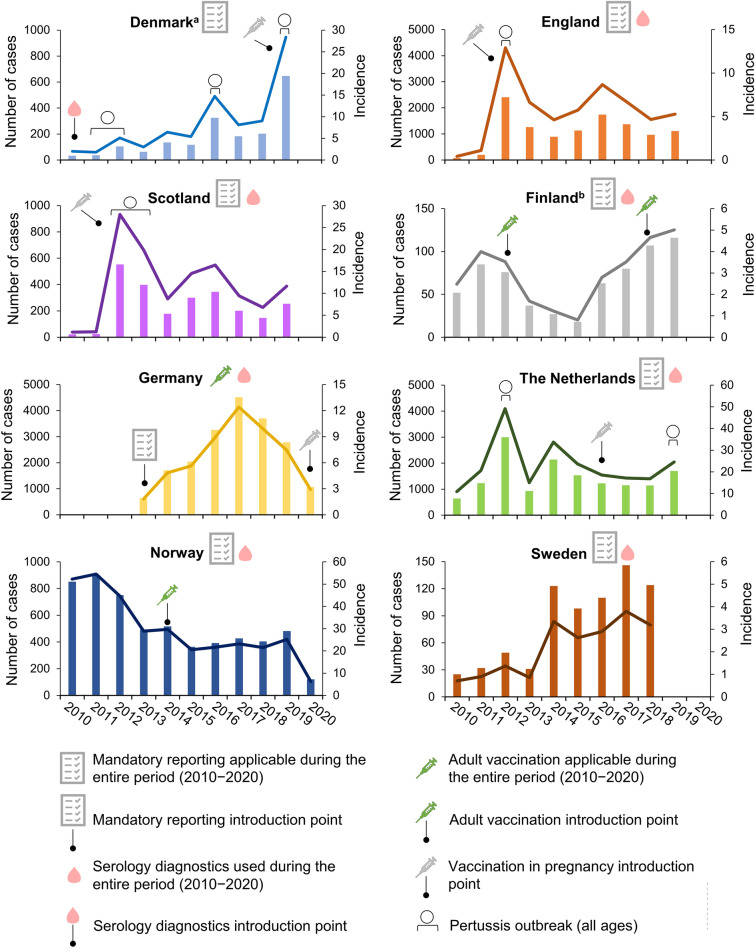
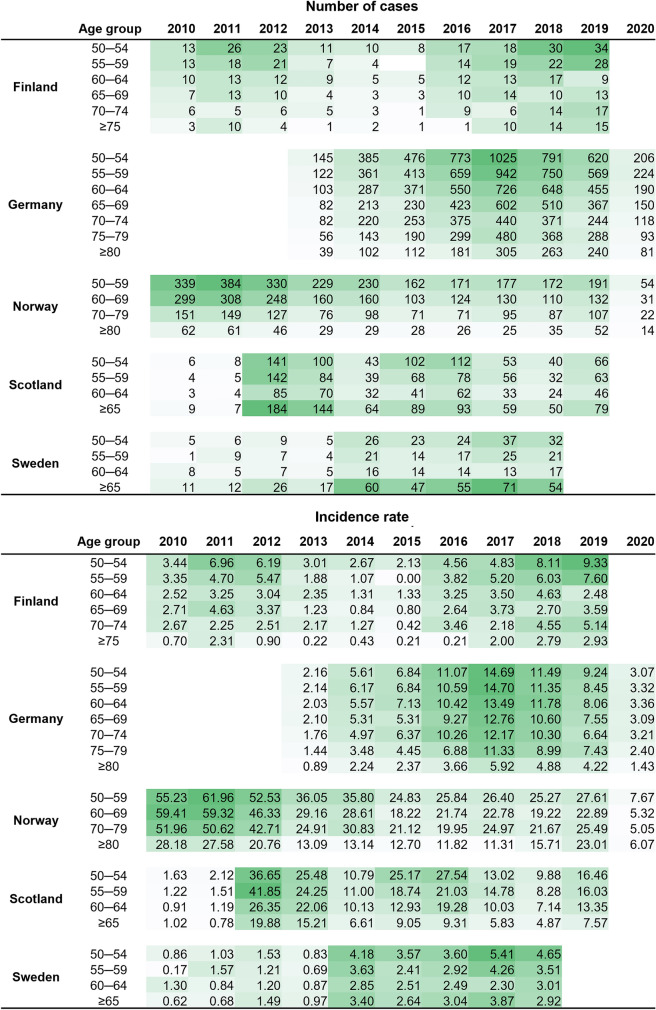
To better understand the pertussis burden (defined here as number of cases and/or incidence rate [IR]) among older adults (OA; at least 50 years of age) in Europe, we collected data on the reported number of cases and IR in this population in Denmark, England and Scotland, Finland, Germany, the Netherlands, Norway and Sweden from 2010 to 2020. Additionally, we collected contextual epidemiological information on surveillance systems, case definitions, laboratory diagnostics and vaccination approaches.
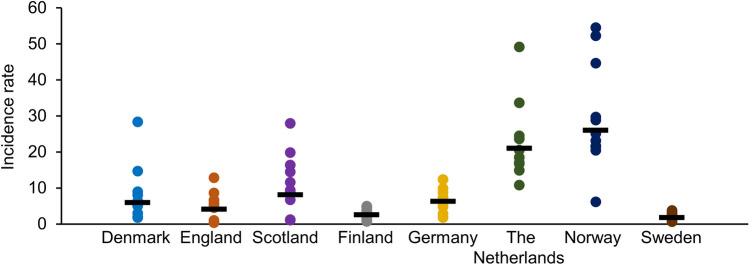
We observed large heterogeneity in the burden among OA between countries: annual IRs ranged from 0.4 (England, 2010) to 54.5 (Norway, 2011) per 100,000 population; 9% (Denmark, 2010) to 45% (England, 2017) of all reported cases occurred in OA. No clear impact of changes in contextual epidemiological information or common trends between countries could be observed, highlighting the need for standardised pertussis surveillance programmes across Europe. The epidemiological trends observed in OA were similar to those observed in 0-4-year-olds.
This analysis showed that B. pertussis continues to circulate among OA in Europe, suggesting that current vaccination strategies are insufficient to decrease the disease burden in all age groups. This may indicate that improved monitoring of pertussis in OA and booster vaccination throughout adulthood are necessary to control the total pertussis burden.
在婴儿期引入百日咳疫苗接种后,百日咳流行病学的年龄相关人口统计学特征发生了变化。
为了更好地了解欧洲老年人(OA;至少50岁)中的百日咳负担(在此定义为病例数和/或发病率[IR]),我们收集了2010年至2020年丹麦、英格兰和苏格兰、芬兰、德国、荷兰、挪威和瑞典该人群中报告的病例数和发病率的数据。此外,我们收集了关于监测系统、病例定义、实验室诊断和疫苗接种方法的背景流行病学信息。
我们观察到各国老年人的负担存在很大差异:每10万人口的年度发病率从0.4(英格兰,2010年)到54.5(挪威,2011年)不等;所有报告病例的9%(丹麦,2010年)至45%(英格兰,2017年)发生在老年人中。未观察到背景流行病学信息变化或各国之间的共同趋势有明显影响,这突出表明欧洲需要标准化的百日咳监测计划。在老年人中观察到的流行病学趋势与在0至4岁儿童中观察到的趋势相似。
该分析表明,百日咳杆菌在欧洲老年人中持续传播,这表明当前的疫苗接种策略不足以降低所有年龄组的疾病负担。这可能表明,加强对老年人百日咳的监测以及在整个成年期进行加强疫苗接种对于控制百日咳总负担是必要的。