Laboratory of Biology and Modelling of the Cell, Université de Lyon, Ecole Normale Supérieure de Lyon, CNRS, UMR5239, Université Claude Bernard Lyon 1, Lyon, France.
Azm Center for Research in Biotechnology and its Applications, LBA3B, EDST, Lebanese University, Tripoli, 1300, Lebanon.
BMC Biol. 2022 Jul 6;20(1):155. doi: 10.1186/s12915-022-01363-7.
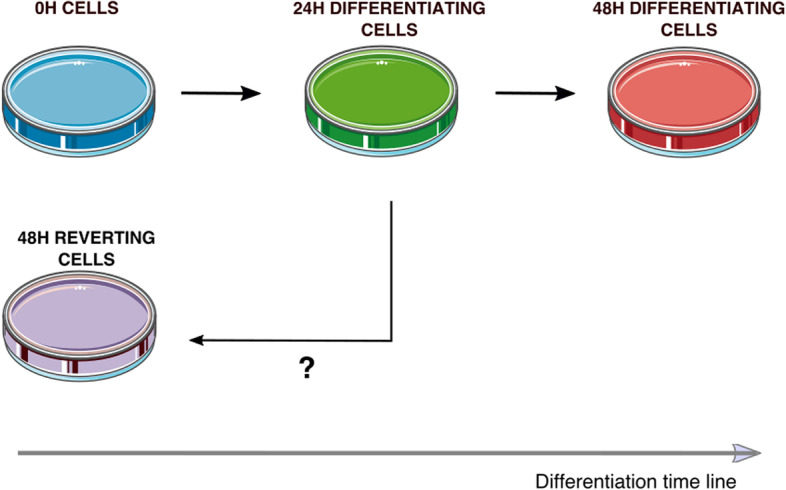
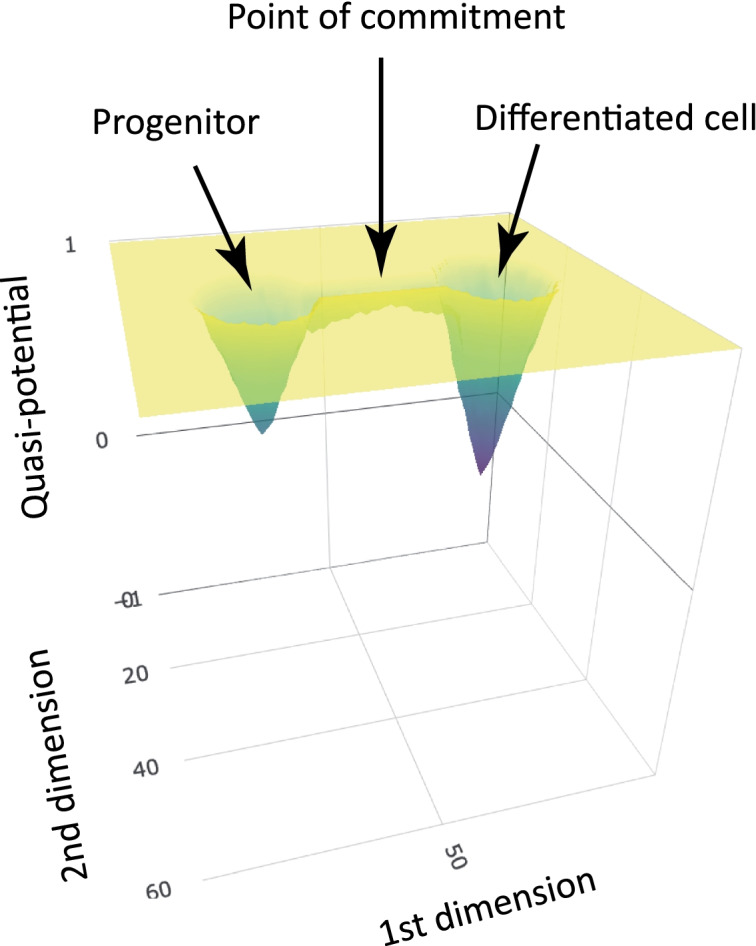
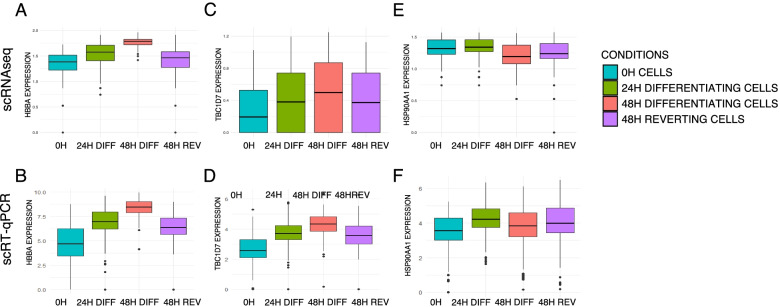
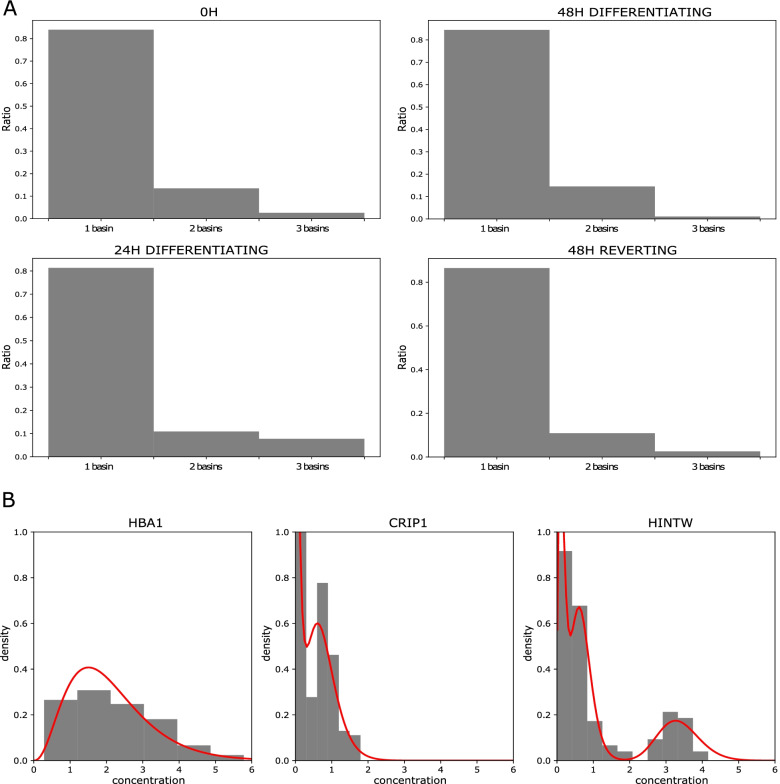
According to Waddington's epigenetic landscape concept, the differentiation process can be illustrated by a cell akin to a ball rolling down from the top of a hill (proliferation state) and crossing furrows before stopping in basins or "attractor states" to reach its stable differentiated state. However, it is now clear that some committed cells can retain a certain degree of plasticity and reacquire phenotypical characteristics of a more pluripotent cell state. In line with this dynamic model, we have previously shown that differentiating cells (chicken erythrocytic progenitors (T2EC)) retain for 24 h the ability to self-renew when transferred back in self-renewal conditions. Despite those intriguing and promising results, the underlying molecular state of those "reverting" cells remains unexplored. The aim of the present study was therefore to molecularly characterize the T2EC reversion process by combining advanced statistical tools to make the most of single-cell transcriptomic data. For this purpose, T2EC, initially maintained in a self-renewal medium (0H), were induced to differentiate for 24H (24H differentiating cells); then, a part of these cells was transferred back to the self-renewal medium (48H reverting cells) and the other part was maintained in the differentiation medium for another 24H (48H differentiating cells). For each time point, cell transcriptomes were generated using scRT-qPCR and scRNAseq.
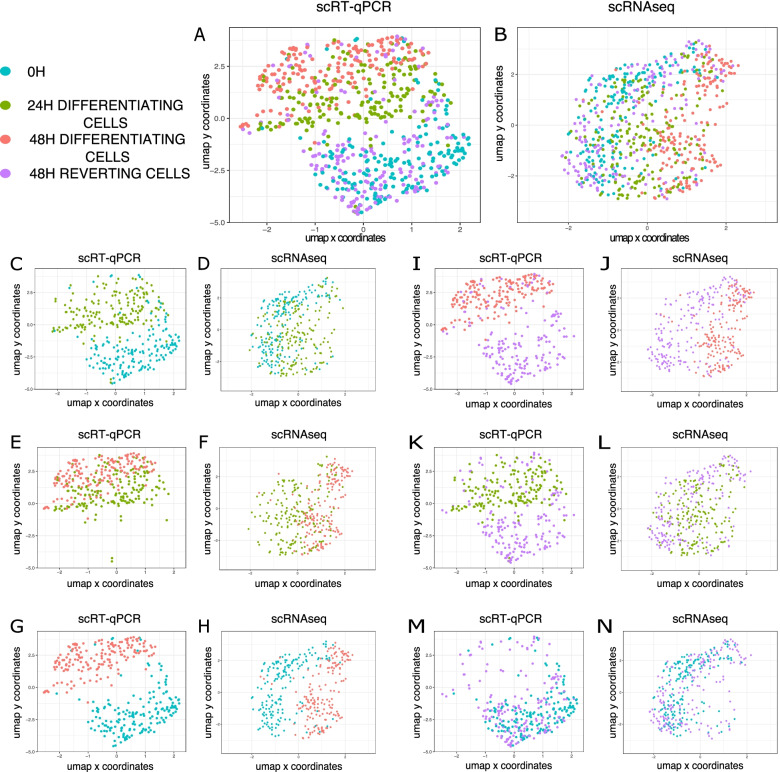
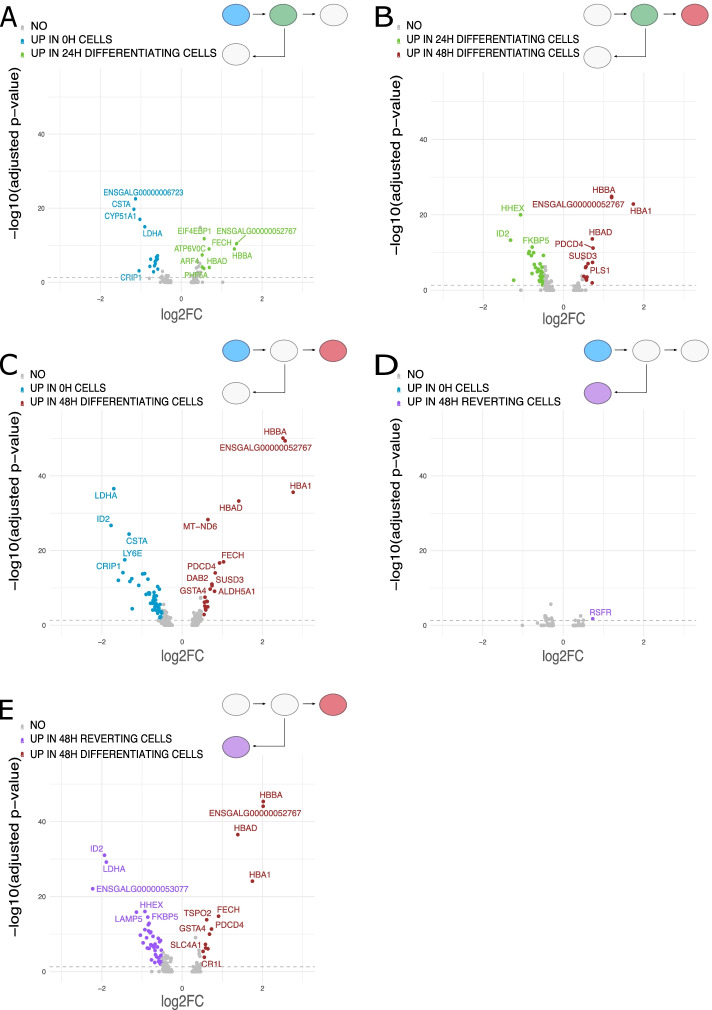
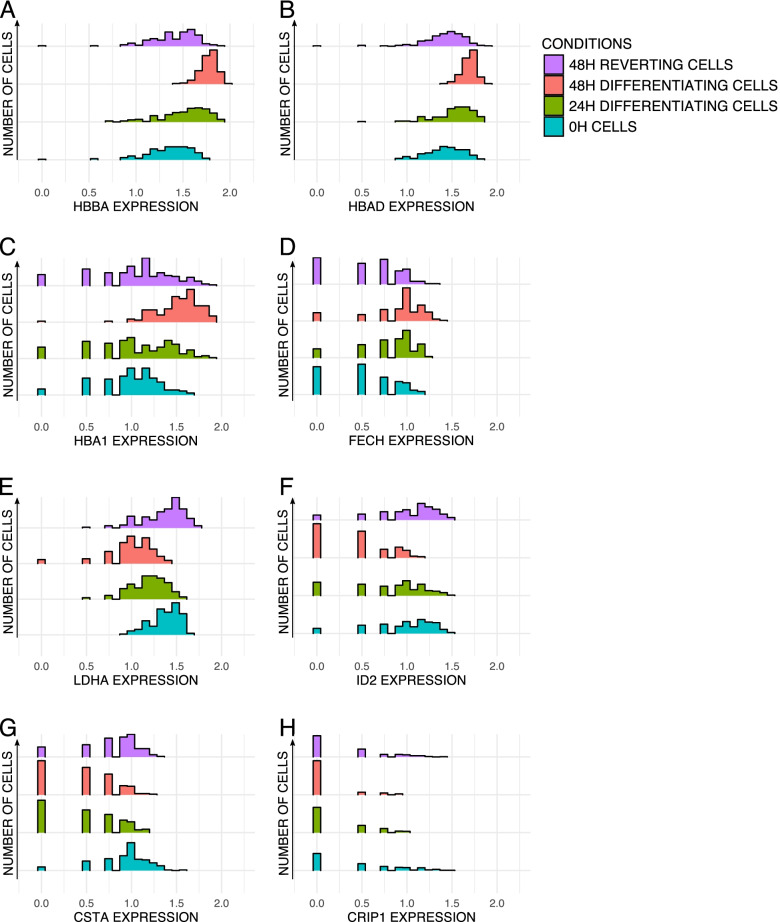
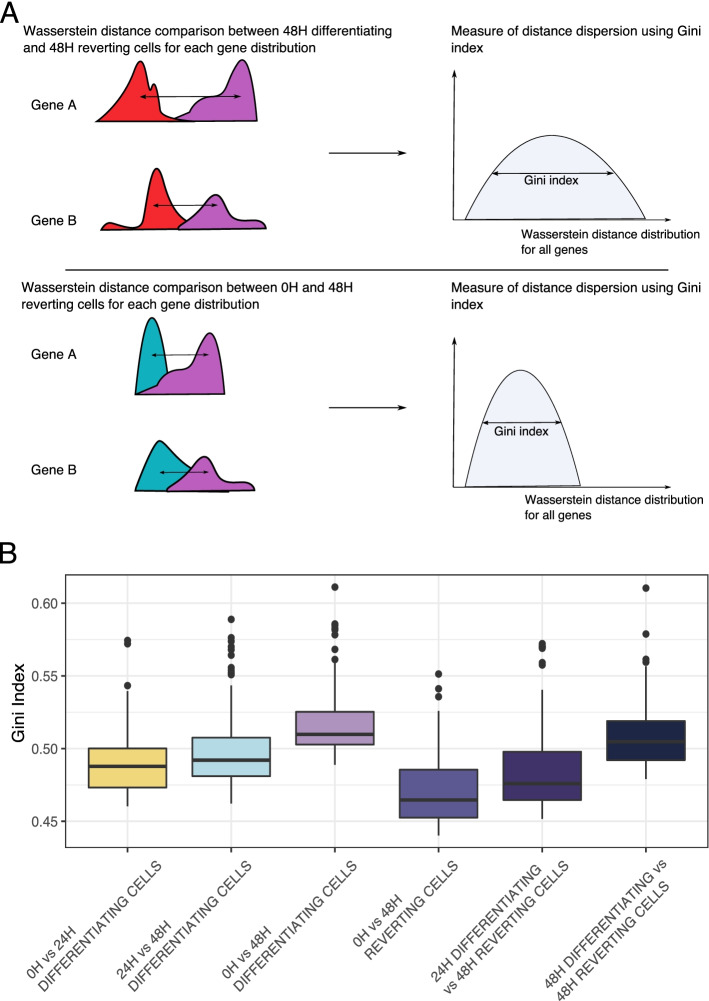
Our results showed a strong overlap between 0H and 48H reverting cells when applying dimensional reduction. Moreover, the statistical comparison of cell distributions and differential expression analysis indicated no significant differences between these two cell groups. Interestingly, gene pattern distributions highlighted that, while 48H reverting cells have gene expression pattern more similar to 0H cells, they are not completely identical, which suggest that for some genes a longer delay may be required for the cells to fully recover. Finally, sparse PLS (sparse partial least square) analysis showed that only the expression of 3 genes discriminates 48H reverting and 0H cells.
Altogether, we show that reverting cells return to an earlier molecular state almost identical to undifferentiated cells and demonstrate a previously undocumented physiological and molecular plasticity during the differentiation process, which most likely results from the dynamic behavior of the underlying molecular network.
根据 Waddington 的表观遗传景观概念,细胞的分化过程可以用一个类似于从山顶滚下的球来表示(增殖状态),在到达稳定的分化状态之前,球会穿过沟壑,然后停留在盆地或“吸引子状态”中。然而,现在很清楚的是,一些已分化的细胞可以保持一定程度的可塑性,并重新获得更具多能性的细胞状态的表型特征。与这个动态模型一致,我们之前已经表明,当分化细胞(鸡红细胞祖细胞(T2EC))在自我更新条件下被转移回时,它们在 24 小时内保持自我更新的能力。尽管这些结果令人着迷和有希望,但那些“逆转”细胞的潜在分子状态仍未被探索。因此,本研究的目的是通过结合先进的统计工具来最大限度地利用单细胞转录组数据,从分子上表征 T2EC 逆转过程。为此,最初在自我更新培养基中维持的 T2EC(0H)被诱导分化 24 小时(24H 分化细胞);然后,一部分细胞被转移回自我更新培养基(48H 逆转细胞),另一部分细胞在分化培养基中再维持 24 小时(48H 分化细胞)。对于每个时间点,使用 scRT-qPCR 和 scRNAseq 生成细胞转录组。
当应用降维时,我们的结果显示 0H 和 48H 逆转细胞之间有很强的重叠。此外,细胞分布的统计比较和差异表达分析表明,这两个细胞群之间没有显著差异。有趣的是,基因模式分布表明,虽然 48H 逆转细胞的基因表达模式更类似于 0H 细胞,但它们并不完全相同,这表明对于某些基因,细胞可能需要更长的延迟才能完全恢复。最后,稀疏偏最小二乘法(稀疏偏最小二乘)分析表明,只有 3 个基因的表达可以区分 48H 逆转和 0H 细胞。
总之,我们表明逆转细胞几乎回到与未分化细胞完全相同的早期分子状态,并证明在分化过程中存在以前未记录的生理和分子可塑性,这很可能是由于基础分子网络的动态行为所致。