1] Statistical Cancer Genomics, Paul O'Gorman Building, UCL Cancer Institute, University College London, 72 Huntley Street, London WC1E 6BT, United Kingdom [2] Centre for Mathematics and Physics in the Life Sciences and Experimental Biology, University College London, London WC1E6BT United Kingdom.
Sci Rep. 2013 Oct 24;3:3039. doi: 10.1038/srep03039.
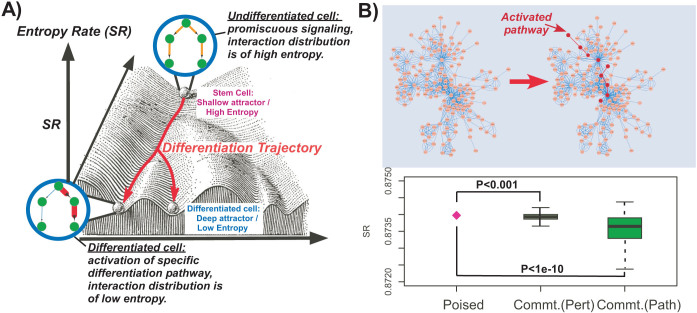
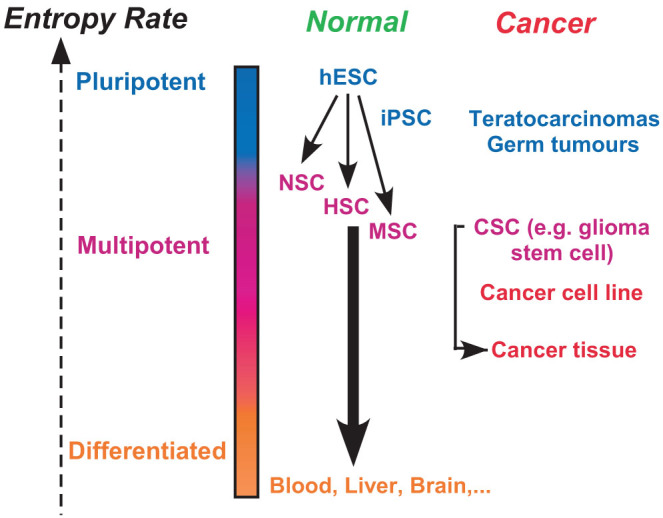
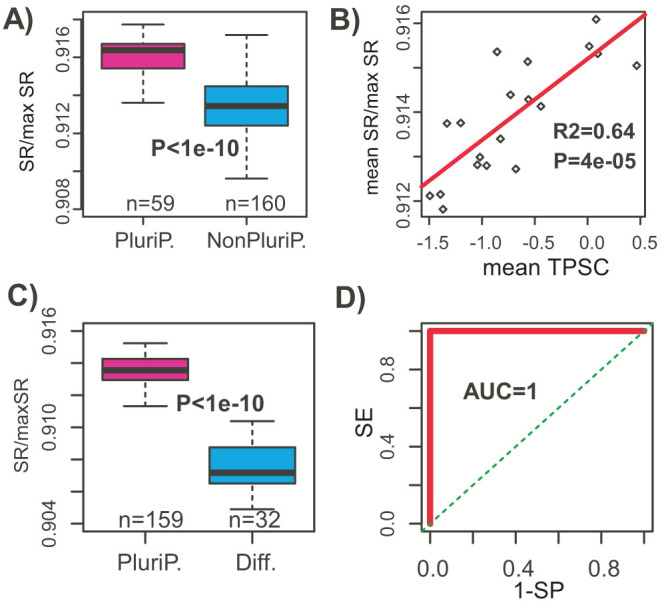
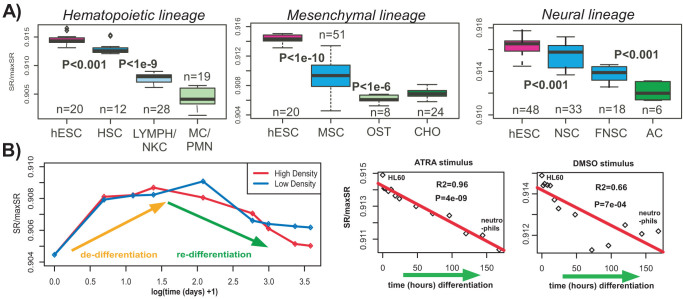
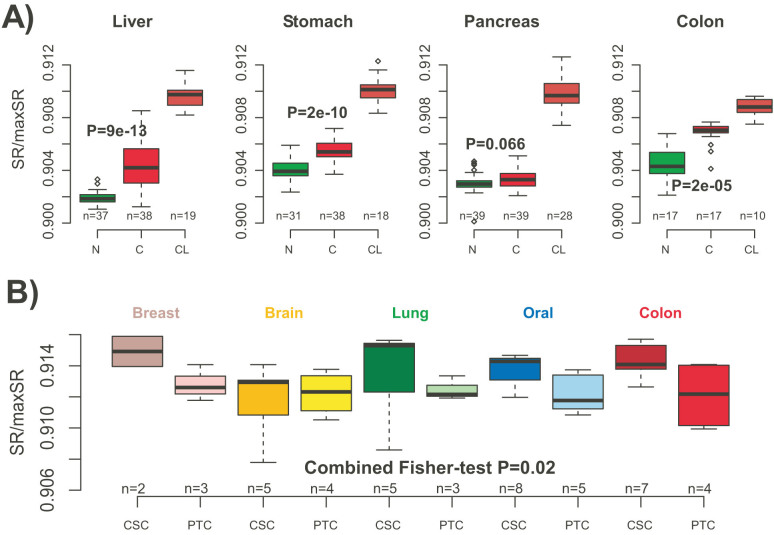
Differentiation is a key cellular process in normal tissue development that is significantly altered in cancer. Although molecular signatures characterising pluripotency and multipotency exist, there is, as yet, no single quantitative mark of a cellular sample's position in the global differentiation hierarchy. Here we adopt a systems view and consider the sample's network entropy, a measure of signaling pathway promiscuity, computable from a sample's genome-wide expression profile. We demonstrate that network entropy provides a quantitative, in-silico, readout of the average undifferentiated state of the profiled cells, recapitulating the known hierarchy of pluripotent, multipotent and differentiated cell types. Network entropy further exhibits dynamic changes in time course differentiation data, and in line with a sample's differentiation stage. In disease, network entropy predicts a higher level of cellular plasticity in cancer stem cell populations compared to ordinary cancer cells. Importantly, network entropy also allows identification of key differentiation pathways. Our results are consistent with the view that pluripotency is a statistical property defined at the cellular population level, correlating with intra-sample heterogeneity, and driven by the degree of signaling promiscuity in cells. In summary, network entropy provides a quantitative measure of a cell's undifferentiated state, defining its elevation in Waddington's landscape.
分化是正常组织发育过程中的一个关键细胞过程,在癌症中发生了显著改变。虽然存在特征化多能性和多能性的分子特征,但迄今为止,还没有一个单一的定量标志可以表示细胞样本在全局分化层次结构中的位置。在这里,我们采用系统的观点,考虑样本的网络熵,这是一种衡量信号通路混杂度的度量,可以从样本的全基因组表达谱中计算出来。我们证明网络熵提供了一个定量的、计算机模拟的、对被分析细胞的平均未分化状态的读数,再现了已知的多能性、多能性和分化细胞类型的层次结构。网络熵进一步在时间过程分化数据中表现出动态变化,并与样本的分化阶段一致。在疾病中,网络熵预测癌症干细胞群体比普通癌细胞具有更高的细胞可塑性水平。重要的是,网络熵还可以识别关键的分化途径。我们的结果与以下观点一致,即多能性是在细胞群体水平上定义的统计属性,与样本内异质性相关,并由细胞中信号转导的混杂程度驱动。总之,网络熵提供了一种量化细胞未分化状态的方法,定义了其在 Waddington 景观中的提升。