Ibnouf Elmutasim O, Aldawsari Mohammed F, Ali Waggiallah Hisham
Department of Pharmaceutics, College of Pharmacy, Prince Sattam bin Abdulaziz University, P.O. Box 173, Alkharj 11942, Saudi Arabia.
Department of Medical Laboratory Science, College of Applied Medical Science, Prince Sattam Bin Abdulaziz University, Alkharj, Saudi Arabia.
Saudi J Biol Sci. 2022 Aug;29(8):103352. doi: 10.1016/j.sjbs.2022.103352. Epub 2022 Jun 20.
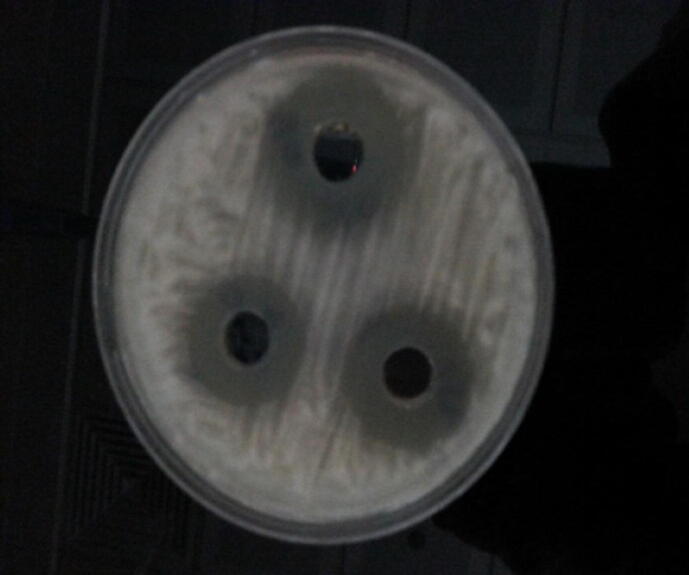
Some types of actinomycetes produce many different secondary metabolites of fatty acids, hydrocarbons, or other compounds. Many of these products play an important role in various medical fields. This study aims to extract natural compounds from actinomycetes after their isolation from the soil and their identification as antimicrobials. Soil samples were collected from different regions after being treated by known methods. Colonies that indicate actinomycetes were replanted and provided with suitable conditions for growth, and then tested against a number of pathogenic microbes. Isolate 3-D is more effective than others. D-3 was exposed to ultraviolet rays for greater production of antimicrobials. The compounds obtained from the isolates were extracted by the column chromatography technique. To identify the compounds resulting from the extract, the Gas Chromatography-Mass Spectrometry (GC-MS) technique was used. Ten compounds have been identified by GC-MS. Some of the compounds are of fatty acid nature, and some are hydrocarbons. These compound includes Hexadecane, 2,6,11,15- Tetramethyl - Octacosane - Dodecanoic Acid, 1,2,3- Propane-triyl ester - Hexatriacontane - Heptacosane - Eicosyl Acetate - Tritetracontane - Tetracosane, 2,6,10,15,19,23-Hexamethyl - Myristic Acid vinyl ester - Tetratetracontane. All of these extracts are of medical importance. Some of them are anti-bacterial, some are anti-allergic, anti-inflammatory, anti-cancer, anti-fungal, antioxidants, and some of them are essential ingredients in cosmetics. The current study showed that isolated D-3 actinomycetes from soil have the ability to produce antimicrobials against a variety of gram-negative and gram-positive bacteria, which are important in the medical field.
某些类型的放线菌会产生许多不同的脂肪酸、碳氢化合物或其他化合物的次生代谢产物。这些产物中的许多在各个医学领域都发挥着重要作用。本研究旨在从土壤中分离出放线菌并将其鉴定为抗菌剂后,提取其中的天然化合物。采用已知方法处理后,从不同地区采集土壤样本。将显示为放线菌的菌落重新接种,并提供适宜的生长条件,然后针对多种致病微生物进行测试。分离株3-D比其他分离株更有效。对D-3进行紫外线照射以增加抗菌剂的产量。通过柱色谱技术从分离株中提取得到的化合物。为了鉴定提取物中产生的化合物,使用了气相色谱-质谱联用(GC-MS)技术。通过GC-MS鉴定出了十种化合物。其中一些化合物具有脂肪酸性质,一些是碳氢化合物。这些化合物包括十六烷、2,6,11,15-四甲基-二十八烷-十二烷酸、1,2,3-丙烷三醇酯-三十六烷-二十七烷-二十烷基乙酸酯-四十四烷-二十四烷、2,6,10,15,19,23-六甲基-肉豆蔻酸乙烯酯-四十四烷。所有这些提取物都具有医学重要性。其中一些具有抗菌、抗过敏、抗炎、抗癌、抗真菌、抗氧化作用,还有一些是化妆品中的重要成分。当前研究表明,从土壤中分离出的D-3放线菌具有产生针对多种革兰氏阴性菌和革兰氏阳性菌的抗菌剂的能力,这在医学领域很重要。