Collineau Lucie, Godebert Euriel, Thibaut Sonia, Lemenand Olivier, Birgand Gabriel, Caillon Jocelyne, Bourely Clémence
French Agency for Food, Environmental and Occupational Health & Safety, Laboratory of Lyon, Epidemiology and surveillance Unit, Lyon, France.
Regional centre for prevention of healthcare-associated infections (CPias), University Hospital of Nantes, Nantes, France.
JAC Antimicrob Resist. 2022 Jul 4;4(4):dlac078. doi: 10.1093/jacamr/dlac078. eCollection 2022 Aug.
Antimicrobial resistance (AMR) has been widely recognized as a major public health issue, which can be addressed through effective AMR surveillance systems. In 2018, a national surveillance programme for AMR in the community and nursing homes called Mission PRIMO was established in France. It builds on an existing network called MedQual-Ville that had been monitoring AMR mainly in the west of France community since 2003.
To evaluate the MedQual-Ville surveillance activities and to formulate practical recommendations for improvement, using a semi-quantitative evaluation framework called OASIS.
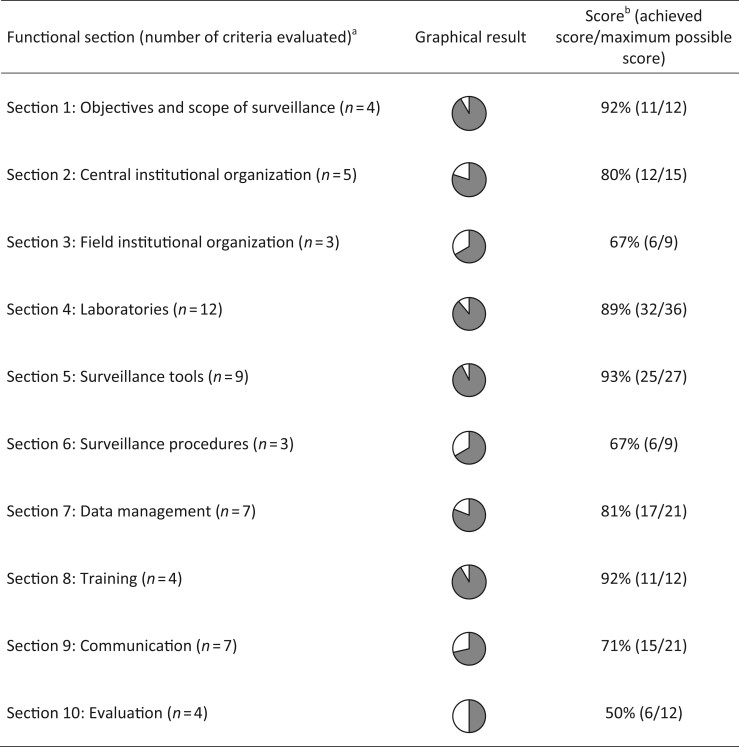
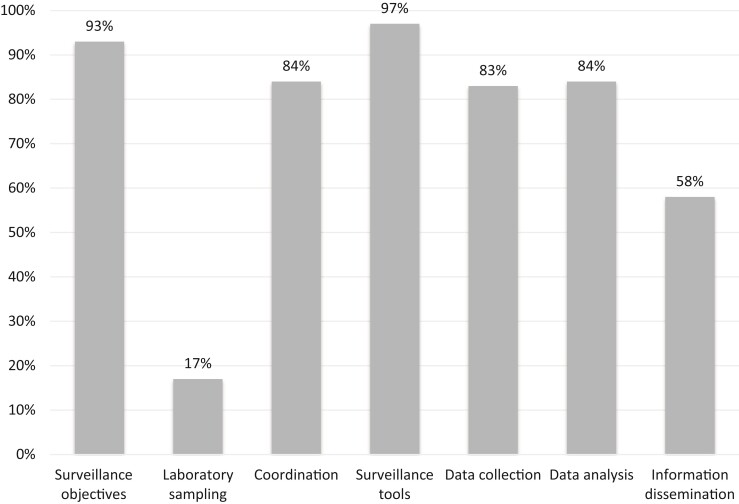
The evaluation showed that MedQual-Ville is overall a well-performing surveillance system. Its major strengths rely on excellent coordination and internal communication with clinical laboratories that participate on a voluntary basis. Surveillance objectives and procedures are clear to all participants. Hence, the quality and reliability of the data being produced is very high. At this stage, the major area for improvement is representativeness, with poor coverage achieved in several densely populated areas. Besides, the utility and impact of surveillance data could be improved by strengthening communication towards end-users, especially local prescribers.
There is currently no European programme or guidance for AMR surveillance in the community and nursing homes. Our results partly fill this gap, by evaluating how surveillance is being performed in France and providing recommendations that could be applicable to other countries with similar health systems. This work also highlighted the relevance of OASIS for evaluation of surveillance systems in the human sector.
抗菌药物耐药性(AMR)已被广泛公认为一个重大的公共卫生问题,可通过有效的AMR监测系统加以应对。2018年,法国设立了一项名为“首要任务”的社区和养老院AMR国家监测计划。该计划建立在一个名为“MedQual-Ville”的现有网络基础之上,该网络自2003年以来主要在法国西部社区监测AMR。
使用一个名为“绿洲”(OASIS)的半定量评估框架来评估“MedQual-Ville”的监测活动,并制定改进的实际建议。
评估表明,“MedQual-Ville”总体上是一个运行良好的监测系统。其主要优势在于与自愿参与的临床实验室之间的出色协调和内部沟通。所有参与者都清楚监测目标和程序。因此,所产生数据的质量和可靠性非常高。现阶段,主要的改进领域是代表性,在几个人口密集地区的覆盖范围较差。此外,通过加强与最终用户,特别是当地开处方者的沟通,可以提高监测数据的实用性和影响力。
目前尚无针对社区和养老院AMR监测的欧洲计划或指南。我们的结果通过评估法国的监测执行情况并提供适用于具有类似卫生系统的其他国家的建议,部分填补了这一空白。这项工作还凸显了“绿洲”(OASIS)对人类领域监测系统评估的相关性。