Fang Xuexian, Han Dan, Yang Jun, Li Fulun, Sui Xinbing
Department of Nutrition and Toxicology, School of Public Health, Hangzhou Normal University, Hangzhou, China.
Department of Nutrition and Food Safety, Zhejiang Provincial Center for Disease Control and Prevention, Hangzhou, China.
Front Nutr. 2022 Jun 20;9:904957. doi: 10.3389/fnut.2022.904957. eCollection 2022.
Epidemiological studies of citrus consumption in relation to melanoma risk have yielded conflicting results. This meta-analysis was performed to investigate the dose-response association between citrus consumption and risk of melanoma.
Relevant prospective cohort studies were identified by searching PubMed, Embase, Scopus, and Web of Science databases up to February 28th, 2022. Results from individual studies were pooled using a random-effects model.
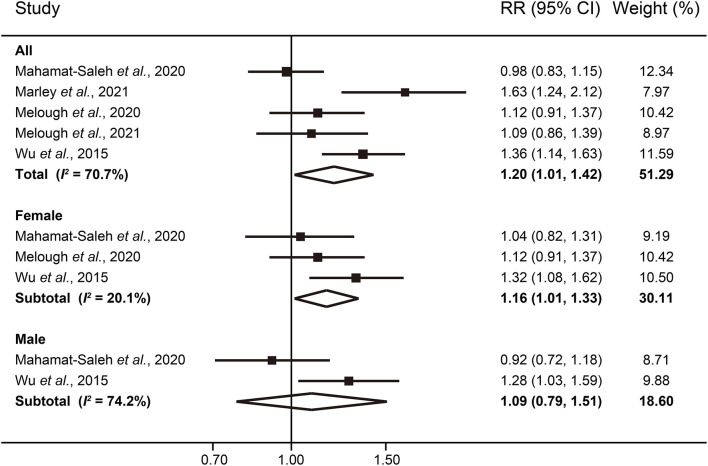
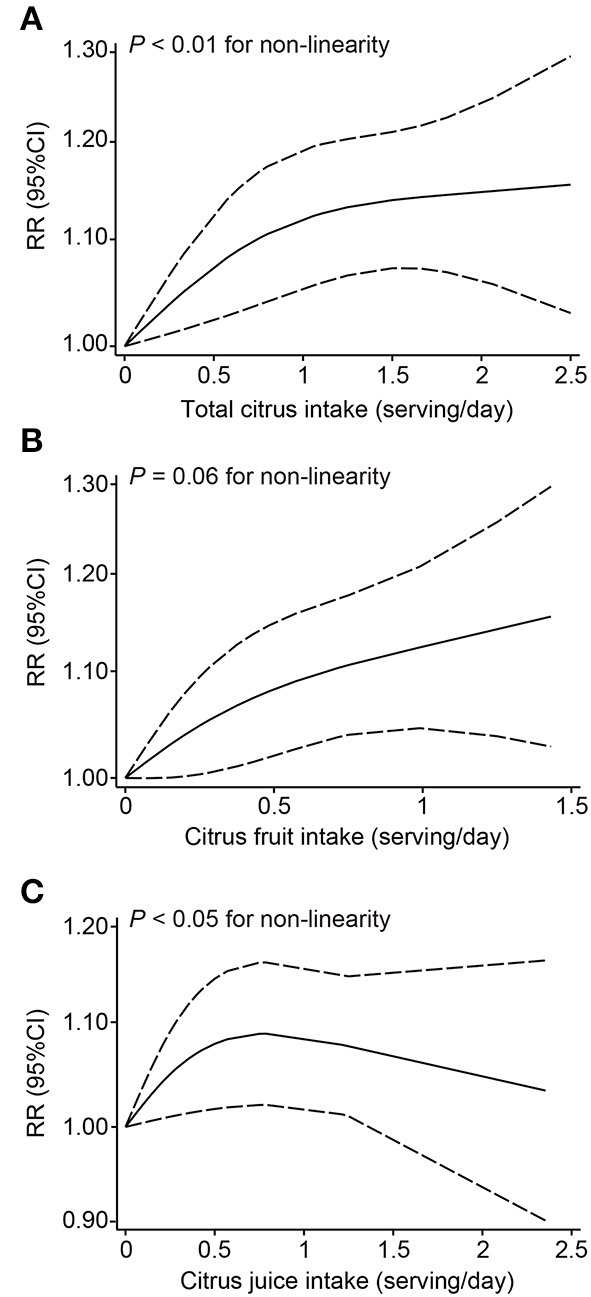
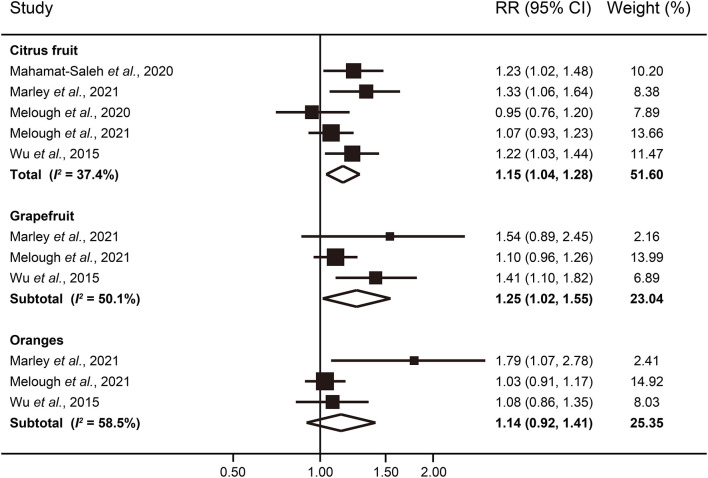
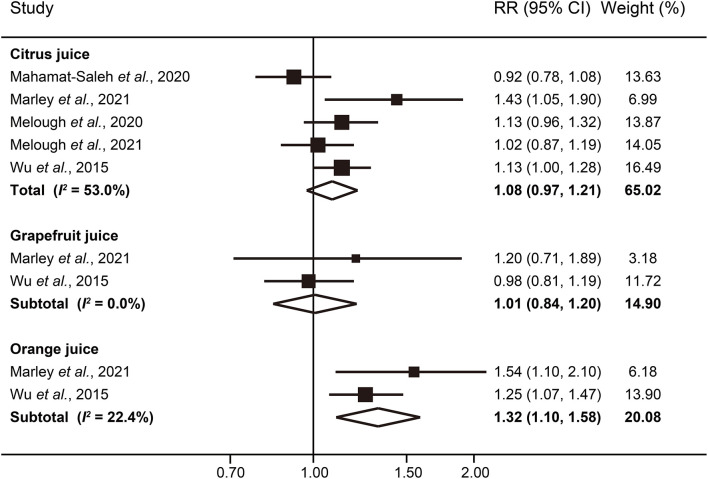
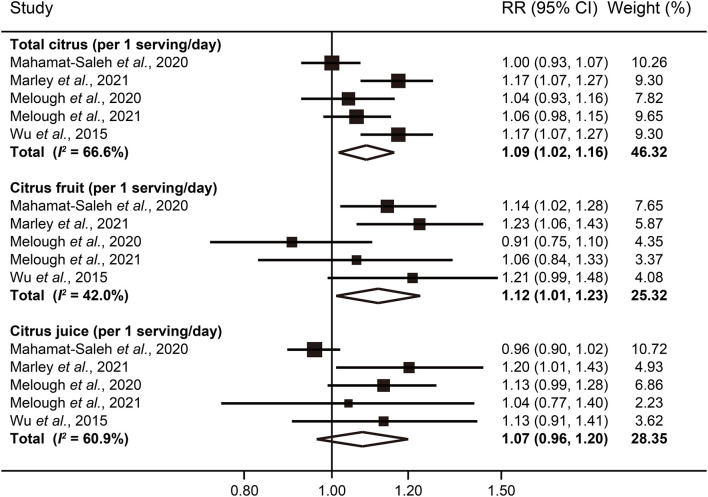
Five prospective studies, with 8,836 melanoma cases and 977,558 participants, were included in the meta-analysis. A significantly increased risk of melanoma was associated with the highest categories of either total citrus products (RR: 1.20; 95% CI: 1.01-1.42) or citrus fruit consumption (1.15; 1.04-1.28), but consumption of citrus juice was not associated with melanoma risk (1.08; 0.97-1.21). The dose-response analyses revealed that for per 1 serving/day increase in total citrus or citrus fruit consumption, the risk of melanoma increased by 9 and 12%, respectively. An inverted U-shaped curvilinear relationship, but not linear association, was observed between citrus juice consumption and melanoma risk.
Citrus consumption was generally associated with a greater risk of malignant melanoma. Our findings may have important public health implications with respect to preventing melanoma.
关于柑橘类水果消费与黑色素瘤风险之间关系的流行病学研究结果相互矛盾。本荟萃分析旨在研究柑橘类水果消费与黑色素瘤风险之间的剂量反应关系。
通过检索截至2022年2月28日的PubMed、Embase、Scopus和Web of Science数据库,确定相关的前瞻性队列研究。使用随机效应模型汇总个体研究的结果。
五项前瞻性研究纳入了荟萃分析,共8836例黑色素瘤病例和977558名参与者。柑橘类产品总量或柑橘类水果消费最高类别与黑色素瘤风险显著增加相关(RR:1.20;95%CI:1.01-1.42)或(1.15;1.04-1.28),但饮用柑橘汁与黑色素瘤风险无关(1.08;0.97-1.21)。剂量反应分析显示,总柑橘类或柑橘类水果消费每增加1份/天,黑色素瘤风险分别增加9%和12%。在柑橘汁消费与黑色素瘤风险之间观察到倒U形曲线关系,而非线性关联。
食用柑橘类水果通常与恶性黑色素瘤风险增加有关。我们的研究结果可能对预防黑色素瘤具有重要的公共卫生意义。