Institute of Biochemistry and Molecular Biology, University of Hamburg, Hamburg, Germany.
Microscopy Imaging Facility, University Medical Center Hamburg-Eppendorf, Hamburg, Germany.
RNA Biol. 2022 Jan;19(1):877-884. doi: 10.1080/15476286.2022.2094137.
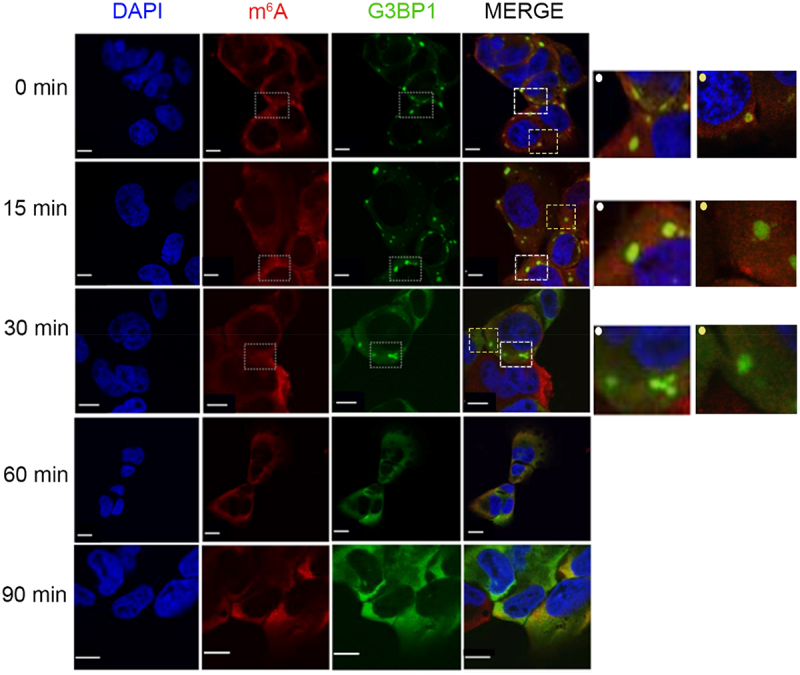
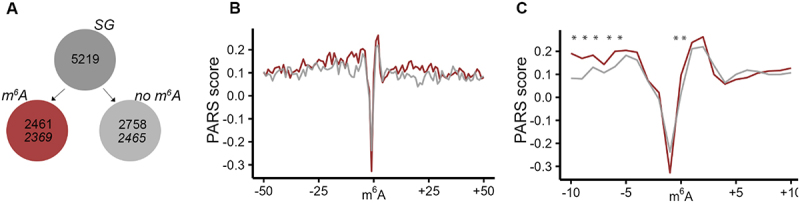
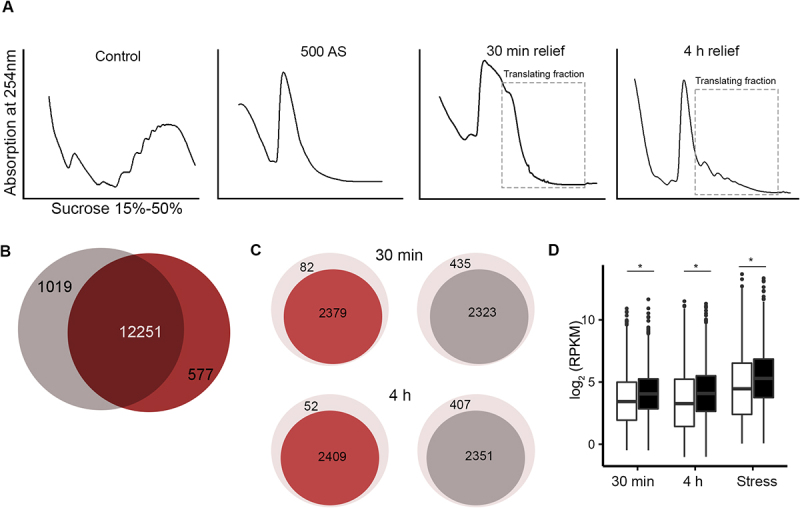
Stress granules (SGs) are membrane-less condensates composed of RNA and protein that assemble in response to stress stimuli and disassemble when stress is lifted. Both assembly and disassembly are tightly controlled processes, yet, it remains elusive whether mRNAs in SGs completely recover for translation following stress relief. Using RNA-seq of translating fractions in human cell line, we found that higher fraction of the mA-modified mRNAs recovered for translation compared to unmodified mRNAs, i.e. 95% vs 84%, respectively. Considering structural mRNA analysis, we found that the mA modification enhances structuring at nucleotides in its close vicinity. Our results suggest that SG-sequestered mRNAs disassemble nearly completely from SGs and the mA modification may display some advantage to the mRNAs in their recovery for translation likely by mA-driven structural stabilization.
应激颗粒 (SGs) 是由 RNA 和蛋白质组成的无膜凝聚物,在应激刺激下组装,应激解除时解聚。组装和解聚都是受到严格控制的过程,但应激缓解后 SG 中的 mRNA 是否完全恢复翻译仍不清楚。我们使用人细胞系中转录部分的 RNA-seq 发现,与未修饰的 mRNA 相比,修饰的 mA 的 mRNA 有更高的比例恢复翻译,分别为 95%和 84%。考虑到结构 mRNA 分析,我们发现 mA 修饰增强了其附近核苷酸的结构。我们的结果表明,SG 中分离的 mRNA 几乎完全从 SG 中解聚,并且 mA 修饰可能在其恢复翻译方面对 mRNA 具有一些优势,可能是通过 mA 驱动的结构稳定。