Wolfson Centre for Mathematical Biology, Mathematical Institute, University of Oxford, Oxford, UK.
Department of Computer Science, University of Oxford, Oxford, UK.
Bull Math Biol. 2022 Jul 8;84(8):85. doi: 10.1007/s11538-022-01046-y.
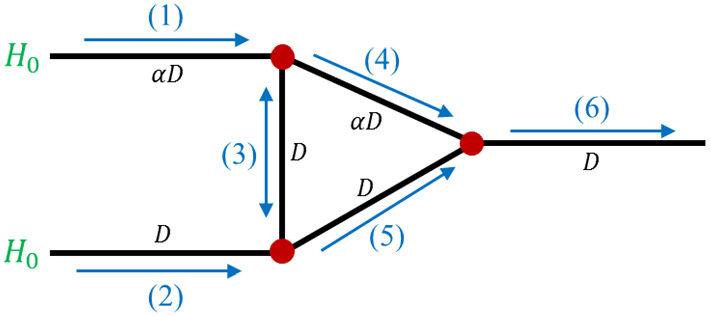
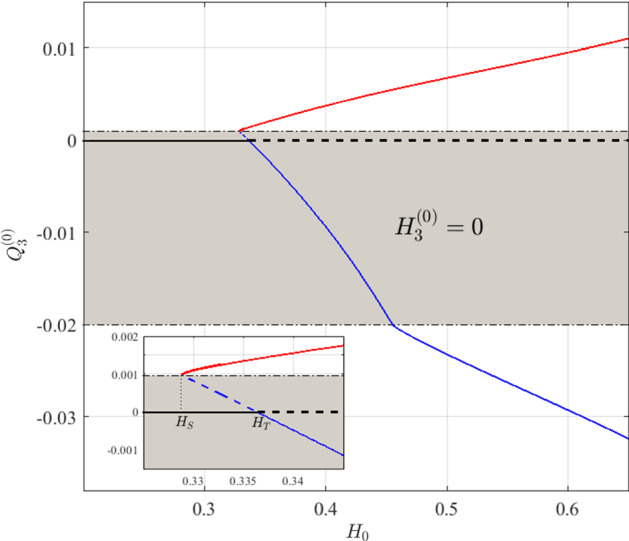
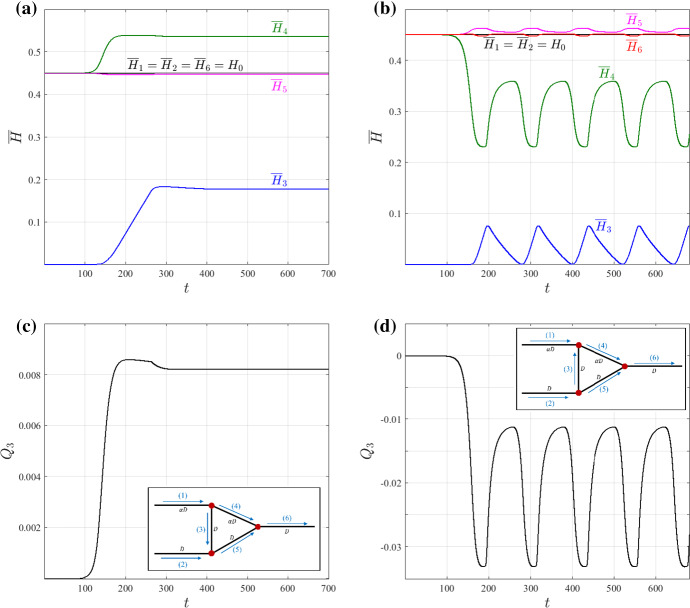
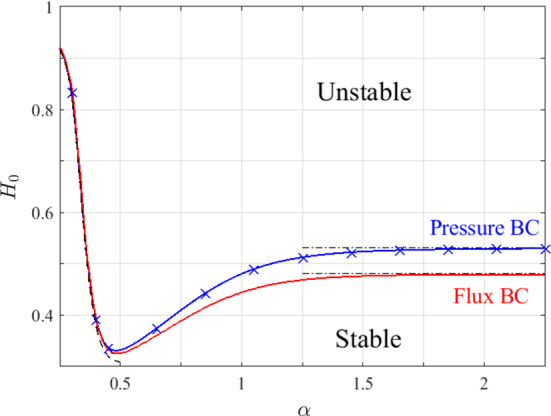
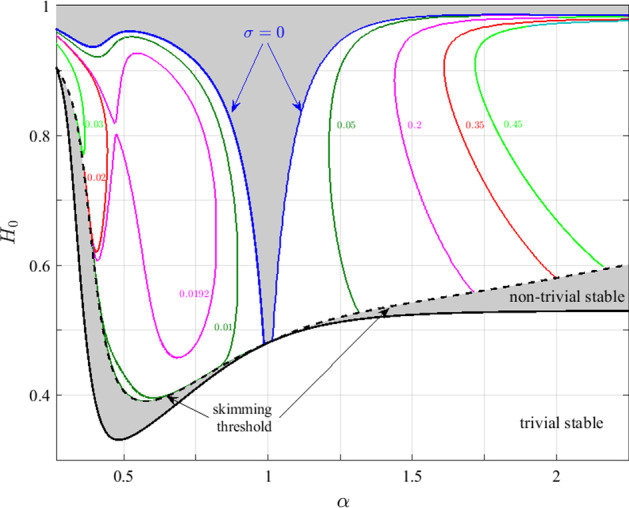
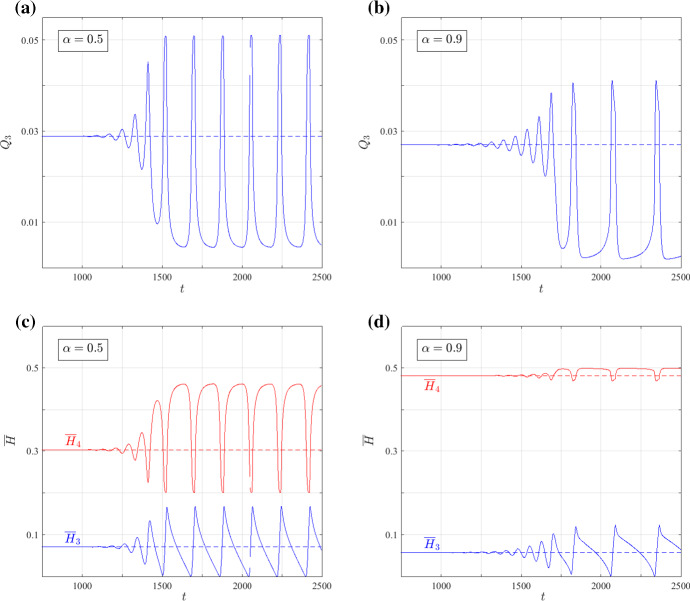
We analyse mathematical models in order to understand how microstructural features of vascular networks may affect blood flow dynamics, and to identify particular characteristics that promote the onset of self-sustained oscillations. By focusing on a simple three-node motif, we predict that network "redundancy", in the form of a redundant vessel connecting two main flow-branches, together with differences in haemodynamic resistance in the branches, can promote the emergence of oscillatory dynamics. We use existing mathematical descriptions for blood rheology and haematocrit splitting at vessel branch-points to construct our flow model; we combine numerical simulations and stability analysis to study the dynamics of the three-node network and its relation to the system's multiple steady-state solutions. While, for the case of equal inlet-pressure conditions, a "trivial" equilibrium solution with no flow in the redundant vessel always exists, we find that it is not stable when other, stable, steady-state attractors exist. In turn, these "nontrivial" steady-state solutions may undergo a Hopf bifurcation into an oscillatory state. We use the branch diameter ratio, together with the inlet haematocrit rate, to construct a two-parameter stability diagram that delineates regimes in which such oscillatory dynamics exist. We show that flow oscillations in this network geometry are only possible when the branch diameters are sufficiently different to allow for a sufficiently large flow in the redundant vessel, which acts as the driving force of the oscillations. These microstructural properties, which were found to promote oscillatory dynamics, could be used to explore sources of flow instability in biological microvascular networks.
我们分析数学模型,以了解血管网络的微观结构特征如何影响血流动力学,并确定促进自维持振荡发生的特定特征。通过关注一个简单的三节点模式,我们预测网络“冗余”,即连接两个主要血流分支的冗余血管,以及分支中血液动力学阻力的差异,可以促进振荡动力学的出现。我们使用现有的血液流变学和血液在血管分支点分裂的数学描述来构建我们的流动模型;我们结合数值模拟和稳定性分析来研究三节点网络的动力学及其与系统多个稳态解的关系。虽然对于入口压力相等的情况,具有无冗余血管中流动的“平凡”平衡解总是存在,但我们发现当存在其他稳定的稳态吸引子时,它是不稳定的。反过来,这些“非平凡”稳态解可能会经历到振荡状态的Hopf 分岔。我们使用分支直径比,以及入口血液比,来构建一个双参数稳定性图,该图描绘了存在这种振荡动力学的区域。我们表明,只有当分支直径足够不同以允许冗余血管中存在足够大的流动时,这种网络几何形状中的流动振荡才是可能的,而冗余血管充当了振荡的驱动力。这些被发现促进振荡动力学的微观结构特性,可以用于探索生物微血管网络中流动不稳定性的来源。