Wellcome Centre for Integrative Neuroimaging, FMRIB, Nuffield Department of Clinical Neurosciences, Oxford, UK.
Wellcome Centre for Integrative Neuroimaging, FMRIB, Nuffield Department of Clinical Neurosciences, Oxford, UK.
Neuroimage. 2022 Oct 15;260:119452. doi: 10.1016/j.neuroimage.2022.119452. Epub 2022 Jul 5.
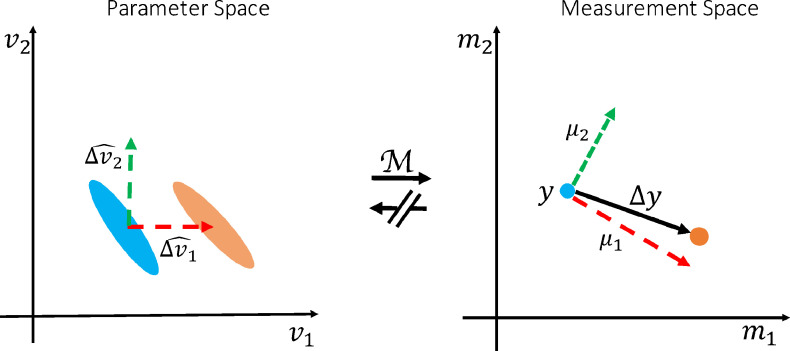
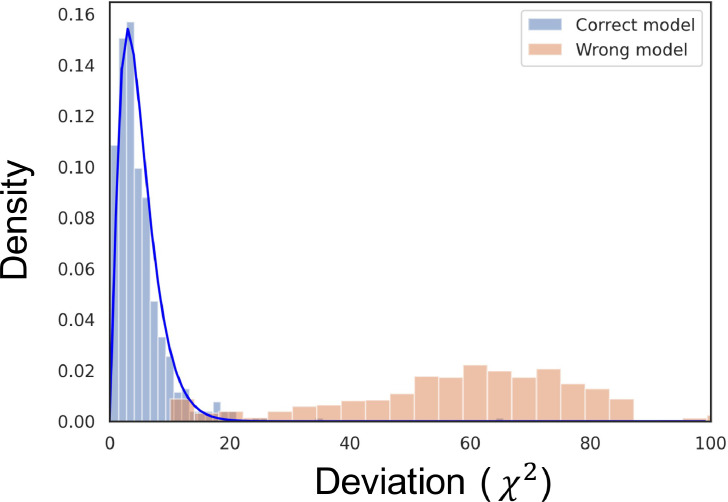
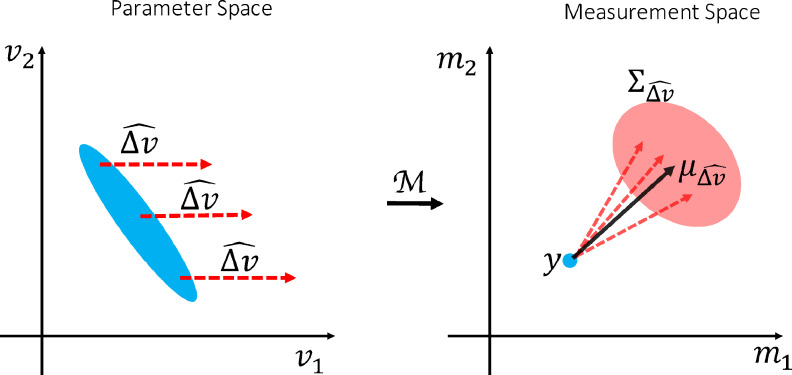
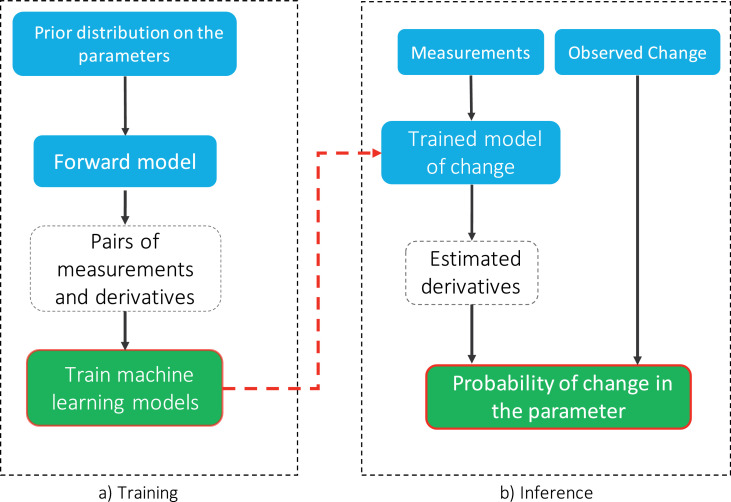
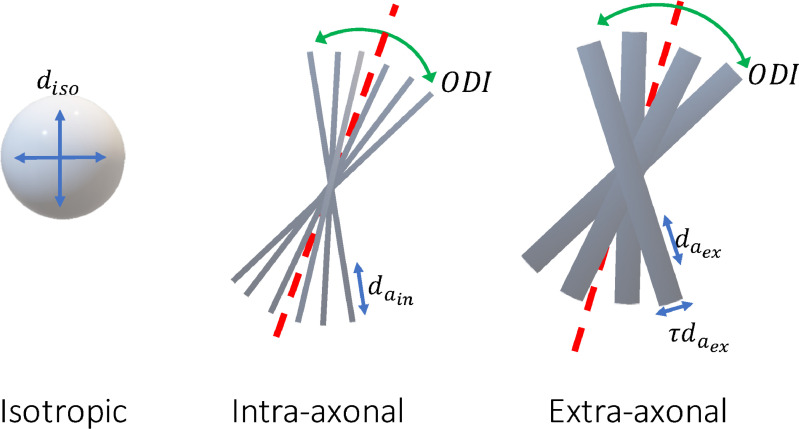
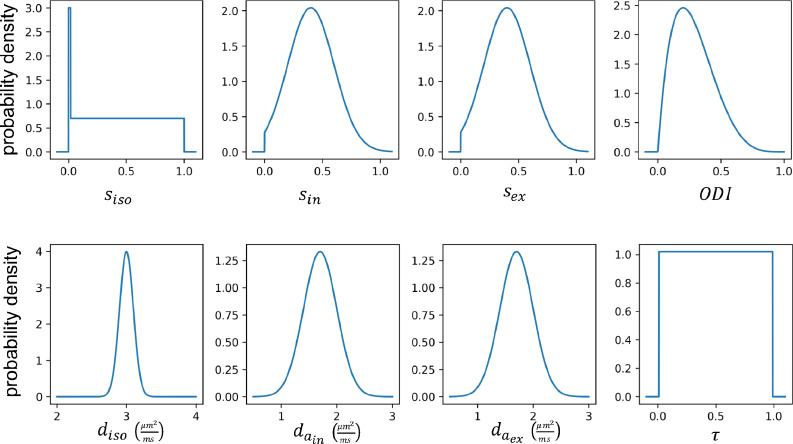
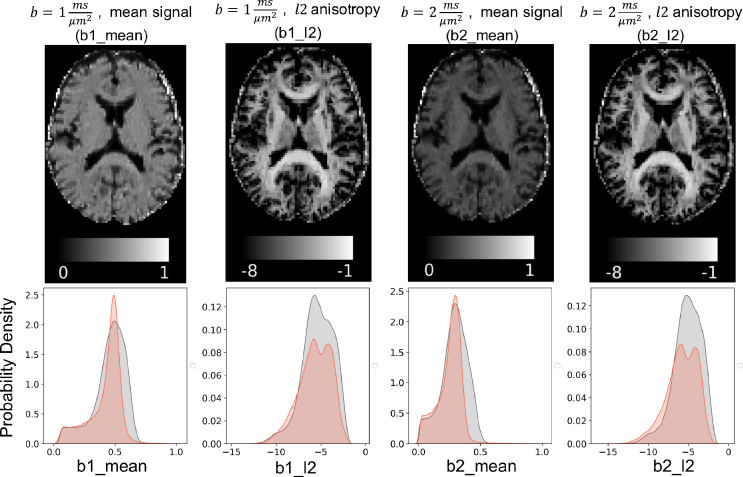
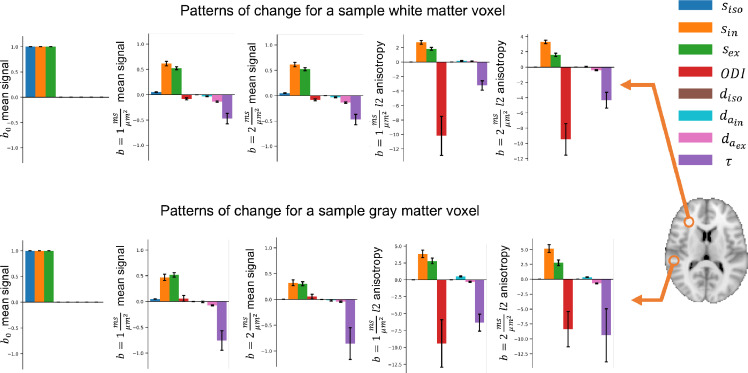
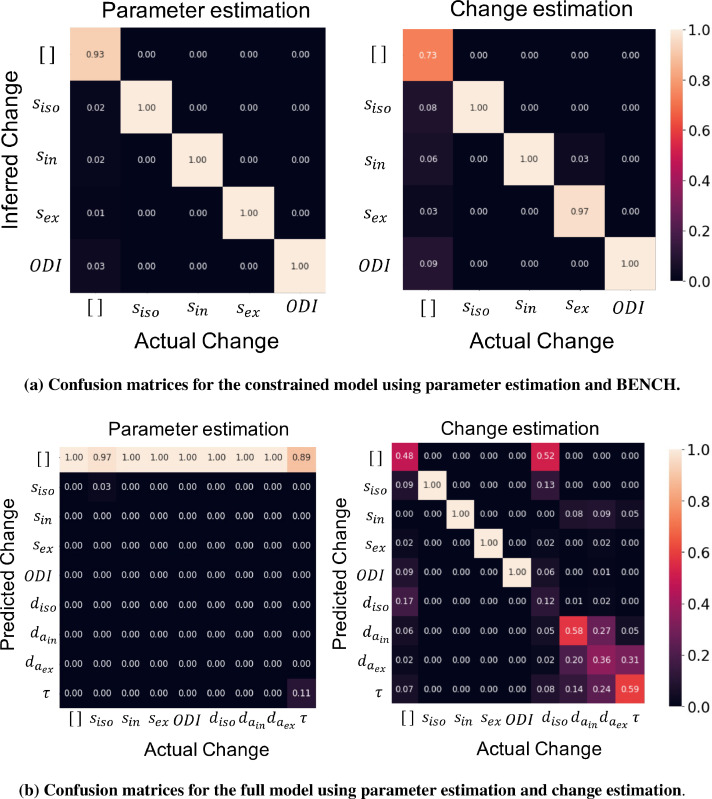
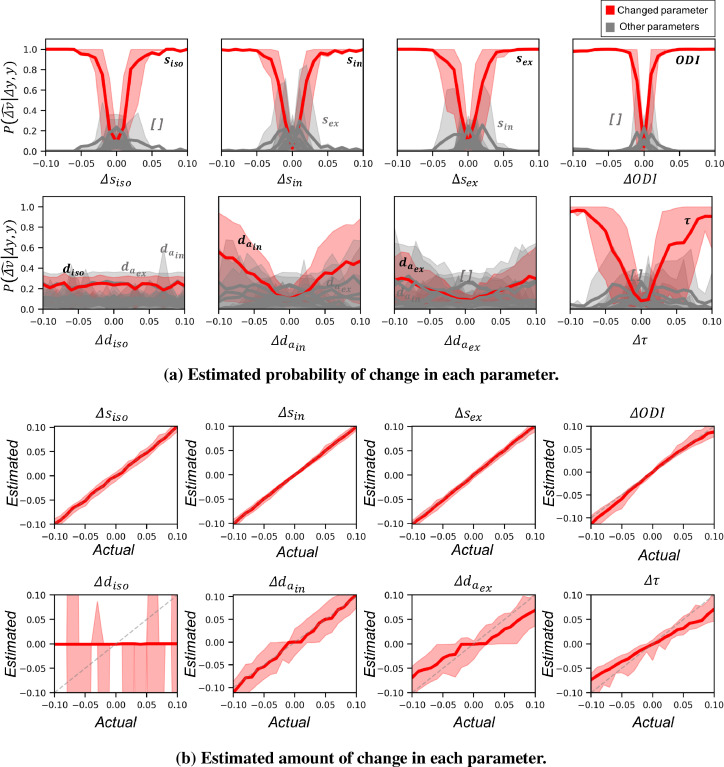
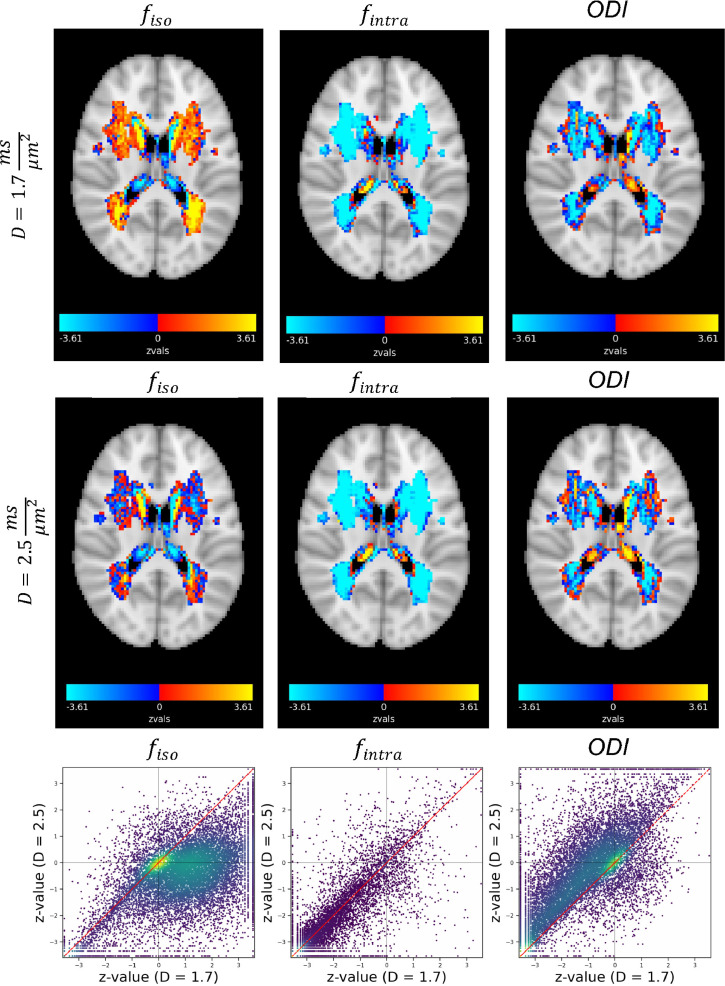
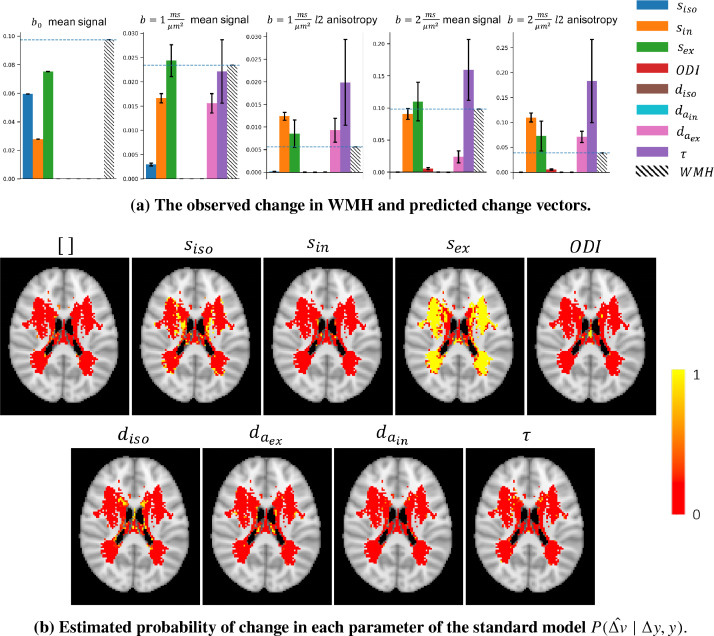
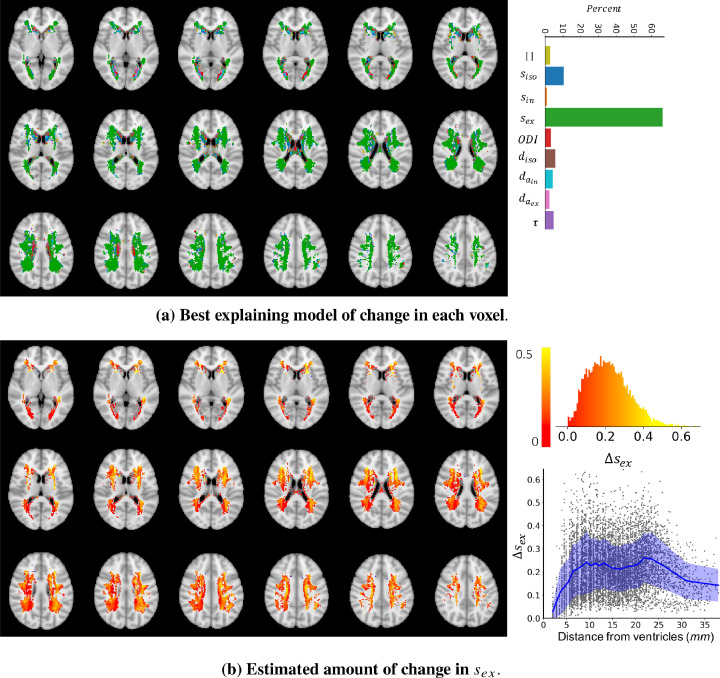
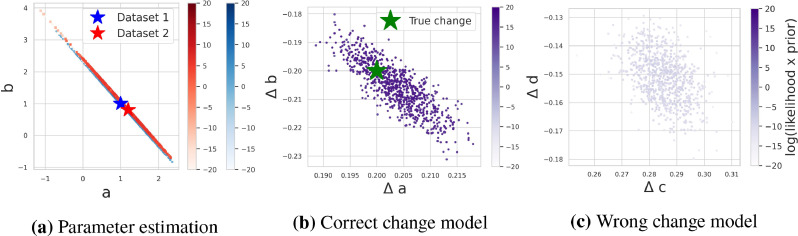
Biophysical models that attempt to infer real-world quantities from data usually have many free parameters. This over-parameterisation can result in degeneracies in model inversion and render parameter estimation ill-posed. However, in many applications, we are not interested in quantifying the parameters per se, but rather in identifying changes in parameters between experimental conditions (e.g. patients vs controls). Here we present a Bayesian framework to make inference on changes in the parameters of biophysical models even when model inversion is degenerate, which we refer to as Bayesian EstimatioN of CHange (BENCH). We infer the parameter changes in two steps; First, we train models that can estimate the pattern of change in the measurements given any hypothetical direction of change in the parameters using simulations. Next, for any pair of real data sets, we use these pre-trained models to estimate the probability that an observed difference in the data can be explained by each model of change. BENCH is applicable to any type of data and models and particularly useful for biophysical models with parameter degeneracies, where we can assume the change is sparse. In this paper, we apply the approach in the context of microstructural modelling of diffusion MRI data, where the models are usually over-parameterised and not invertible without injecting strong assumptions. Using simulations, we show that in the context of the standard model of white matter our approach is able to identify changes in microstructural parameters from conventional multi-shell diffusion MRI data. We also apply our approach to a subset of subjects from the UK-Biobank Imaging to identify the dominant standard model parameter change in areas of white matter hyperintensities under the assumption that the standard model holds in white matter hyperintensities.
生物物理模型通常试图从数据中推断出实际数量,这些模型通常具有许多自由参数。这种过度参数化会导致模型反演中的退化,并使参数估计变得不适定。然而,在许多应用中,我们并不关心参数本身的定量,而是关心在实验条件下(例如患者与对照组)参数的变化。在这里,我们提出了一种贝叶斯框架,可以在模型反演退化的情况下对生物物理模型参数的变化进行推断,我们称之为贝叶斯参数变化估计(BENCH)。我们通过两步来推断参数变化:首先,我们训练模型,这些模型可以使用模拟来估计在任何参数变化的假设方向下测量值的变化模式。接下来,对于任何一对真实数据集,我们使用这些预训练的模型来估计观察到的数据差异可以用每个变化模型来解释的概率。BENCH 适用于任何类型的数据和模型,对于具有参数退化的生物物理模型尤其有用,在这些模型中,我们可以假设变化是稀疏的。在本文中,我们将该方法应用于扩散 MRI 数据的微结构建模中,在这种情况下,模型通常过度参数化,并且如果不注入强假设,模型就无法反演。使用模拟,我们表明,在标准白质模型的背景下,我们的方法能够从常规多壳扩散 MRI 数据中识别微结构参数的变化。我们还将我们的方法应用于 UK-Biobank Imaging 的一部分受试者,以在假设标准模型在白质高信号区中成立的情况下,识别白质高信号区中标准模型参数的主要变化。