van Ham Camila Rosalinde, Burgers Vivian Wilhelmina Gerarda, Sleeman Sophia Helena Eva, Dickhout Annemiek, Harthoorn Niels Christiaan Gerardus Laurus, Manten-Horst Eveliene, van Eenbergen Mies Christina, Husson Olga
Department of Communication, Netherlands Comprehensive Cancer Organisation (IKNL), Utrecht, The Netherlands.
Department of Psychosocial Research and Epidemiology, Netherlands Cancer Institute, Amsterdam, The Netherlands.
Res Involv Engagem. 2022 Jul 8;8(1):30. doi: 10.1186/s40900-022-00362-w.
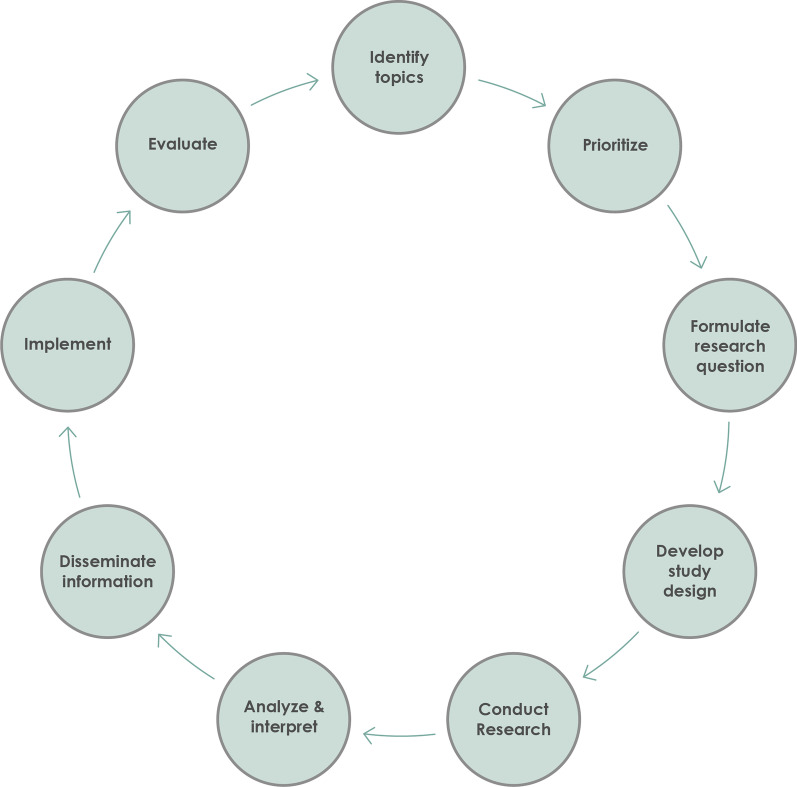
Including the lived experience of patients in research is important to improve the quality and outcomes of cancer studies. It is challenging to include adolescents and young adults (AYAs) cancer patients in studies and this accounts even more for AYAs with an uncertain and/or poor prognosis (UPCP). Little is known about involving these AYAs in scientific research. However, by including their lived experiences during multiple phases of research, the quality of the study improves and therefore also the healthcare and quality of life of this unique patient group. We first aimed to document experiences of AYAs and researchers with AYA involvement initiatives using the Involvement Matrix and the nine phases of the research cycle. Second, we aimed to map the (expected) challenges and recommendations, according to patients and researchers, for AYA involvement in each research phase.
Thirteen semi-structured qualitative interviews were conducted with AYAs and researchers from February 2020 to May 2020. A thematic analysis codebook with a critical realistic framework was used to analyze the data.
AYAs and researchers were predominantly positive about AYA involvement within six of the nine phases of research: identify and prioritize topics, develop study design, disseminate information, implement, and evaluate findings. Not all respondents were positive about AYA involvement in the following three phases: formulate research questions, conduct research, and analysis and interpretation. However, few respondents had experience with AYA-researcher collaborations in multiple phases of the research cycle. Last, the results indicate the importance of adding a role (practical support) and two phases (grant application and recruitment) to the Involvement Matrix.
Our results show the added value of AYA (with a UPCP) involvement within scientific research projects. We recommend researchers to actively think about the level and phase of collaboration prior to each research project, by involving and brainstorming with AYAs at the conception and throughout research projects. Besides, to enhance fruitful participation, we suggest thoroughly discussing the pros and cons of collaboration for each phase together with AYAs via the proposed Involvement Matrix to support transparency. We recommend to report experiences, choices, and results of AYA involvement.
将患者的生活经历纳入研究对于提高癌症研究的质量和成果很重要。让青少年和青年(AYA)癌症患者参与研究具有挑战性,对于预后不确定和/或较差的AYA患者而言更是如此。关于让这些AYA患者参与科学研究的情况,人们了解甚少。然而,通过在研究的多个阶段纳入他们的生活经历,研究质量得以提高,进而也能改善这一独特患者群体的医疗保健和生活质量。我们的首要目标是使用参与矩阵和研究周期的九个阶段记录AYA患者及研究人员参与AYA相关倡议的经历。其次,我们旨在根据患者和研究人员的反馈,梳理出AYA患者参与每个研究阶段所面临的(预期)挑战及建议。
2020年2月至2020年5月,对AYA患者和研究人员进行了13次半结构化定性访谈。使用带有批判性现实框架的主题分析编码本对数据进行分析。
AYA患者和研究人员对AYA患者在研究周期九个阶段中的六个阶段的参与情况总体持积极态度,这六个阶段分别是:确定研究主题并排序、制定研究设计、传播信息、实施研究以及评估研究结果。并非所有受访者都对AYA患者参与以下三个阶段持积极态度:提出研究问题、开展研究以及分析和解读研究结果。然而,很少有受访者在研究周期的多个阶段有过与AYA患者 - 研究人员合作的经历。最后,结果表明在参与矩阵中增加一个角色(实际支持)和两个阶段( grant申请和招募)的重要性。
我们的研究结果显示了AYA(预后不确定和/或较差)患者参与科研项目的附加价值。我们建议研究人员在每个科研项目之前,通过在项目构思阶段及整个研究过程中让AYA患者参与并进行头脑风暴,积极思考合作的程度和阶段。此外,为了加强富有成效的参与,我们建议通过提议的参与矩阵与AYA患者一起全面讨论每个阶段合作的利弊,以支持透明度。我们建议报告AYA患者参与的经历、选择和结果。