Matthews Rachel, Kaur Meerat, French Catherine, Baker Alison, Reed Julie
1Interim Head UCL Centre for Co-Production in Health Research, UCL Culture, 38-50 Bidborough Street, London, WC1H 9BT UK.
2NIHR CLAHRC Northwest London, Chelsea and Westminster Hospital, 369 Fulham Road, London, SW10 9NH UK.
Res Involv Engagem. 2019 Nov 4;5:31. doi: 10.1186/s40900-019-0164-0. eCollection 2019.
Patient and Public Involvement (PPI) strategic documents are viewed as an essential feature of organisational commitment to openness and transparency. They provide a mechanism to communicate opportunities for wider community influence in healthcare. The absence of documentation can be negatively interpreted, for example during regulatory inspection, as a lack of intent by organisations to collaborate with a broad constituency. Published literature paints a confusing picture of rationale and evidence that could provide the foundation for strategic action. This makes it difficult for those responsible for turning goals into meaningful involvement. We investigated how content is presented and organised in strategic documents. This pragmatic study is intended to stimulate reflective practice, promote debate and generate further inquiry with a wide audience.
We created and iterated a framework adapted from 4Pi National Involvement Standards to analyse organisational PPI strategic documents against five domains which are principles, purpose, presence, process and impact. Fifteen strategic documents were grouped into four categories (acute care providers; clinical commissioning groups; community healthcare providers; and other) and included for analysis. A matrix was produced. By reading the matrix vertically (down) and horizontally (across), comparisons can be made between 4Pi domains and across organisations.
There was no discernible pattern between domains or between organisations. There was variation in the level to which criteria were met. No single strategy fully met the criteria for all five domains of 4Pi National Involvement Standards. The criteria for purpose was fully met in eight strategic documents. Only two documents fully met impact criteria. Four organisations showed better completeness with fully or partially met criteria across five domains. A single organisation partially met the criteria for all domains. The remaining 10 were unable to meet the criteria in at least one domain.
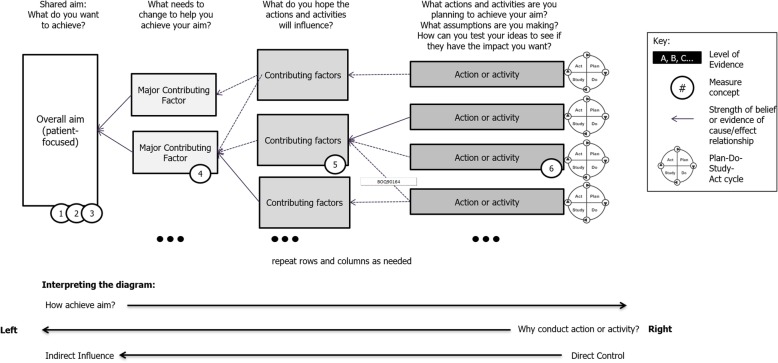
Our findings align with published literature that suggests the underpinning rationale for PPI is confusing. A strategic aim is difficult to articulate. Context and complexity are at play making the sharing of generalisable knowledge elusive. We offer further critique about the value of these documents and consider: 'is there an alternative approach to construct PPI strategy to generate theory, capture learning and evaluate effectiveness at the same time?' We suggest testing the adoption of programme theory in PPI. The emergent nature and context sensitive features of programme theory enable curiosity, creativity and critical appraisal. It has the potential to release practitioners from the tokenistic cycle of monitoring and reporting and replace this with a richer understanding of 'what' works and 'how' tied to a 'why' - in order to achieve a shared aim that everyone can get behind.
患者及公众参与(PPI)战略文件被视为组织致力于开放和透明的一项基本特征。它们提供了一种机制,用于传达更广泛社区在医疗保健方面施加影响的机会。例如,在监管检查期间,缺乏文件记录可能会被负面解读为组织缺乏与广大选民合作的意愿。已发表的文献对于可为战略行动提供基础的基本原理和证据描绘了一幅令人困惑的图景。这使得那些负责将目标转化为有意义参与的人感到困难。我们调查了战略文件中内容的呈现和组织方式。这项务实的研究旨在激发反思性实践、促进辩论并引发广大受众的进一步探究。
我们创建并迭代了一个改编自4Pi国家参与标准的框架,以根据原则、目的、存在、过程和影响这五个领域分析组织的PPI战略文件。15份战略文件被分为四类(急症护理提供者;临床委托组;社区医疗保健提供者;以及其他)并纳入分析。制作了一个矩阵。通过纵向(向下)和横向( across )阅读矩阵,可以在4Pi领域之间以及不同组织之间进行比较。
各领域之间或各组织之间没有明显的模式。在满足标准的程度上存在差异。没有单一的策略完全符合4Pi国家参与标准所有五个领域的标准。目的标准在八份战略文件中得到了充分满足。只有两份文件完全符合影响标准。四个组织在五个领域中全部或部分满足标准,表现出更好的完整性。单个组织部分满足了所有领域的标准。其余10个组织至少在一个领域中无法满足标准。
我们的研究结果与已发表的文献一致,表明PPI的基本原理令人困惑。一个战略目标难以阐明。背景和复杂性在起作用,使得可推广知识的共享难以实现。我们对这些文件的价值提出了进一步的批评,并思考:“是否有另一种构建PPI战略的方法,能够同时生成理论、获取经验教训并评估有效性?”我们建议在PPI中测试项目理论的应用。项目理论的新兴性质和情境敏感特征能够激发好奇心、创造力和批判性评估。它有可能使从业者摆脱监测和报告的表面形式循环,代之以对“什么”有效以及“如何”与“为什么”相关联的更深入理解,以便实现一个每个人都能支持的共同目标。
