Harrison Lucas, Tyson Gregory H, Strain Errol, Lindsey Rebecca L, Strockbine Nancy, Ceric Olgica, Fortenberry Gamola Z, Harris Beth, Shaw Sheryl, Tillman Glenn, Zhao Shaohua, Dessai Uday
U.S. Food and Drug Administration, Center for Veterinary Medicine, Laurel, MD 20708, USA.
Centers for Disease Control and Prevention, Atlanta, GA 30333, USA.
Foods. 2022 Jul 3;11(13):1975. doi: 10.3390/foods11131975.
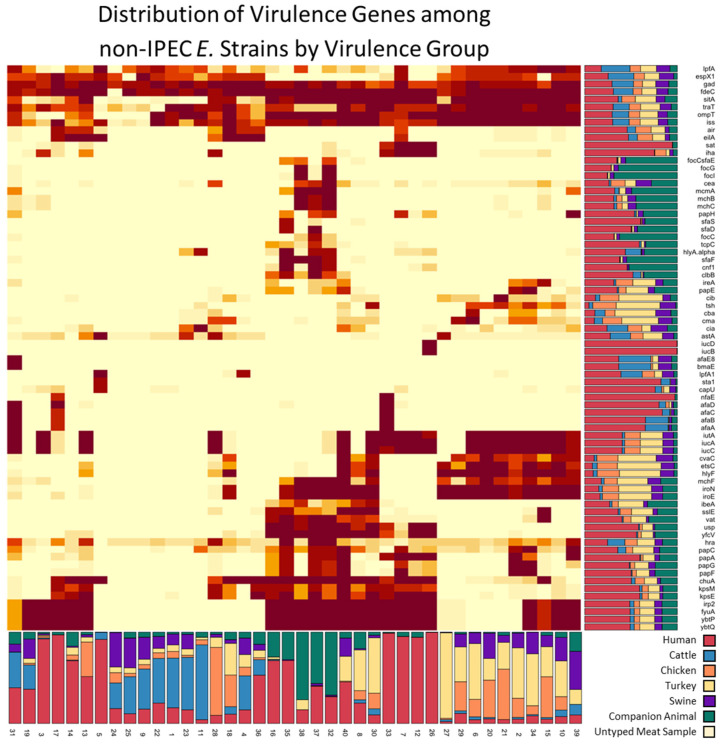
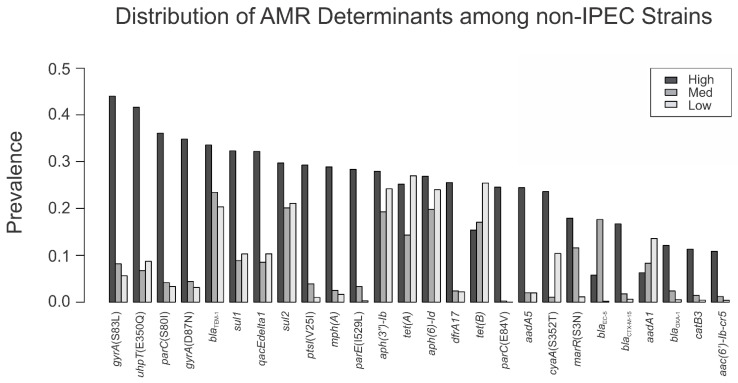
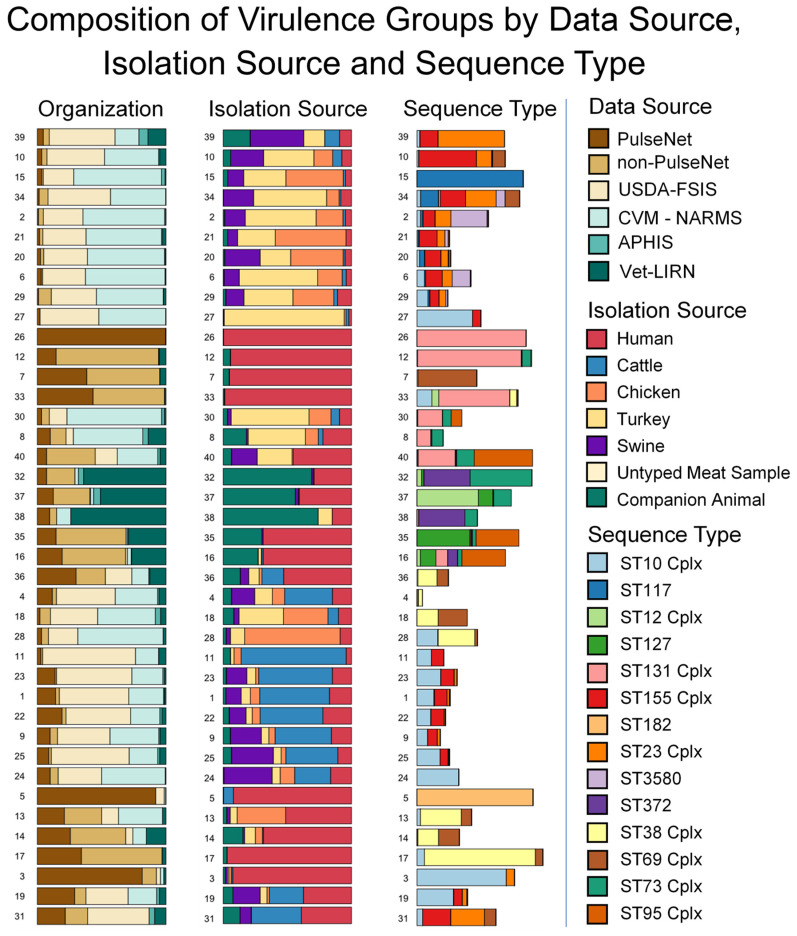
Extraintestinal pathogenic Escherichia coli (ExPEC) cause urinary tract and potentially life-threatening invasive infections. Unfortunately, the origins of ExPEC are not always clear. We used genomic data of E. coli isolates from five U.S. government organizations to evaluate potential sources of ExPEC infections. Virulence gene analysis of 38,032 isolates from human, food animal, retail meat, and companion animals classified the subset of 8142 non-diarrheagenic isolates into 40 virulence groups. Groups were identified as low, medium, and high relative risk of containing ExPEC strains, based on the proportion of isolates recovered from humans. Medium and high relative risk groups showed a greater representation of sequence types associated with human disease, including ST-131. Over 90% of food source isolates belonged to low relative risk groups, while >60% of companion animal isolates belonged to medium or high relative risk groups. Additionally, 18 of the 26 most prevalent antimicrobial resistance determinants were more common in high relative risk groups. The associations between antimicrobial resistance and virulence potentially limit treatment options for human ExPEC infections. This study demonstrates the power of large-scale genomics to assess potential sources of ExPEC strains and highlights the importance of a One Health approach to identify and manage these human pathogens.
肠外致病性大肠杆菌(ExPEC)可引发尿路感染以及可能危及生命的侵袭性感染。不幸的是,ExPEC的起源并不总是清晰明了。我们利用来自美国五个政府机构的大肠杆菌分离株的基因组数据,来评估ExPEC感染的潜在来源。对来自人类、食用动物、零售肉类和伴侣动物的38032株分离株进行毒力基因分析,将8142株非腹泻性分离株的子集分为40个毒力组。根据从人类身上分离出的分离株比例,将这些组确定为含有ExPEC菌株的低、中、高相对风险组。中高相对风险组显示出与人类疾病相关的序列类型的代表性更高,包括ST-131。超过90%的食物源分离株属于低相对风险组,而超过60%的伴侣动物分离株属于中或高相对风险组。此外,26种最常见的抗菌药物耐药决定因素中有18种在高相对风险组中更为常见。抗菌药物耐药性与毒力之间的关联可能会限制人类ExPEC感染的治疗选择。这项研究证明了大规模基因组学在评估ExPEC菌株潜在来源方面的作用,并强调了采用“同一健康”方法来识别和管理这些人类病原体的重要性。