Laboratory of Stem Cells and Regenerative Medicine, Department of Biomedical Sciences, Faculty of Medicine and Health Sciences, University of Barcelona, 08036 Barcelona, Spain.
Creatio, Production and Validation Center of Advanced Therapies, Faculty of Medicine and Health Science, University of Barcelona, 08036 Barcelona, Spain.
Cells. 2022 Jun 21;11(13):1984. doi: 10.3390/cells11131984.
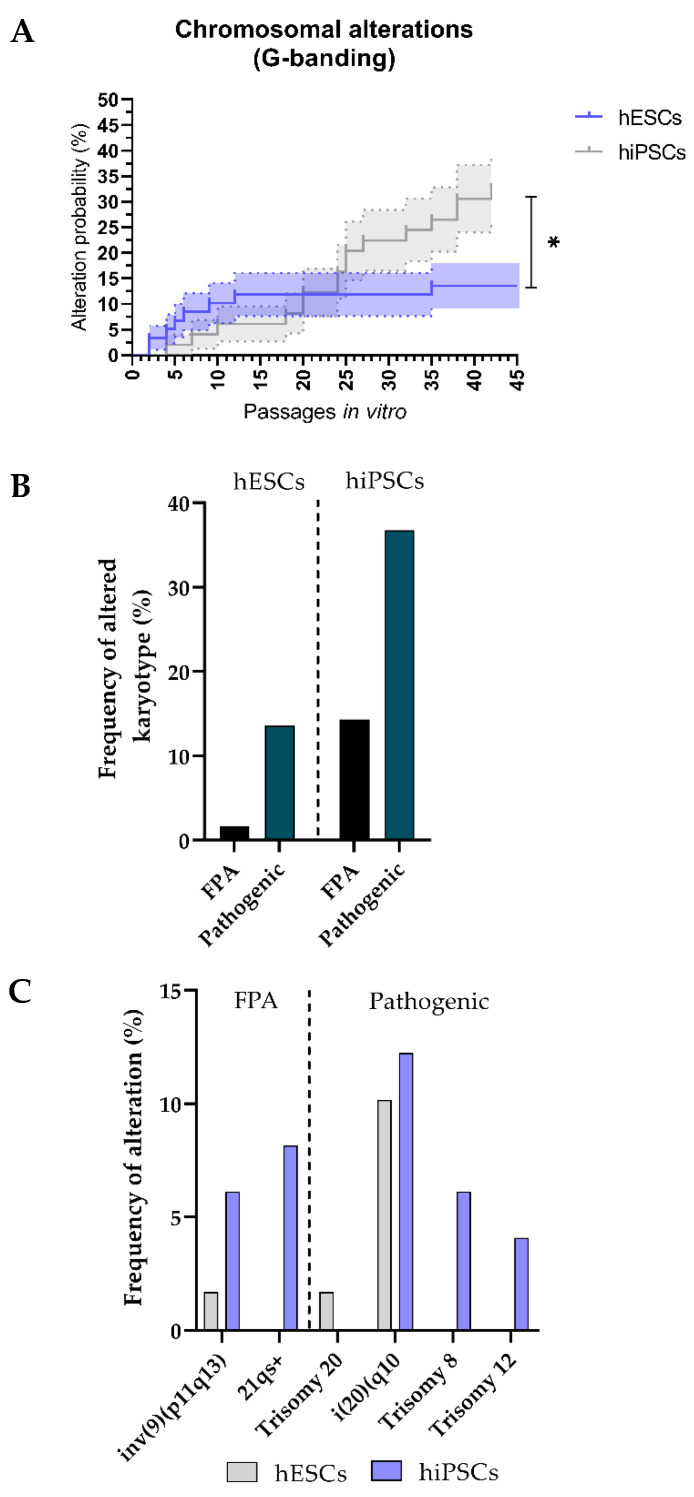
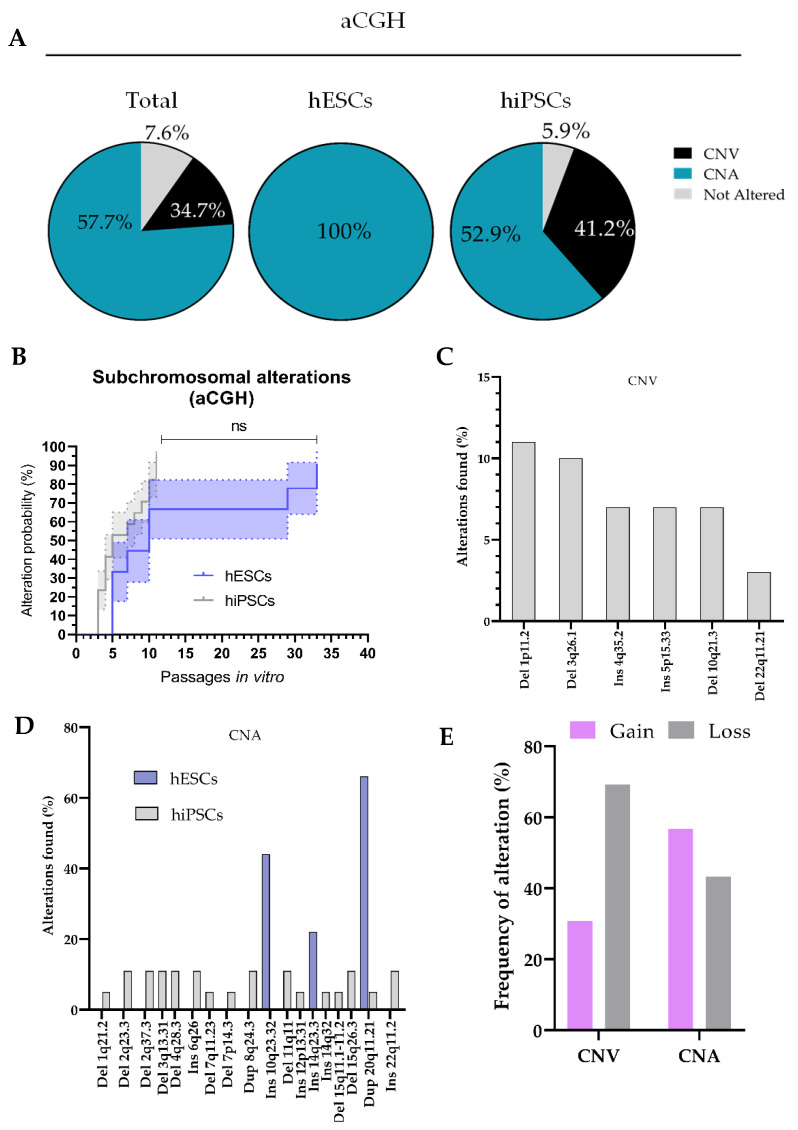
Human pluripotent stem cells (hPSCs) have generated unprecedented interest in the scientific community, given their potential applications in regenerative medicine, disease modeling, toxicology and drug screening. However, hPSCs are prone to acquire genomic alterations in vitro, mainly due to suboptimal culture conditions and inappropriate routines to monitor genome integrity. This poses a challenge to both the safety of clinical applications and the reliability of basic and translational hPSC research. In this study, we aim to investigate if the implementation of a Quality Management System (QMS) such as ISO9001:2015 to ensure reproducible and standardized cell culture conditions and genomic screening strategies can decrease the prevalence of genomic alterations affecting hPSCs used for research applications. To this aim, we performed a retrospective analysis of G-banding karyotype and Comparative Genomic Hybridization array (aCGH) data generated by our group over a 5-year span of different hESC and hiPSC cultures. This work demonstrates that application of a QMS to standardize cell culture conditions and genomic monitoring routines leads to a striking improvement of genomic stability in hPSCs cultured in vitro, as evidenced by a reduced probability of potentially pathogenic chromosomal aberrations and subchromosomal genomic alterations. These results support the need to implement QMS in academic laboratories performing hPSC research.
人类多能干细胞(hPSCs)因其在再生医学、疾病建模、毒理学和药物筛选方面的潜在应用,引起了科学界的极大兴趣。然而,hPSCs 在体外容易获得基因组改变,主要是由于培养条件不佳和监测基因组完整性的常规方法不当。这对临床应用的安全性和基础及转化 hPSC 研究的可靠性都构成了挑战。在这项研究中,我们旨在研究是否实施质量管理体系(QMS),如 ISO9001:2015,以确保可重复和标准化的细胞培养条件和基因组筛选策略,从而降低影响用于研究应用的 hPSCs 的基因组改变的发生率。为此,我们对我们小组在 5 年的不同 hESC 和 hiPSC 培养过程中生成的 G 带核型和比较基因组杂交阵列(aCGH)数据进行了回顾性分析。这项工作表明,应用 QMS 来标准化细胞培养条件和基因组监测常规,可显著提高 hPSCs 在体外培养的基因组稳定性,这表现在潜在致病性染色体异常和亚染色体基因组改变的概率降低。这些结果支持在进行 hPSC 研究的学术实验室中实施 QMS 的必要性。