Faculty of Human and Social Sciences, University of Enna "Kore", 94100 Enna, Italy.
Associazione Onlus Laboratorio 0246, Via del Nascimben, 1b, 31100 Treviso, Italy.
Int J Environ Res Public Health. 2022 Jun 22;19(13):7652. doi: 10.3390/ijerph19137652.
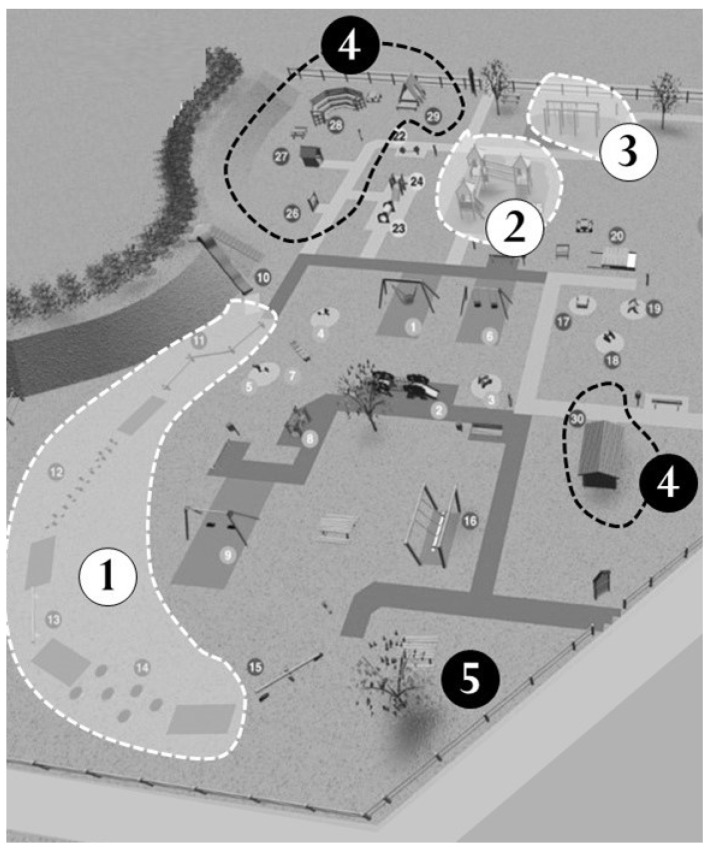
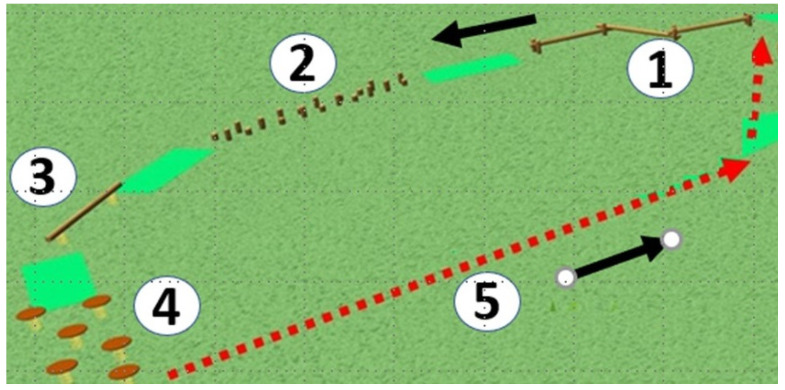
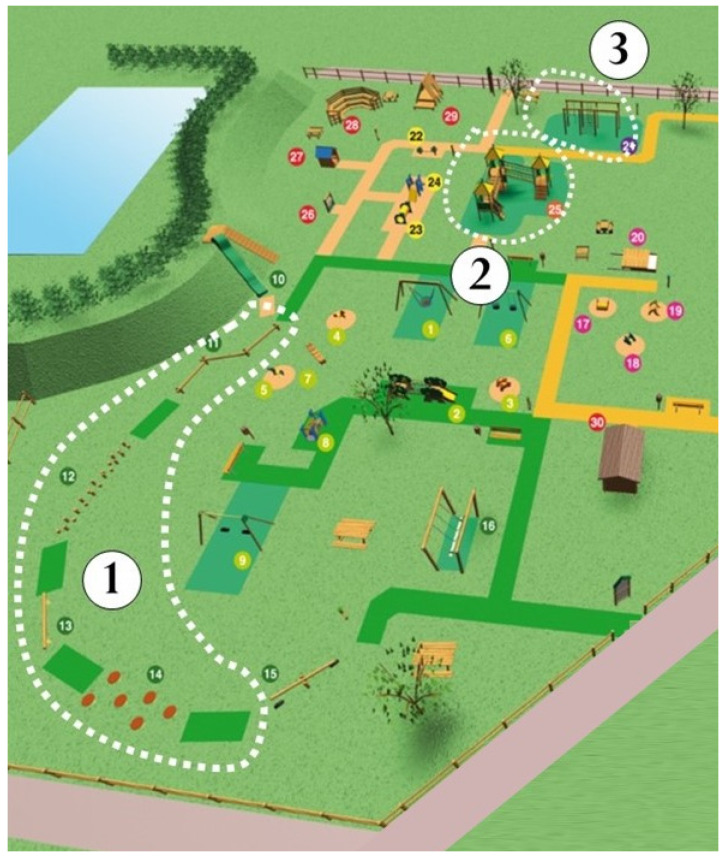
Both the indoor and the outdoor environments and their organization exert pronounced influence upon physical activity behavior and motor development of preschool children. The aim of this study was to explore whether partly structured activity or free play in a specific playground had different impacts on motor competence development in 4-6-year-old preschoolers. The study had a pretest-post-test design, with two intervention groups and one control. Sixty-two children were included in a partly structured activity group and forty-three children in a free-play group. Both groups participated in playground activities consisting of 10 sessions (once a week), each lasting 1 h, in a specific playground setting. For the partly structured activity group, activities in each session consisted of a combination of both structured and free activity while the free-play group were engaged in unstructured play only. The control group did not attend the playground activities (N = 36). To assess levels of motor skills, each child completed pre- and post-tests using the Movement Assessment Battery for children (MABC-2), the Test of Motor Competence (TMC) and two playground-specific tests. A 3 (study group) and X 2 (gender) ANCOVAs were conducted on post-test scores on each of the test items from TMC, MABC-II and playground tests, with pre-test scores as covariates. Post hoc pairwise multiple comparisons were conducted with the alpha Bonferroni corrected, and the partial eta-squared () was applied as a measure of effect size. The results indicate no significant differences in motor competence measured by the TMC or the MABC-2 between groups. On the contrary, a significant improvement in performance in the playground-specific tests was observed in the partly structured activity group compared to the free-play and control groups.
室内和室外环境及其组织对学龄前儿童的身体活动行为和运动发展有显著影响。本研究旨在探讨特定游乐场中的部分结构化活动或自由游戏是否对 4-6 岁学龄前儿童的运动能力发展有不同的影响。该研究采用了前测-后测设计,有两个干预组和一个对照组。62 名儿童被纳入部分结构化活动组,43 名儿童被纳入自由游戏组。两组均参加了在特定游乐场环境下进行的 10 次(每周一次)、每次 1 小时的游乐场活动。对于部分结构化活动组,每次活动由结构化和自由活动的组合组成,而自由游戏组仅进行非结构化游戏。对照组不参加游乐场活动(N=36)。为了评估运动技能水平,每个孩子在预测试和后测试中都使用儿童运动评估电池(MABC-2)、运动能力测试(TMC)和两个特定于游乐场的测试进行评估。在 TMC、MABC-II 和游乐场测试的每个测试项目的后测分数上进行了 3(研究组)和 X 2(性别)协方差分析,以预测试分数为协变量。使用校正后的 alpha 邦弗伦尼多重比较进行事后两两多重比较,并应用部分 eta 平方()作为效应量的度量。结果表明,TMC 或 MABC-2 测量的运动能力在组间没有显著差异。相反,与自由游戏组和对照组相比,部分结构化活动组在特定于游乐场的测试中的表现有显著提高。