Pediatric Pulmonology and Sleep Medicine, Cystic Fibrosis Center, Children's Hospital, University of Duisburg-Essen, 45117 Essen, Germany.
Institute of Human Nutrition and Food Science, Christian Albrechts University Kiel, 24105 Kiel, Germany.
Int J Environ Res Public Health. 2022 Jun 28;19(13):7923. doi: 10.3390/ijerph19137923.
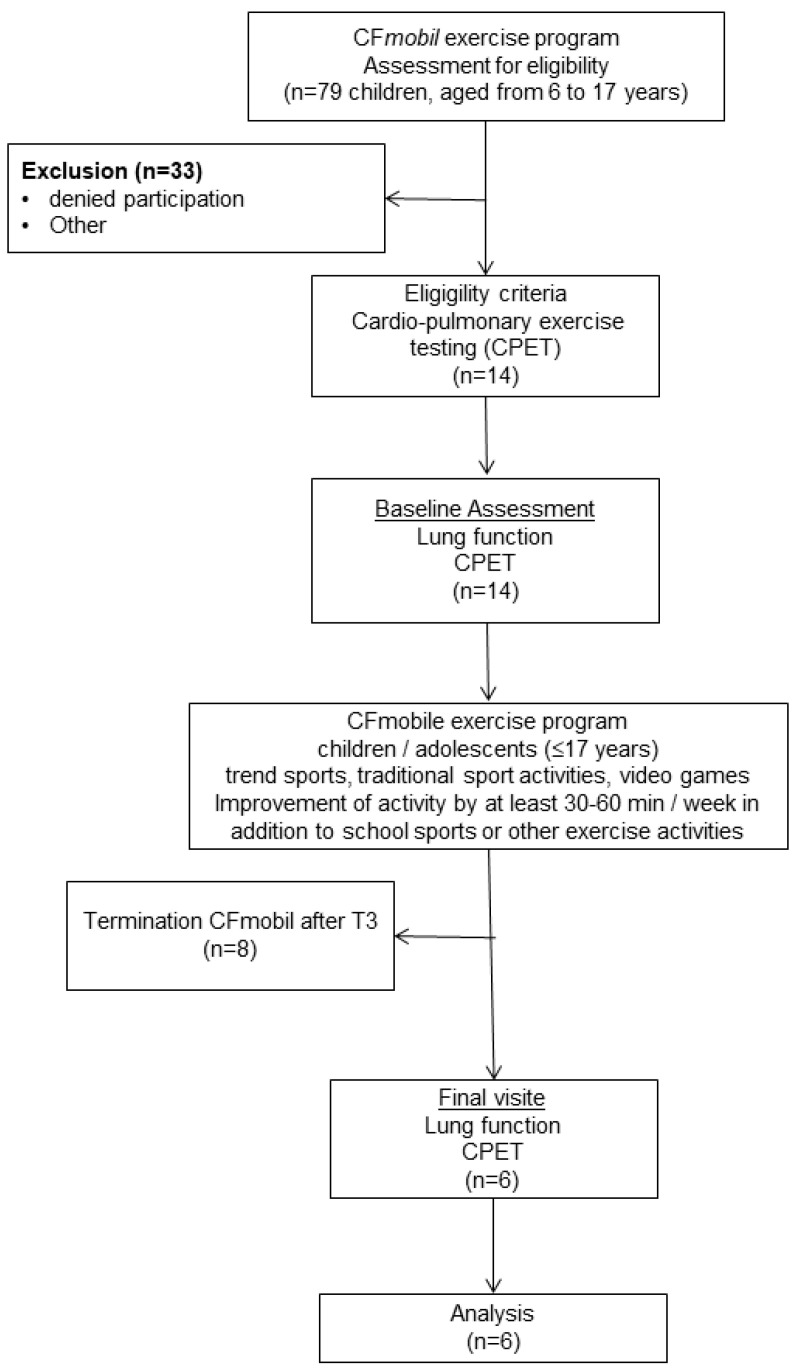
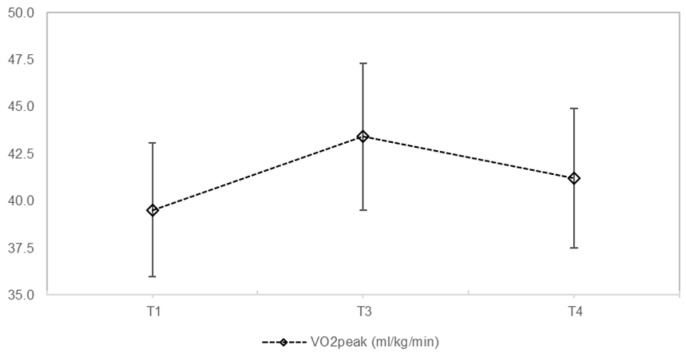
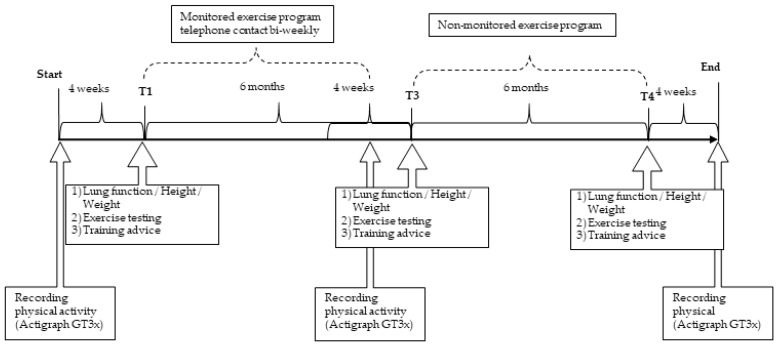
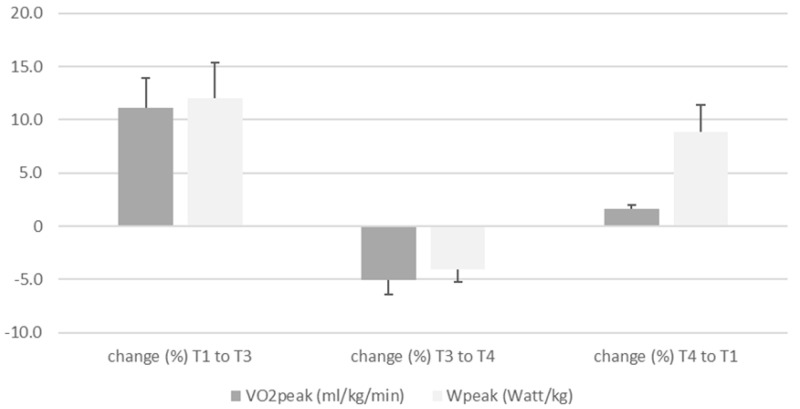
Background: The aim of this study was to investigate the effects of a monitored exercise program on aerobic fitness in children with cystic fibrosis (CF). Methods: Six children (2f/4m) with ages ranging from 6 to 14 years (11.3 ± 3.3 years.) and a mean ppFEV1 102.5 ± 13.5% pred. participated in the partially monitored 12-month exercise program. VO2peak and Wpeak were used as parameters of aerobic fitness. Incremental Cardio-Pulmonary Exercise Tests (CPETs) were performed before the program began (T1), after 6 months (T3) of monitoring, and after a further 6 months (T4) without monitoring. Habitual physical activity (HPA) was assessed with accelerometry. Results: The values of VO2peak and Wpeak improved slightly from T1 to T3 (p > 0.05), without a further increase after monitoring was stopped (T4). However, the VO2peak and Wpeak values were higher after monitoring was stopped compared to at T1. The exercise program with and without monitoring (p > 0.05) had no or only a slight effect on the FEV1 values, steps/day, and the intensity of HPA. Conclusions: Monitoring seems to facilitate the achievement of beneficial effects on physical fitness in CF children. For that reason, continuous individual exercise monitoring programs that involve close contact with an exercise therapist should be provided to maintain long-term motivation and participation in physical activities and sport activities during leisure time.
本研究旨在探讨监测运动方案对囊性纤维化(CF)患儿有氧适能的影响。
6 名年龄在 6 至 14 岁之间(平均 11.3±3.3 岁)的 CF 患儿(2 女 4 男),预计用力肺活量(ppFEV1)占预计值的 102.5±13.5%。参与者接受了为期 12 个月的部分监测运动方案。峰值摄氧量(VO2peak)和峰值功率(Wpeak)被用作有氧适能的参数。在方案开始前(T1)、监测 6 个月后(T3)以及停止监测 6 个月后(T4)进行递增心肺运动测试(CPET)。通过加速度计评估习惯性体力活动(HPA)。
VO2peak 和 Wpeak 值从 T1 到 T3 略有改善(p>0.05),停止监测后(T4)没有进一步增加。然而,与 T1 相比,停止监测后 VO2peak 和 Wpeak 值更高。有或没有监测的运动方案(p>0.05)对 FEV1 值、每日步数和 HPA 的强度没有或只有轻微影响。
监测似乎有利于 CF 患儿身体素质的有益效果。因此,应提供持续的个体化运动监测方案,与运动治疗师密切接触,以保持长期的运动动机和参与休闲时间的体育活动。