Departamento de Saúde Ambiental, Instituto Nacional de Saúde Doutor Ricardo Jorge, Avenida Padre Cruz, 1649-016 Lisboa, Portugal.
Centre for Environmental and Marine Studies (CESAM), Department of Animal Biology, University of Lisboa, 1349-017 Lisboa, Portugal.
Int J Environ Res Public Health. 2022 Jun 28;19(13):7934. doi: 10.3390/ijerph19137934.
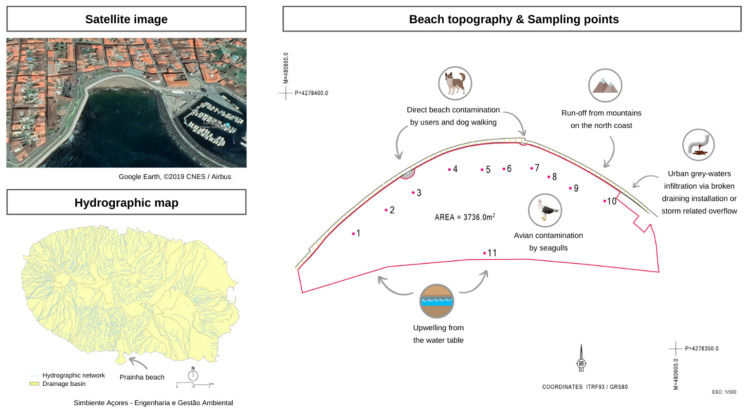
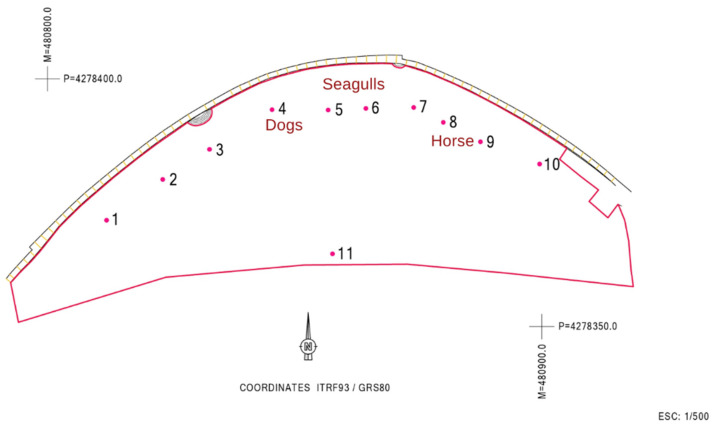
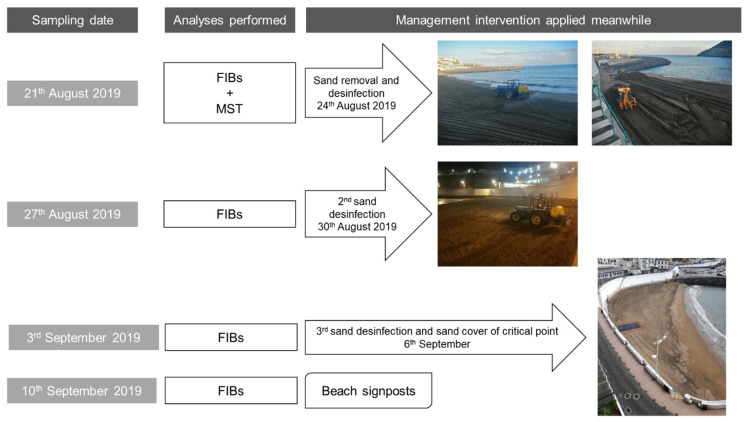
Beach sand may act as a reservoir for numerous microorganisms, including enteric pathogens. Several of these pathogens originate in human or animal feces, which may pose a public health risk. In August 2019, high levels of fecal indicator bacteria (FIB) were detected in the sand of the Azorean beach Prainha, Terceira Island, Portugal. Remediation measures were promptly implemented, including sand removal and the spraying of chlorine to restore the sand quality. To determine the source of the fecal contamination, during the first campaign, supratidal sand samples were collected from several sites along the beach, followed by microbial source tracking (MST) analyses of marker genes for five animal species, including humans. Some of the sampling sites revealed the presence of marker genes from dogs, seagulls, and ruminants. Making use of the information on biological sources originating partially from dogs, the municipality enforced restrictive measures for dog-walking at the beach. Subsequent sampling campaigns detected low FIB contamination due to the mitigation and remediation measures that were undertaken. This is the first case study where the MST approach was used to determine the contamination sources in the supratidal sand of a coastal beach. Our results show that MST can be an essential tool to determine sources of fecal contamination in the sand. This study shows the importance of holistic management of beaches that should go beyond water quality monitoring for FIB, putting forth evidence for beach sand monitoring.
海滩沙可能是许多微生物的储集地,包括肠道病原体。其中一些病原体来源于人类或动物粪便,这可能对公共健康构成威胁。2019 年 8 月,葡萄牙特塞拉岛的阿祖尔海滩普拉伊尼亚的沙滩中检测到高浓度的粪便指示菌(FIB)。随后迅速采取了补救措施,包括清除沙子和喷洒氯来恢复沙滩质量。为了确定粪便污染的来源,在第一次采样期间,从海滩沿线的几个地点采集了潮上带沙滩样本,随后对来自 5 种动物(包括人类)的标记基因进行了微生物源追踪(MST)分析。一些采样点显示出来自狗、海鸥和反刍动物的标记基因的存在。利用部分来源于狗的生物来源信息,市政府在海滩上对遛狗实施了限制措施。随后的采样活动检测到 FIB 污染程度较低,这是由于采取了缓解和补救措施。这是首例使用 MST 方法确定沿海滩涂潮上带沙滩污染来源的案例研究。我们的研究结果表明,MST 可以作为确定沙滩中粪便污染来源的重要工具。本研究表明海滩整体管理的重要性,除了 FIB 的水质监测,还应提出沙滩监测的证据。