Department of Biochemistry, College of Science, King Saud University, Riyadh 11451, Saudi Arabia.
Molecules. 2022 Jun 21;27(13):3992. doi: 10.3390/molecules27133992.
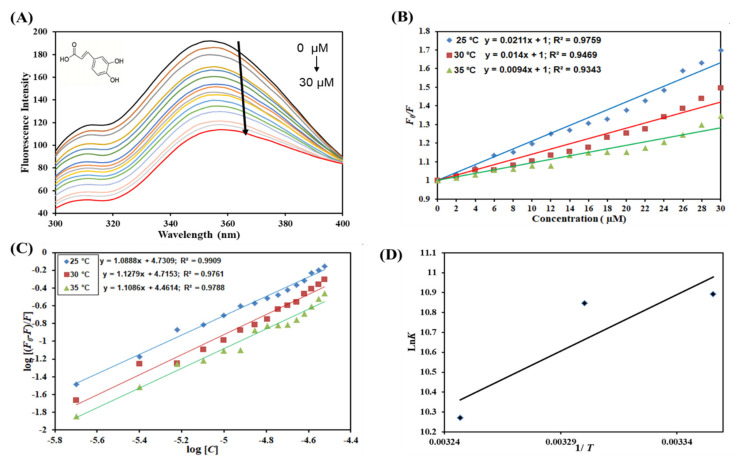
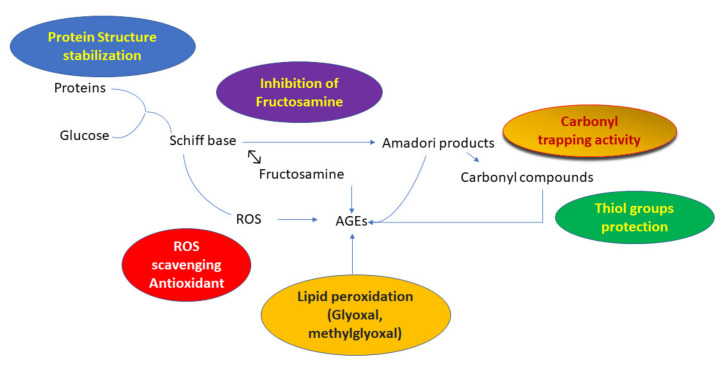
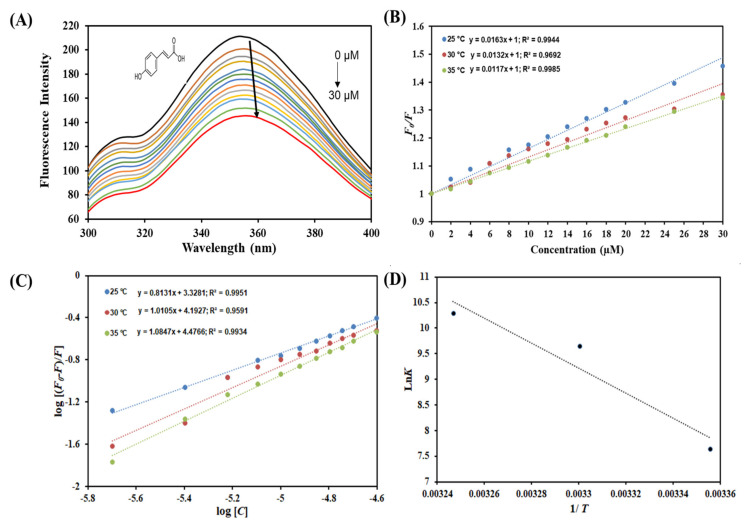
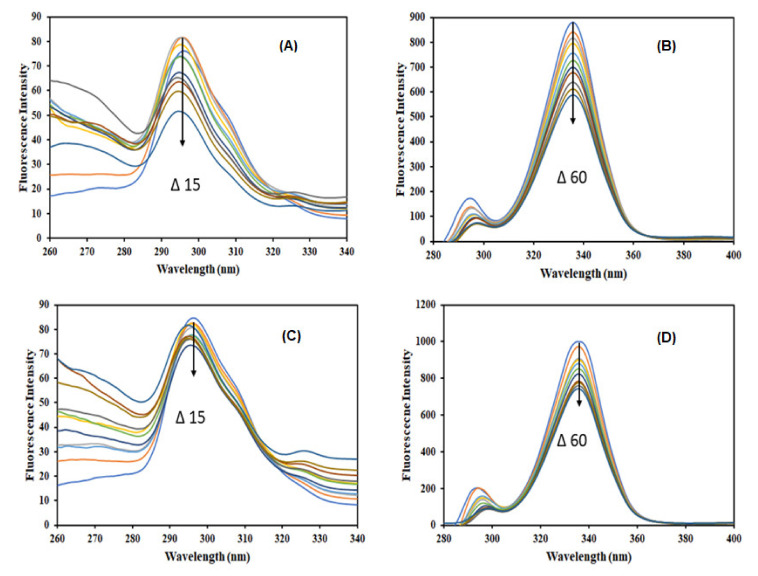
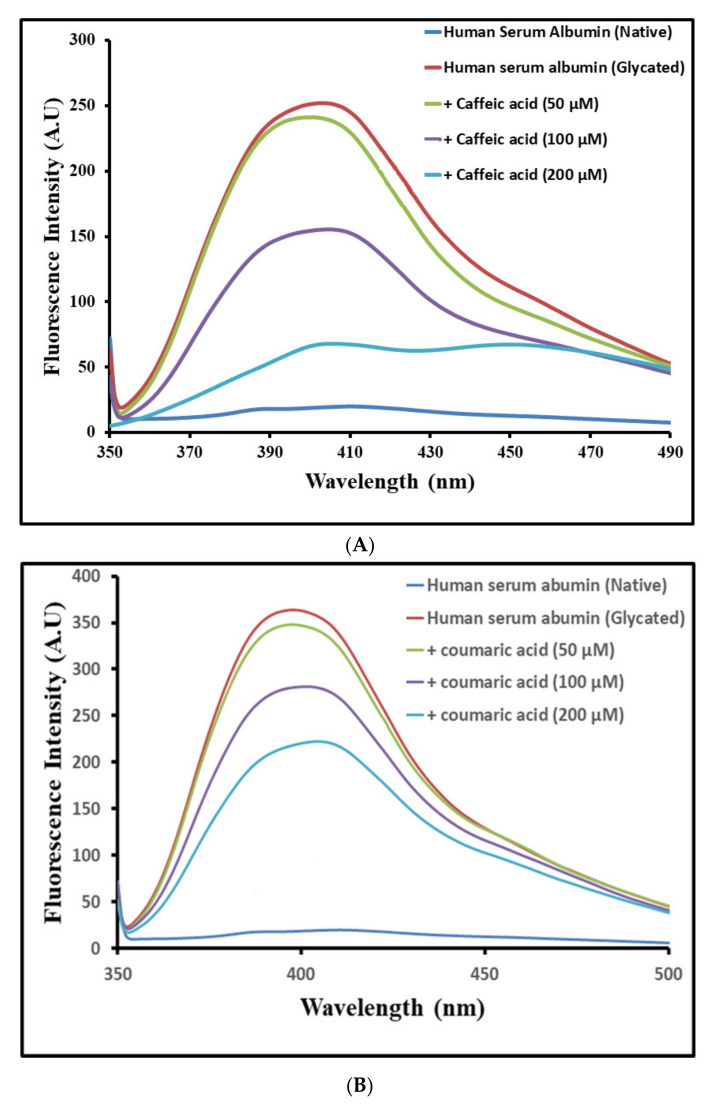
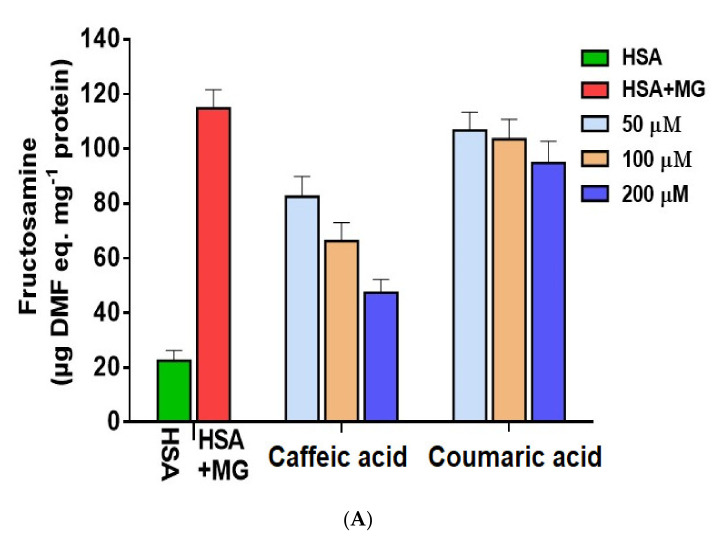
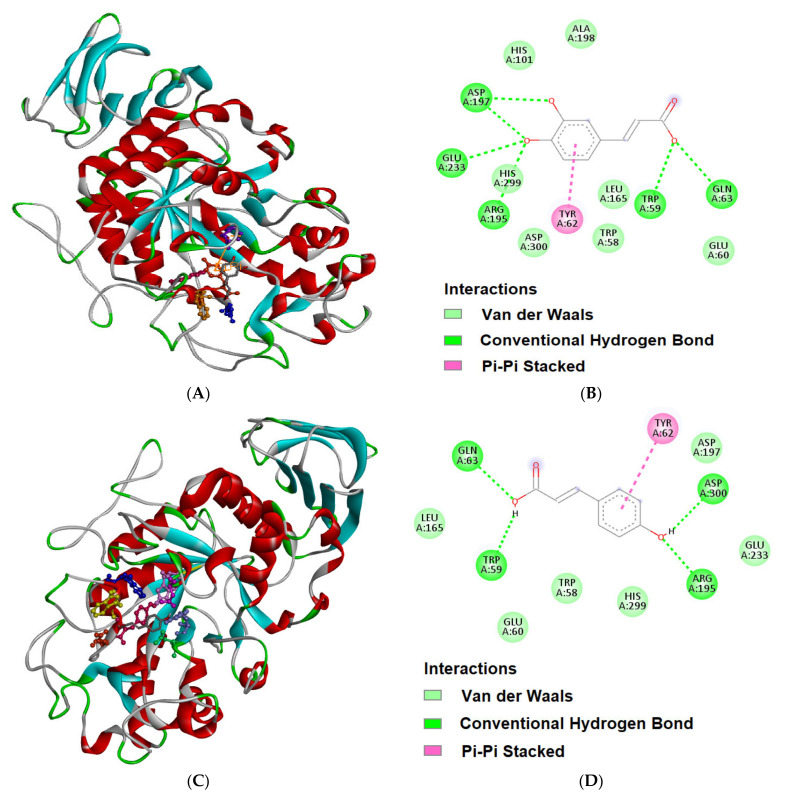
Alpha-amylase (α-amylase) is a key player in the management of diabetes and its related complications. This study was intended to have an insight into the binding of caffeic acid and coumaric acid with α-amylase and analyze the effect of these compounds on the formation of advanced glycation end-products (AGEs). Fluorescence quenching studies suggested that both the compounds showed an appreciable binding affinity towards α-amylase. The evaluation of thermodynamic parameters (Δ and Δ) suggested that the α-amylase-caffeic/coumaric acid complex formation is driven by van der Waals force and hydrogen bonding, and thus complexation process is seemingly specific. Moreover, glycation and oxidation studies were also performed to explore the multitarget to manage diabetes complications. Caffeic and coumaric acid both inhibited fructosamine content and AGE fluorescence, suggesting their role in the inhibition of early and advanced glycation end-products (AGEs). However, the glycation inhibitory potential of caffeic acid was more in comparison to p-coumaric acid. This high antiglycative potential can be attributed to its additional -OH group and high antioxidant activity. There was a significant recovery of 84.5% in free thiol groups in the presence of caffeic acid, while coumaric attenuated the slow recovery of 29.4% of thiol groups. In vitro studies were further entrenched by in silico studies. Molecular docking studies revealed that caffeic acid formed six hydrogen bonds (Trp 59, Gln 63, Arg 195, Arg 195, Asp 197 and Asp 197) while coumaric acid formed four H-bonds with Trp 59, Gln 63, Arg 195 and Asp 300. Our studies highlighted the role of hydrogen bonding, and the ligands such as caffeic or coumaric acid could be exploited to design antidiabetic drugs.
α-淀粉酶(α-amylase)是糖尿病及其相关并发症管理的关键因素。本研究旨在深入了解咖啡酸和香豆酸与α-淀粉酶的结合,并分析这些化合物对晚期糖基化终产物(AGEs)形成的影响。荧光猝灭研究表明,这两种化合物都对α-淀粉酶表现出相当大的结合亲和力。热力学参数(Δ和Δ)的评估表明,α-淀粉酶-咖啡酸/香豆酸复合物的形成是由范德华力和氢键驱动的,因此复合物的形成过程似乎是特异性的。此外,还进行了糖化和氧化研究,以探索多靶点管理糖尿病并发症。咖啡酸和香豆酸均抑制果糖胺含量和 AGE 荧光,表明它们在抑制早期和晚期糖基化终产物(AGEs)中的作用。然而,咖啡酸的糖化抑制潜力比对香豆酸更大。这种高抗糖化潜力可归因于其额外的-OH 基团和高抗氧化活性。在咖啡酸存在的情况下,自由巯基组的回收率显著达到 84.5%,而香豆酸则使巯基组的缓慢恢复率降低 29.4%。体外研究进一步通过计算机模拟研究得到证实。分子对接研究表明,咖啡酸形成了六个氢键(色氨酸 59、谷氨酰胺 63、精氨酸 195、精氨酸 195、天冬氨酸 197 和天冬氨酸 197),而香豆酸与色氨酸 59、谷氨酰胺 63、精氨酸 195 和天冬氨酸 300 形成四个氢键。我们的研究强调了氢键的作用,以及咖啡酸或香豆酸等配体可用于设计抗糖尿病药物。