Islam Md Shafiqul, Islam Md Tohidul, Sarker Saugata, Jame Hasan Al, Nishat Sadiq Shahriyar, Jani Md Rafsun, Rauf Abrar, Ahsan Sumaiyatul, Shorowordi Kazi Md, Efstathiadis Harry, Carbonara Joaquin, Ahmed Saquib
Department of Materials and Metallurgical Engineering (MME), Bangladesh University of Engineering and Technology (BUET), East Campus, Dhaka 1000, Bangladesh.
Department of Materials Design and Innovation, University at Buffalo, Buffalo, New York 14260, United States.
ACS Omega. 2022 Jun 22;7(26):22263-22278. doi: 10.1021/acsomega.2c01076. eCollection 2022 Jul 5.
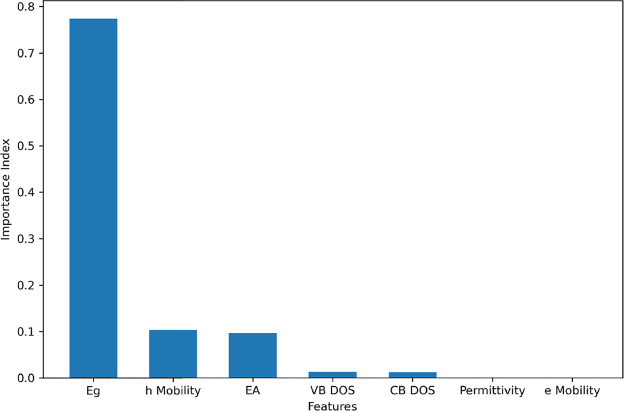
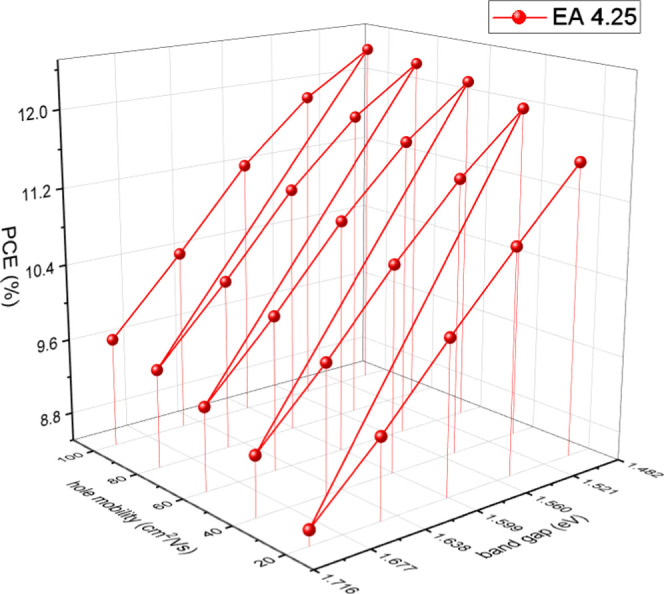
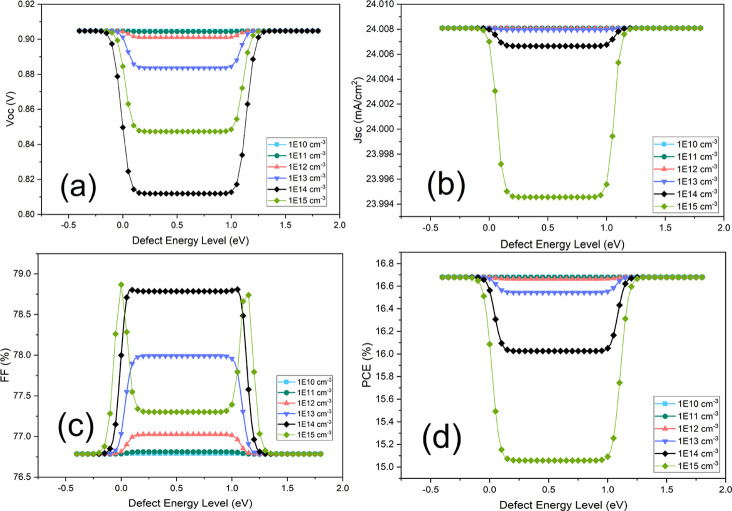
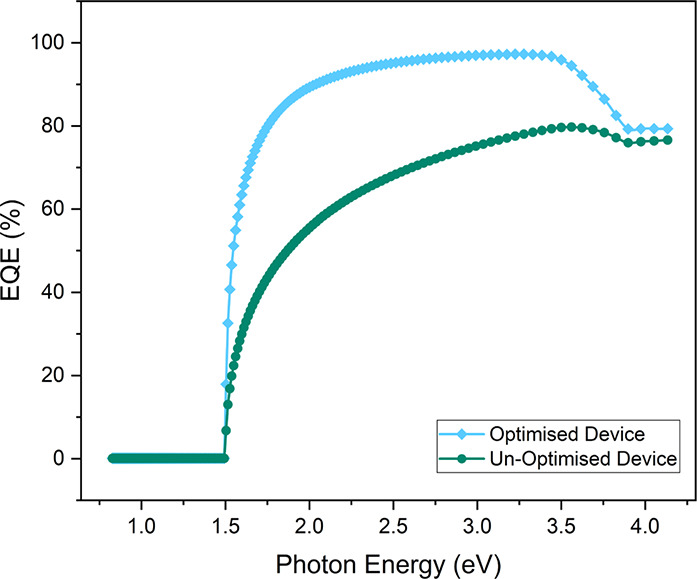
In this research, solar cell capacitance simulator-one-dimensional (SCAPS-1D) software was used to build and probe nontoxic Cs-based perovskite solar devices and investigate modulations of key material parameters on ultimate power conversion efficiency (PCE). The input material parameters of the absorber Cs-perovskite layer were incrementally changed, and with the various resulting combinations, 63,500 unique devices were formed and probed to produce device PCE. Versatile and well-established machine learning algorithms were thereafter utilized to train, test, and evaluate the output dataset with a focused goal to delineate and rank the input material parameters for their impact on ultimate device performance and PCE. The most impactful parameters were then tuned to showcase unique ranges that would ultimately lead to higher device PCE values. As a validation step, the predicted results were confirmed against SCAPS simulated results as well, highlighting high accuracy and low error metrics. Further optimization of intrinsic material parameters was conducted through modulation of absorber layer thickness, back contact metal, and bulk defect concentration, resulting in an improvement in the PCE of the device from 13.29 to 16.68%. Overall, the results from this investigation provide much-needed insight and guidance for researchers at large, and experimentalists in particular, toward fabricating commercially viable nontoxic inorganic perovskite alternatives for the burgeoning solar industry.
在本研究中,使用太阳能电池电容模拟器一维(SCAPS-1D)软件构建并探究无毒铯基钙钛矿太阳能器件,并研究关键材料参数对最终功率转换效率(PCE)的调制作用。吸收层铯钙钛矿层的输入材料参数逐步变化,通过各种所得组合,形成并探究了63500个独特的器件以得出器件的PCE。此后,利用通用且成熟的机器学习算法对输出数据集进行训练、测试和评估,目标是明确并排列输入材料参数对最终器件性能和PCE的影响。然后对影响最大的参数进行调整,以展示最终能导致更高器件PCE值的独特范围。作为验证步骤,预测结果也与SCAPS模拟结果进行了对比,突出了高精度和低误差指标。通过调节吸收层厚度、背接触金属和体缺陷浓度对本征材料参数进行了进一步优化,使器件的PCE从13.29%提高到了16.68%。总体而言,本研究结果为广大研究人员,尤其是实验人员,在为蓬勃发展的太阳能产业制造具有商业可行性的无毒无机钙钛矿替代品方面提供了急需的见解和指导。