Liu Weixin, Yin Hengfu, Feng Yi, Yu Suhang, Fan Zhengqi, Li Xinlei, Li Jiyuan
State Key Laboratory of Tree Genetics and Breeding, Research Institute of Subtropical Forestry, Chinese Academy of Forestry, Hangzhou, Zhejiang 311400, China.
Key Laboratory of Forest Genetics and Breeding, Research Institute of Subtropical Forestry, Chinese Academy of Forestry, Hangzhou, Zhejiang 311400, China.
Curr Genomics. 2022 Apr 7;23(1):66-76. doi: 10.2174/1389202923666220203104340.
Flower senescence is the last stage of flower development and affects the ornamental and economic value of flower plants. There is still less known on flower senescence of the ornamental plant , a precious species of with significant commercial application value.
Transcriptome sequencing was used to investigate the flower senescence in five developmental stages of .
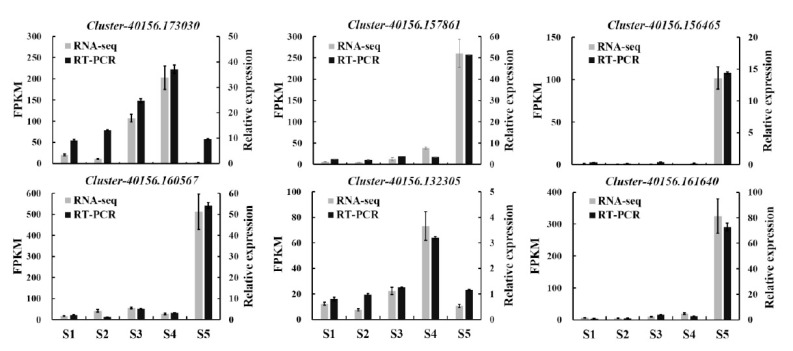
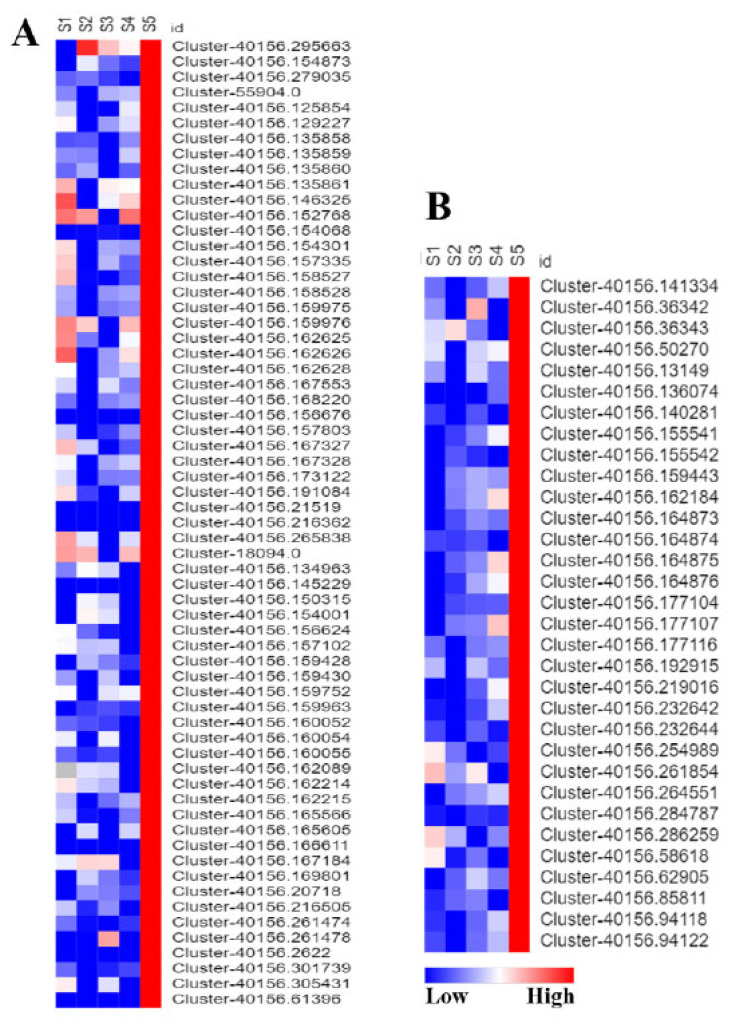
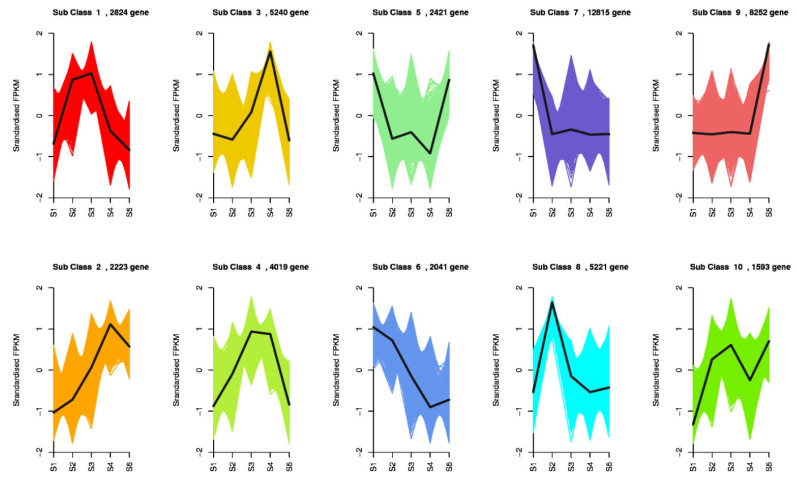
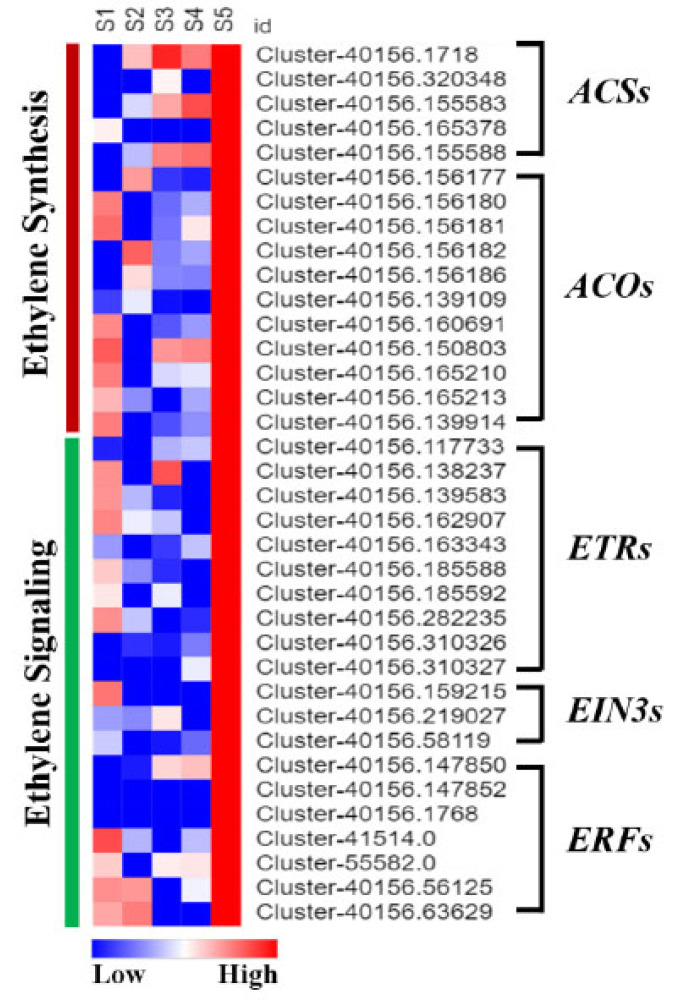
By Illumina HiSeq sequencing, we generated approximately 101.16 Gb clean data and 46649 differentially expressed unigenes. Based on the different expression pattern, differentially expressed unigenes were classified into 10 Sub Class. And Sub Class 9 including 8252 unigenes, was highly expressed in the flower senescent stage, suggesting it had a potential regulatory relationship of flower senescence. First, we found that ethylene biosynthesis genes , , receptor genes and signaling genes , all upregulated during flower senescence, suggesting ethylene might play a key role in the flower senescence of . Furthermore, reactive oxygen species (ROS) production related genes (), (), (), and ROS scavenging related genes (), () and () were induced in senescent stage, suggesting ROS might be involved in the flower senescence. Besides, the expression of monoterpenoid and isoflavonoid biosynthesis genes, transcription factors (, , and ), also were increased during flower senescence.
In , ethylene pathway might be the key to regulate flower senescence, and ROS signal might play a role in the flower senescence.
花朵衰老为花朵发育的最后阶段,会影响花卉植物的观赏和经济价值。对于具有重要商业应用价值的珍贵观赏植物的花朵衰老,人们了解的仍然较少。
利用转录组测序研究该植物五个发育阶段的花朵衰老情况。
通过Illumina HiSeq测序,我们获得了约101.16 Gb的干净数据和46649个差异表达的单基因。基于不同的表达模式,差异表达的单基因被分为10个亚类。其中亚类9包含8252个单基因,在花朵衰老阶段高度表达,表明其与花朵衰老可能存在潜在调控关系。首先,我们发现乙烯生物合成基因、受体基因和信号转导基因在花朵衰老过程中均上调,表明乙烯可能在该植物的花朵衰老中起关键作用。此外,衰老阶段活性氧(ROS)产生相关基因(、、)以及ROS清除相关基因(、、)均被诱导,表明ROS可能参与了花朵衰老。此外,单萜类和异黄酮生物合成基因、转录因子(、、和)的表达在花朵衰老过程中也有所增加。
在该植物中,乙烯途径可能是调控花朵衰老的关键,而ROS信号可能在花朵衰老中发挥作用。