Chen Panfeng, Li Xiaoping, Yu Xi, Yang Min
Department of Respiratory and Critical Care Medicine, Tianjin First Central Hospital, Tianjin 300192, China.
Department of Thoracic Surgery, Tianjin First Central Hospital, Tianjin 300192, China.
Evid Based Complement Alternat Med. 2022 Jul 1;2022:1244836. doi: 10.1155/2022/1244836. eCollection 2022.
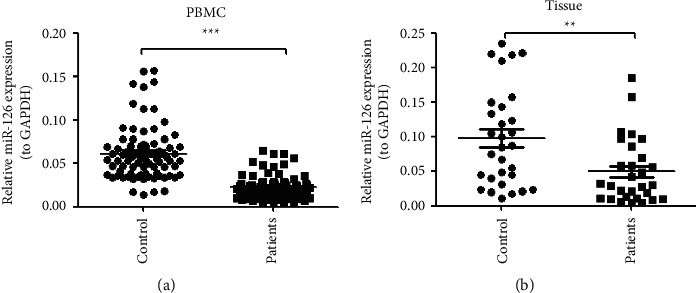
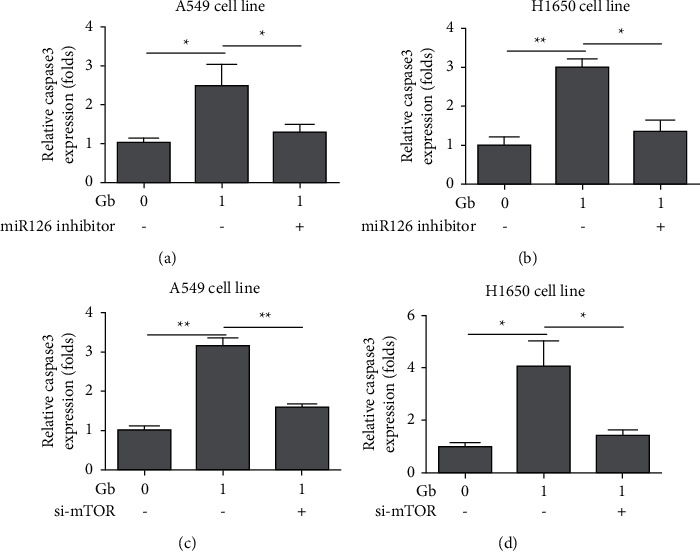
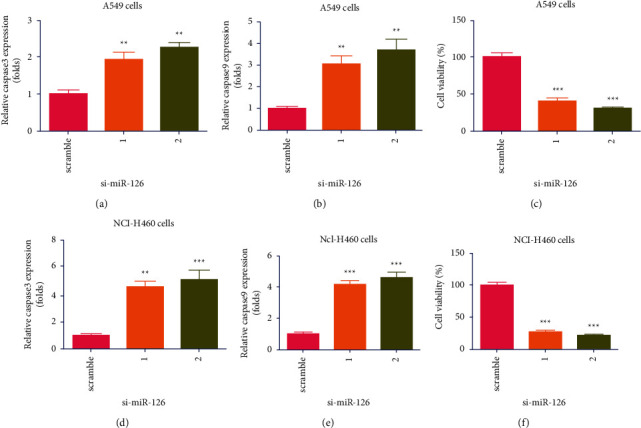
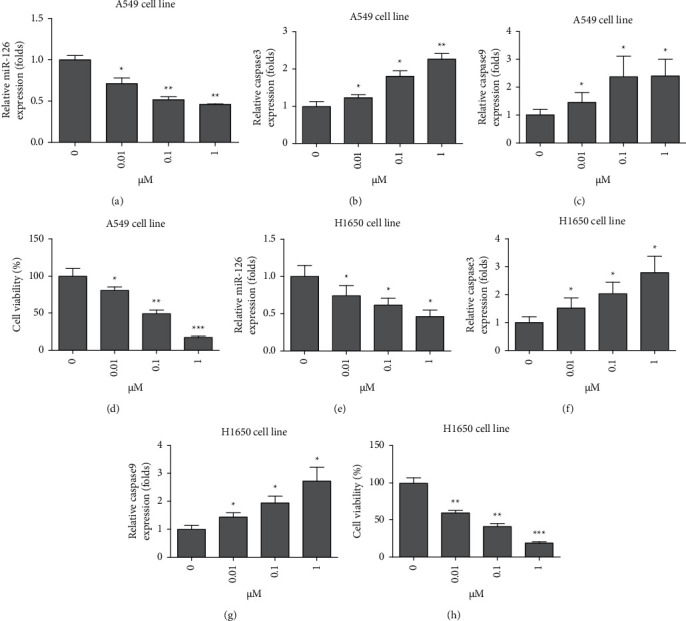
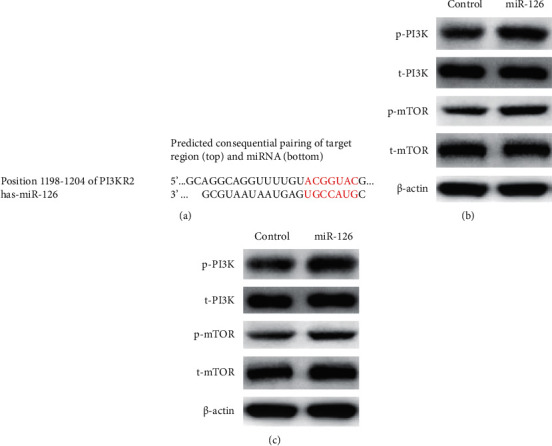
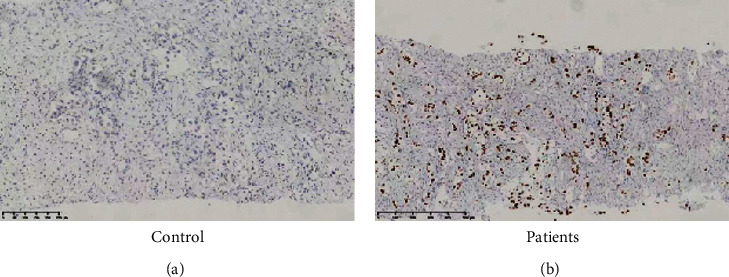
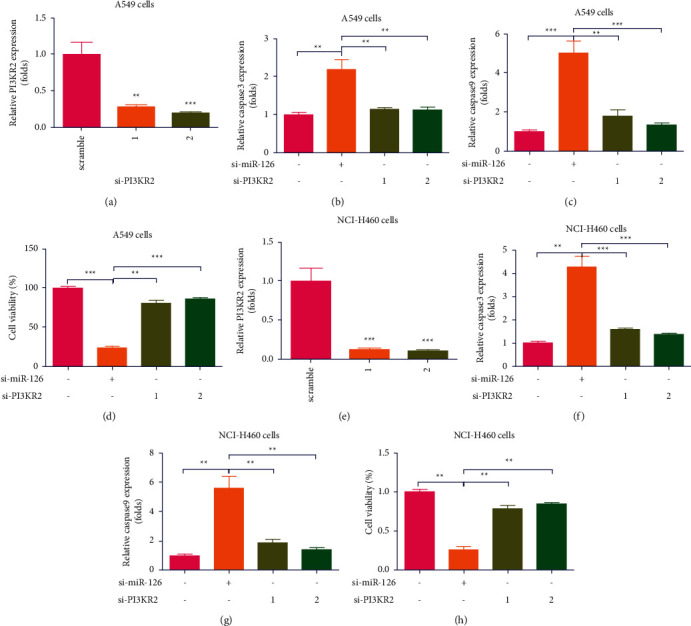
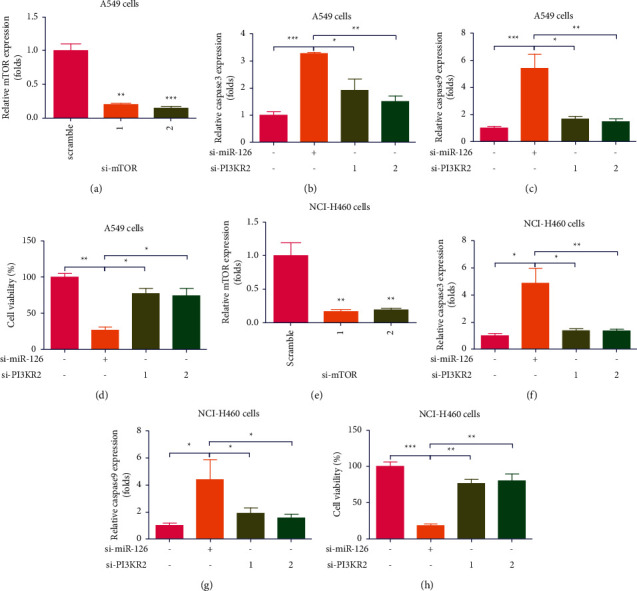
As one of the most common cause of cancer death in the world, lung cancer causes approximately 1.6 million deaths annually. Among them, NSCLC accounts for approximately 85% of patients in whole lung cancer patients. Ginsenoside Rg1 has been confirmed to play an important role in various diseases including cancer. As one of miRNAs, miR-126 closely involves in pathogenesis of the several types of cancers including colorectal, prostate, bladder and gastric cancer, and so on. Thus, the present study aims to investigate effects of the Ginsenoside Rg1 on NSCLC and underlying mechanism. In the study, two lung cancer cell lines including A549 and H1650 were used. It was found that expression of miR-126 was decreased in PBMC of NSCLC patients compared to healthy control. Expression of miR-126 was decreased in cancer tissue compared to paracancerous tissues in NSCLC patients. Importantly, it was found Ginsenoside Rg1 could inhibit growth of lung cancer cells. miR-126 KD remarkably increased the expression of apoptosis genes including caspase 3 and caspase 9 and decreased cell viability in lung cancer cells including A549 and H1650 cells. Interesting, analysis indicated that miR-126 could target PI3K signaling pathway, which was confirmed by WB assay. KD of PI3KR2 compromised promotion of miR-126 on cell apoptosis. Similarly, it was found that KD of mTOR compromised promotion of miR-126 on cell apoptosis. Inhibition of Ginsenoside Rg1 on growth of lung cancer cells was through miR-126 and mTOR. Thus, the present study confirmed that Ginsenoside Rg1 remarkably inhibit lung cancer, which is through microRNA-126-PI3K-AKT-mTOR pathway.
作为全球癌症死亡的最常见原因之一,肺癌每年导致约160万人死亡。其中,非小细胞肺癌(NSCLC)约占全部肺癌患者的85%。人参皂苷Rg1已被证实在包括癌症在内的多种疾病中发挥重要作用。作为一种微小RNA(miRNA),miR-126密切参与包括结直肠癌、前列腺癌、膀胱癌和胃癌等多种癌症的发病机制。因此,本研究旨在探讨人参皂苷Rg1对非小细胞肺癌的影响及其潜在机制。在该研究中,使用了两种肺癌细胞系,包括A549和H1650。研究发现,与健康对照相比,非小细胞肺癌患者外周血单个核细胞(PBMC)中miR-126的表达降低。在非小细胞肺癌患者中,癌组织中miR-126的表达低于癌旁组织。重要的是,发现人参皂苷Rg1可抑制肺癌细胞的生长。miR-126基因敲低(KD)显著增加了包括半胱天冬酶3(caspase 3)和半胱天冬酶9(caspase 9)在内的凋亡基因的表达,并降低了包括A549和H1650细胞在内的肺癌细胞的活力。有趣的是,分析表明miR-126可靶向磷脂酰肌醇-3-激酶(PI3K)信号通路,这通过蛋白质免疫印迹(WB)分析得到证实。PI3KR2基因敲低削弱了miR-126对细胞凋亡的促进作用。同样,发现雷帕霉素靶蛋白(mTOR)基因敲低也削弱了miR-126对细胞凋亡的促进作用。人参皂苷Rg1对肺癌细胞生长的抑制作用是通过miR-126和mTOR实现的。因此,本研究证实人参皂苷Rg1通过微小RNA-126-PI3K-AKT-mTOR途径显著抑制肺癌。