UMR ASTRE, Université de Montpellier, CIRAD, INRAE, Montpellier, France.
Faculty of Veterinary Medicine, Kasetsart University, Bangkok, Thailand.
PLoS Negl Trop Dis. 2022 Jul 11;16(7):e0010462. doi: 10.1371/journal.pntd.0010462. eCollection 2022 Jul.
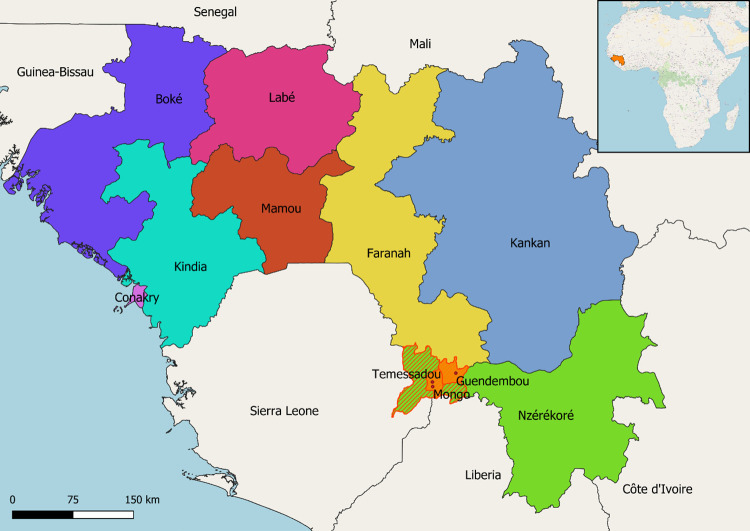
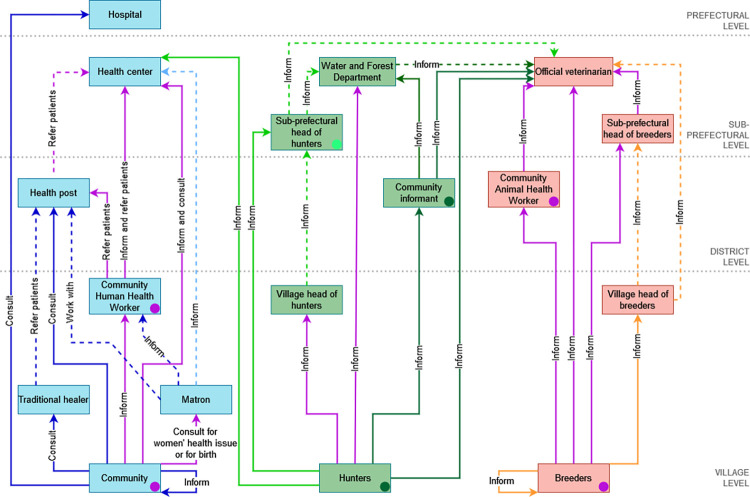
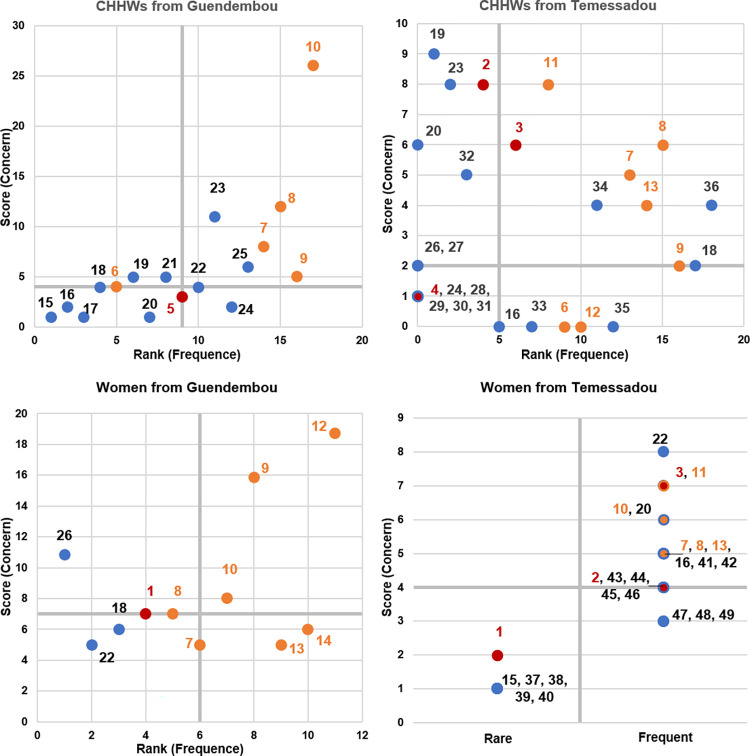
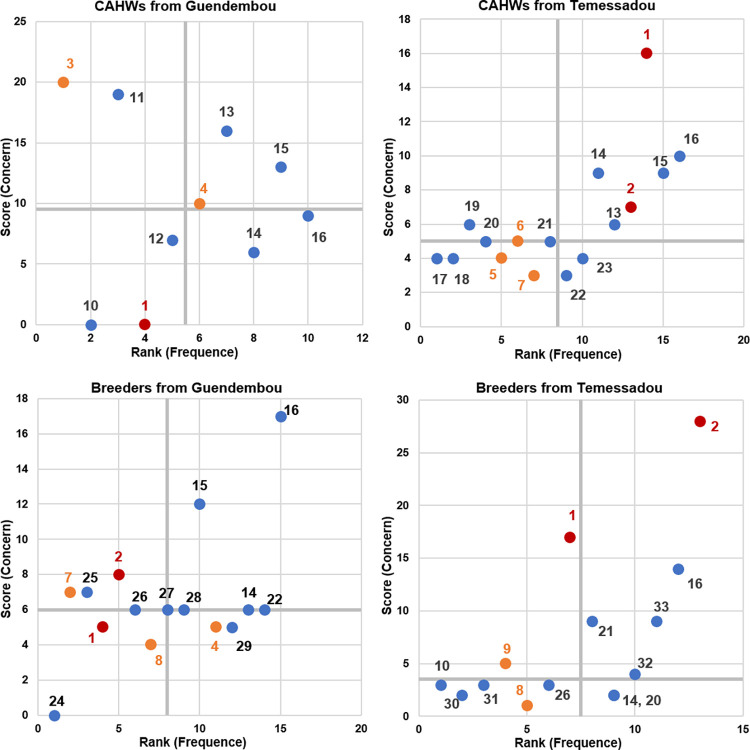
The Ebola virus disease epidemic that threatened West Africa between 2013 and 2016 was of unprecedented health magnitude. After this health crisis, studies highlighted the need to introduce community-based surveillance systems and to adopt a One Health approach. This study aimed to provide preparatory insights for the definition of a community-based surveillance system for emerging zoonoses such as viral hemorrhagic fevers in Guinea. The objective was to explore the disease detection capacity and the surveillance network opportunities at the community level in two pilot areas in the forest region of Guinea, where the epidemic emerged. Based on a participatory epidemiological and One Health approach, we conducted Focus Group Discussions with human, animal and ecosystem health actors. We used a range of participatory tools, included semi-structured interviews, ranking, scoring and flow diagram, to estimate the local knowledge and perception of diseases and clinical signs and to investigate the existing health information exchange network and its related strengths and weaknesses. The results showed that there is heterogeneity in knowledge of diseases and perception of the clinical signs among actors and that there are preferred and more effective health communication channels opportunities. This preparatory study suggests that it is necessary to adapt the case definitions and the health communication channels to the different actors who can play a role in a future community-based surveillance system and provides recommendations for future surveillance activities to be carried out in West Africa.
2013 年至 2016 年间,埃博拉病毒病在西非爆发,其规模之大前所未有。这场卫生危机过后,研究强调有必要引入基于社区的监测系统,并采取“同一健康”方法。本研究旨在为在几内亚等新兴人畜共患病毒出血热的基于社区的监测系统的定义提供初步见解。目的是探索在几内亚森林地区两个试点地区的社区层面的疾病检测能力和监测网络机会,该地区是疫情的发源地。我们采用了参与性流行病学和同一健康方法,与人类、动物和生态系统健康行为者进行了焦点小组讨论。我们使用了一系列参与性工具,包括半结构化访谈、排名、评分和流程图,以评估当地对疾病和临床症状的了解和看法,并调查现有的卫生信息交流网络及其相关优势和劣势。结果表明,行为者对疾病的了解和对临床症状的看法存在差异,并且存在优先和更有效的卫生交流渠道机会。这项预备性研究表明,有必要根据在未来基于社区的监测系统中发挥作用的不同行为者,调整病例定义和卫生交流渠道,并为未来在西非开展的监测活动提供建议。