Khan Amir Ali, Gul Muhammad Tehsil, Karim Asima, Ranade Anu, Azeem Muhammad, Ibrahim Zeinab, Ramachandran Gopika, Nair Vidhya A, Ahmad Firdos, Elmoselhi Adel, Qaisar Rizwan
Department of Applied Biology, College of Sciences, University of Sharjah, Sharjah, 27272, UAE.
Human Genetics & Stem Cells Research Group, Research Institute of Sciences & Engineering, University of Sharjah, Sharjah, 27272, UAE.
NPJ Microgravity. 2022 Jul 11;8(1):24. doi: 10.1038/s41526-022-00211-w.
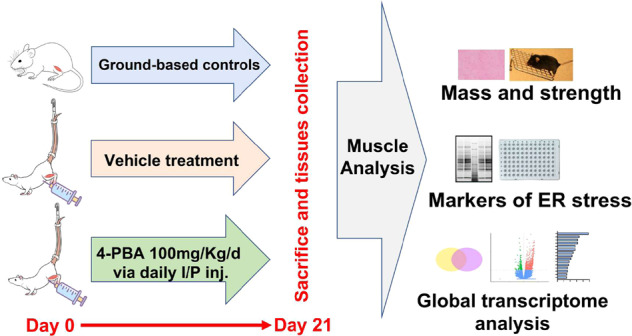
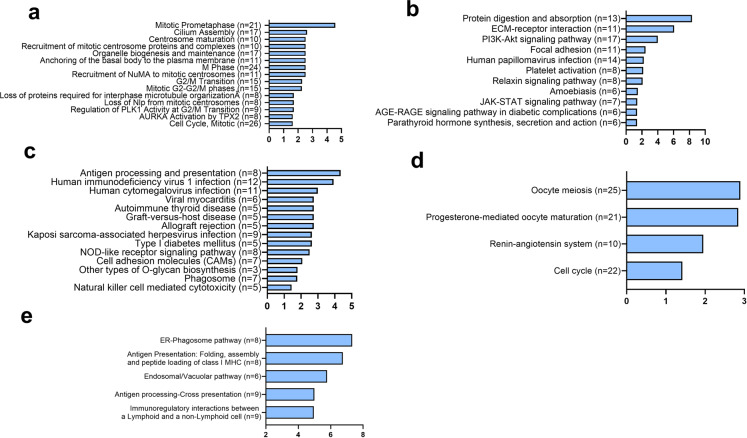
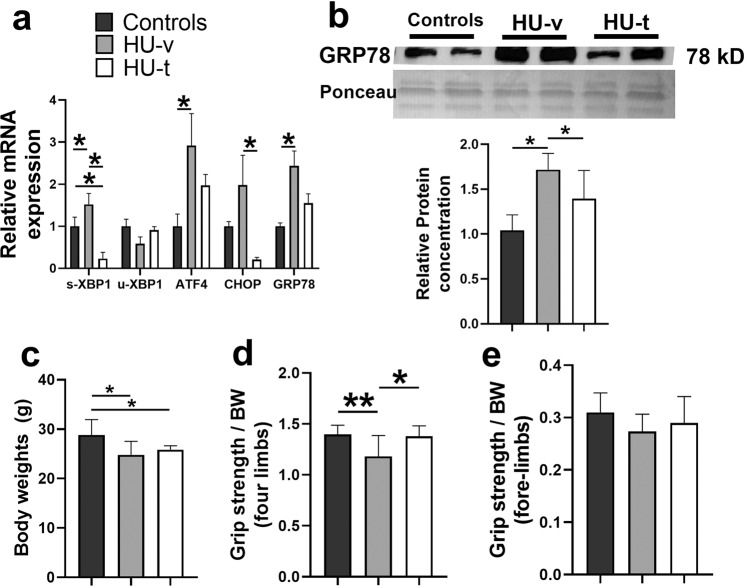
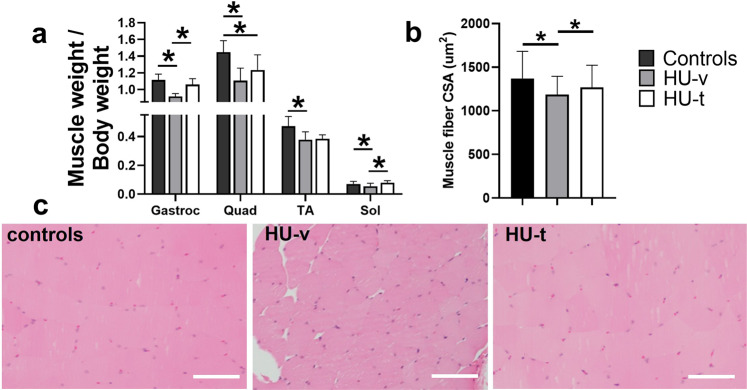
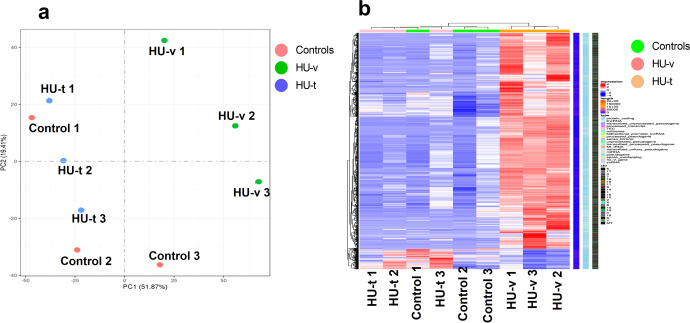
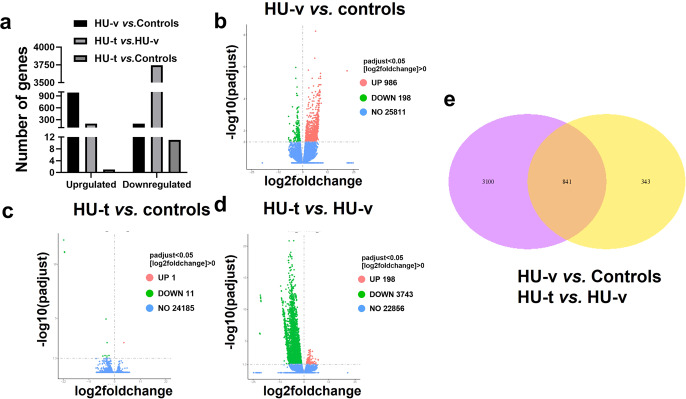
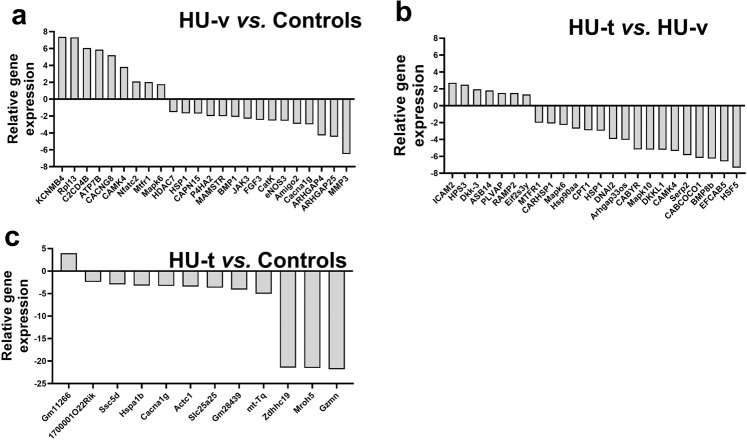
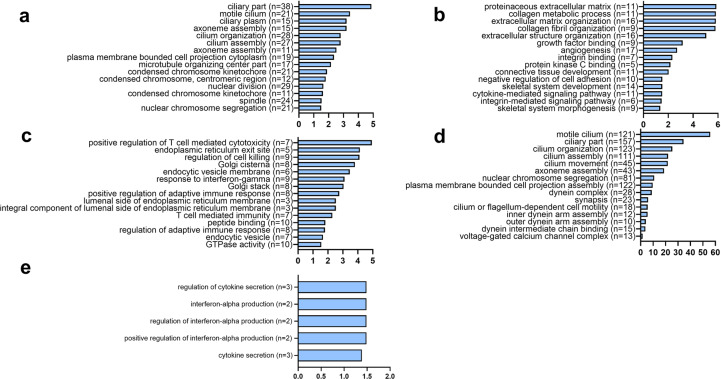
Muscle disuse in the hindlimb unloaded (HU) mice causes significant atrophy and weakness. However, the cellular and molecular mechanisms driving disuse-muscle atrophy remain elusive. We investigated the potential contribution of proteins dysregulation by sarcoplasmic reticulum (SR), a condition called SR stress, to muscle loss during HU. Male, c57BL/6j mice were assigned to ground-based controls or HU groups treated with vehicle or 4-phenylbutyrate (4-PBA), a potent inhibitor of SR stress, once a day for three weeks. We report that the 4-PBA reduced the SR stress and partly reversed the muscle atrophy and weakness in the HU mice. Transcriptome analysis revealed that several genes were switched on (n = 3688) or differentially expressed (n = 1184) due to HU. GO, and KEGG term analysis revealed alterations in pathways associated with the assembly of cilia and microtubules, extracellular matrix proteins regulation, calcium homeostasis, and immune modulation during HU. The muscle restoration with 4-PBA partly reversed these changes along with differential and unique expression of several genes. The analysis of genes among the two comparisons (HU-v vs. control and HU-t vs. HU-v.) shows 841 genes were overlapped between the two comparisons and they may be regulated by 4-PBA. Altogether, our findings suggest that the pharmacological suppression of SR stress may be an effective strategy to prevent disuse-induced muscle weakness and atrophy.
后肢卸载(HU)小鼠的肌肉废用会导致显著的萎缩和无力。然而,驱动废用性肌肉萎缩的细胞和分子机制仍然难以捉摸。我们研究了肌浆网(SR)蛋白失调(一种称为SR应激的情况)对HU期间肌肉损失的潜在影响。将雄性C57BL/6j小鼠分为地面对照组或HU组,HU组每天用载体或4-苯基丁酸盐(4-PBA,一种有效的SR应激抑制剂)处理一次,持续三周。我们报告称,4-PBA减轻了SR应激,并部分逆转了HU小鼠的肌肉萎缩和无力。转录组分析显示,由于HU,有几个基因被开启(n = 3688)或差异表达(n = 1184)。基因本体(GO)和京都基因与基因组百科全书(KEGG)术语分析显示,在HU期间,与纤毛和微管组装、细胞外基质蛋白调节、钙稳态和免疫调节相关的途径发生了改变。4-PBA对肌肉的恢复作用部分逆转了这些变化,同时一些基因出现了差异表达和独特表达。对两组比较(HU-v与对照组以及HU-t与HU-v)中的基因分析表明,两组比较中有841个基因重叠,它们可能受4-PBA调控。总之,我们的研究结果表明,药理学抑制SR应激可能是预防废用性肌肉无力和萎缩的有效策略。