Tianjin Medical University Cancer Institute and Hospital, National Clinical Research Center for Cancer, Tianjin, 300060, China.
Tianjin's Clinical Research Center for Cancer, Tianjin, 300060, China.
Cell Death Dis. 2022 Jul 13;13(7):607. doi: 10.1038/s41419-022-05057-4.
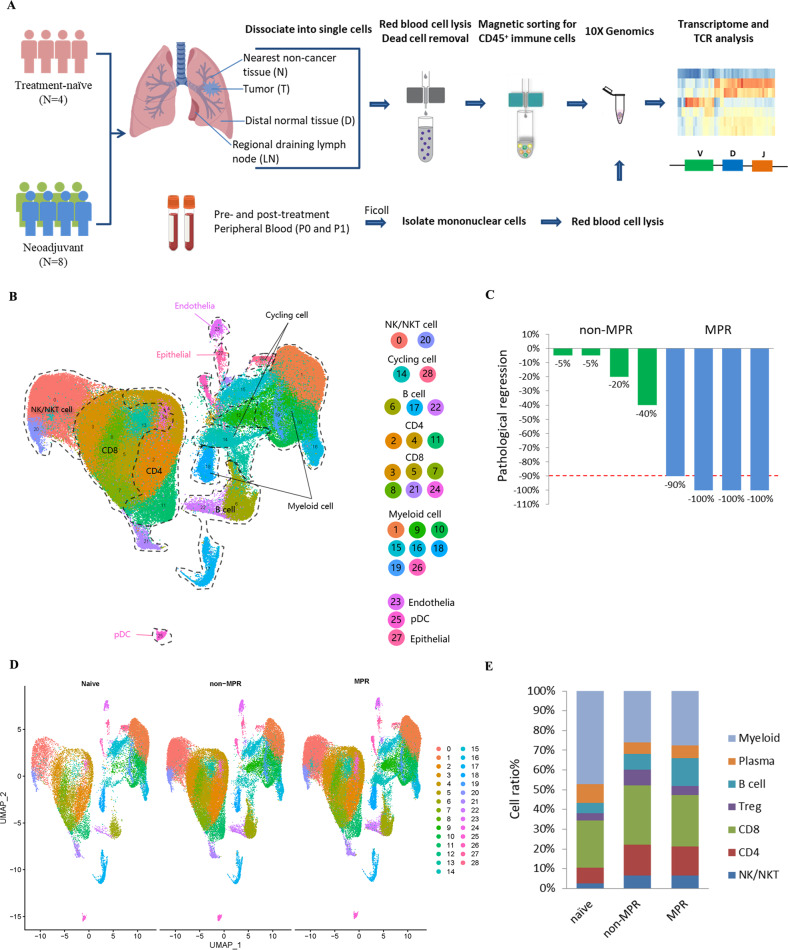
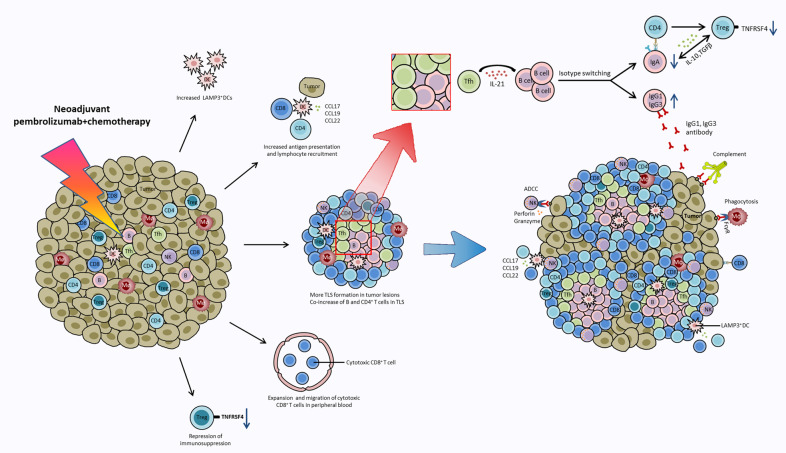
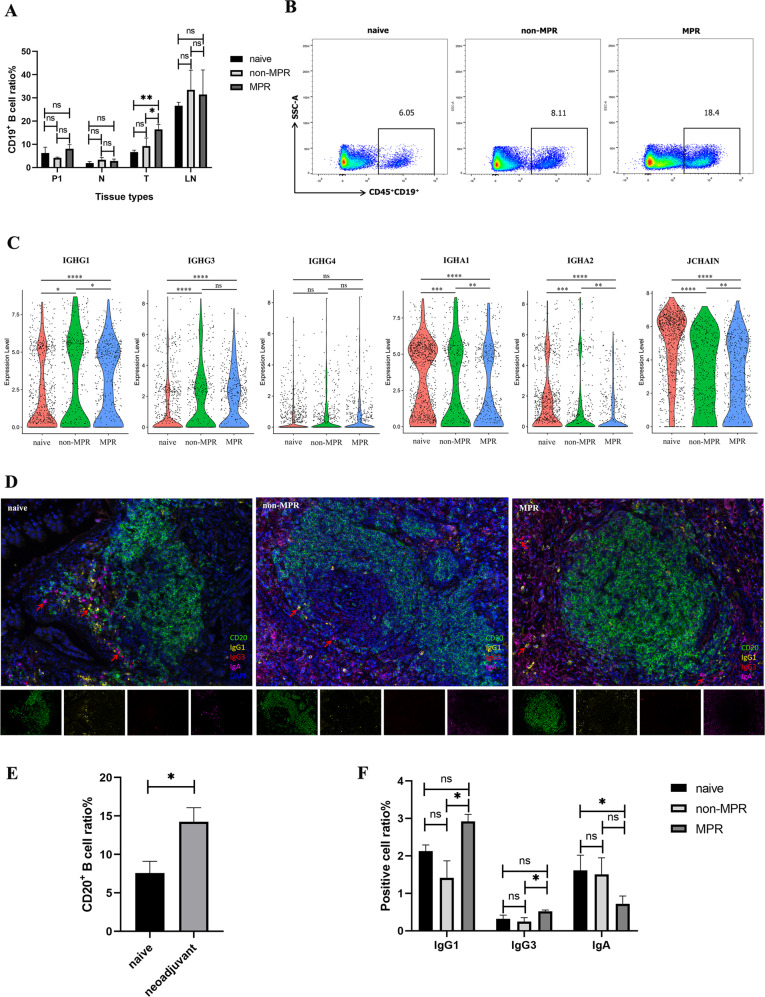
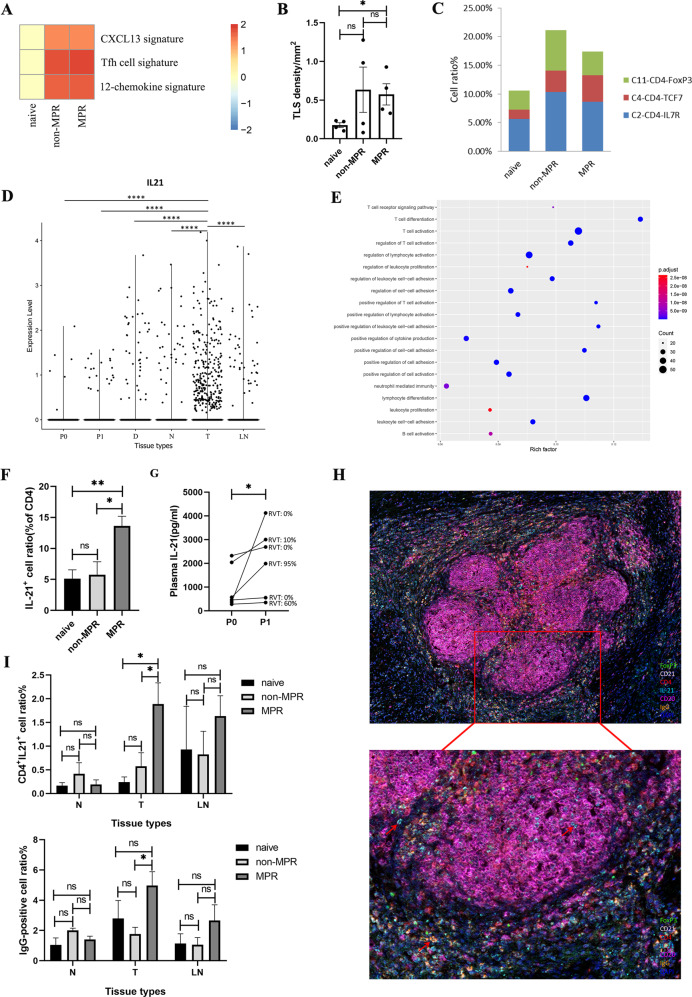
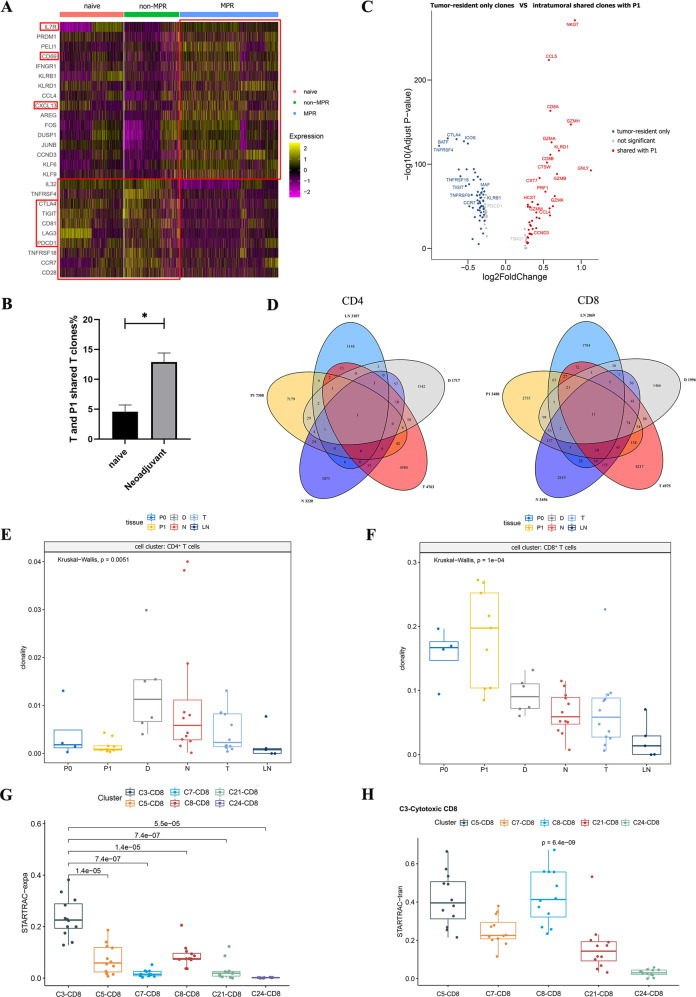
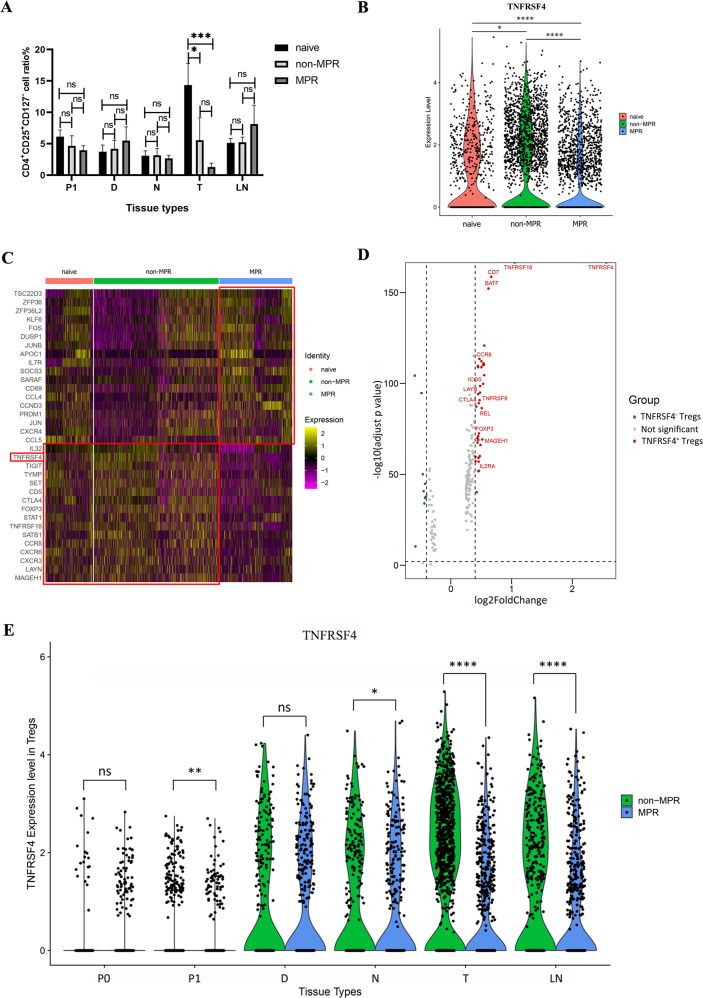
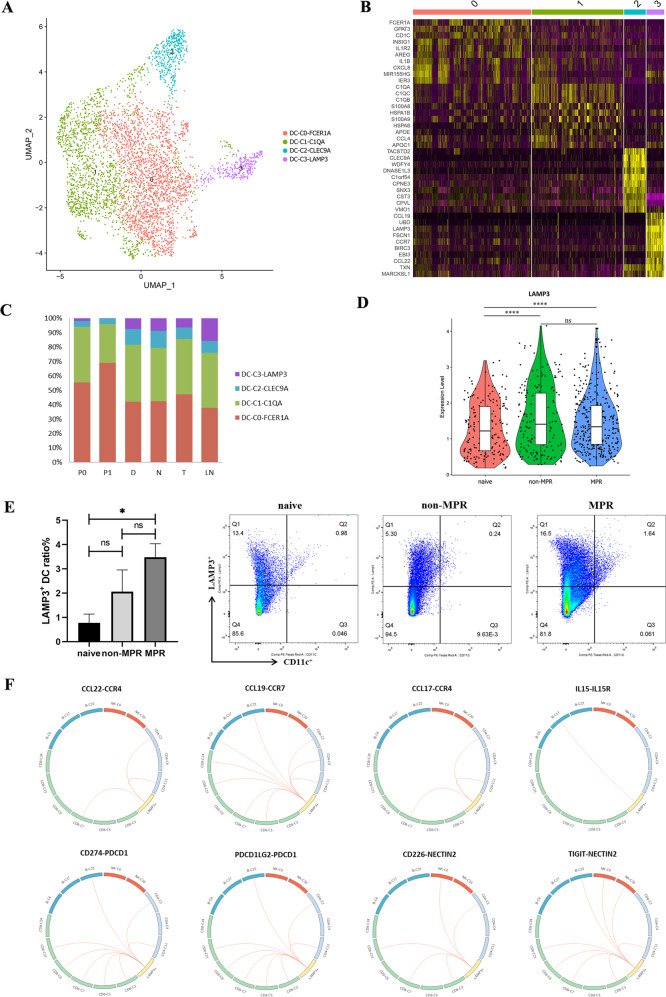
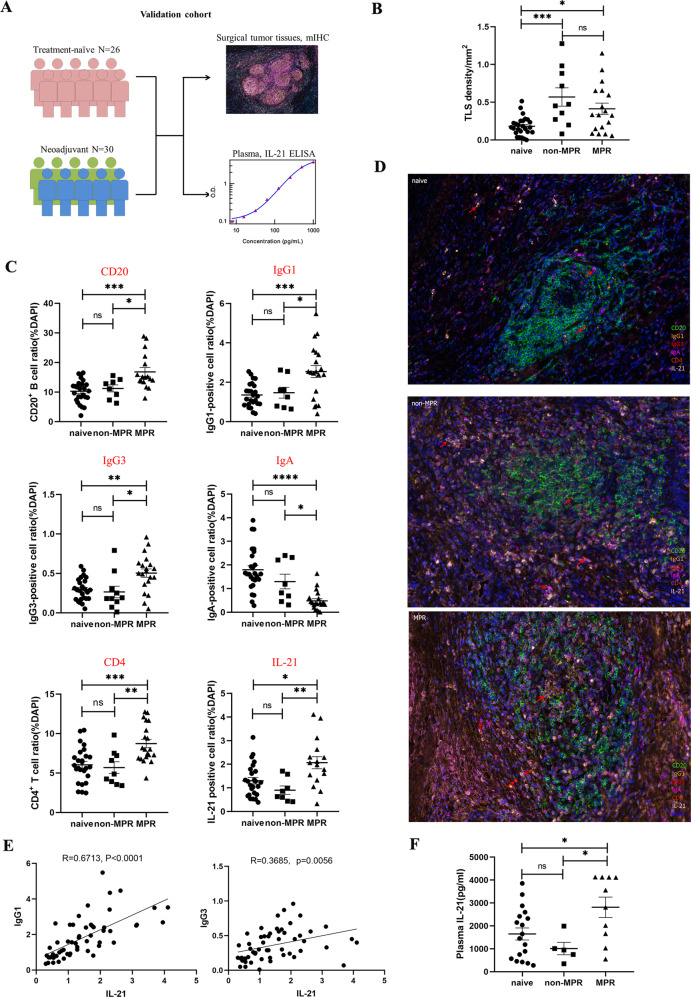
The combination of immune checkpoint inhibitors (ICIs) with chemotherapy (chemoimmunotherapy) in the neoadjuvant setting have achieved favorable clinical benefits in non-small cell lung cancer (NSCLC), but the mechanism of clinical responses remain unclear. We provide a rich resource of 186,477 individual immune cells from 48 samples of four treatment-naive and eight neoadjuvant chemoimmunotherapy treated IIIA NSCLC patients (responders versus non-responders) by single-cell RNA-seq and TCR-seq. We observed the synergistic increase of B cells and CD4 T cells were associated with a positive therapeutic response of neoadjuvant chemoimmunotherapy. B cell IgG subclasses IgG1 and IgG3 played a critical role in anti-tumor immune response in tumor lesions, and this process was driven by increased IL-21 secreted by infiltrated T follicular helper (Tfh) cells after neoadjuvant chemoimmunotherapy. Furthermore, we uncovered several critical events for positive clinical outcomes, including the diminished activated TNFRSF4 regulatory T cells (Tregs), increased LAMP3 dendritic cells (DCs), and the expansion of intratumoral CD4 T clones and peripheral C3-Cytotoxic CD8 T clones. A validation cohort of 26 treatment-naive and 30 neoadjuvant chemoimmunotherapy treated IIIA/ IIIB NSCLC patients verified these findings. In total, our comprehensive study of the single-cell profile of immune cells provides insights into mechanisms underlying anti-PD-1-based therapies and identified potential predictive factors and therapeutic targets for improving the efficiency of neoadjuvant chemoimmunotherapy in NSCLC.
免疫检查点抑制剂(ICIs)与化疗(化疗免疫治疗)联合在新辅助治疗中为非小细胞肺癌(NSCLC)带来了良好的临床获益,但临床反应的机制仍不清楚。我们通过单细胞 RNA-seq 和 TCR-seq 从 48 例未接受治疗和 8 例接受新辅助化疗免疫治疗的 IIIA NSCLC 患者(应答者与非应答者)的 48 个样本中提供了 186477 个单个免疫细胞的丰富资源。我们观察到 B 细胞和 CD4 T 细胞的协同增加与新辅助化疗免疫治疗的积极治疗反应相关。B 细胞 IgG 亚类 IgG1 和 IgG3 在肿瘤病变中的抗肿瘤免疫反应中发挥关键作用,这一过程是由新辅助化疗免疫治疗后浸润的滤泡辅助 T(Tfh)细胞分泌的增加的 IL-21 驱动的。此外,我们还揭示了几个对阳性临床结果至关重要的事件,包括激活的 TNFRSF4 调节性 T 细胞(Tregs)减少、LAMP3 树突状细胞(DC)增加、肿瘤内 CD4 T 克隆和外周 C3-细胞毒性 CD8 T 克隆的扩增。一个由 26 例未经治疗和 30 例接受新辅助化疗免疫治疗的 IIIA/IIIB NSCLC 患者组成的验证队列验证了这些发现。总的来说,我们对免疫细胞单细胞谱的全面研究为基于 PD-1 的治疗机制提供了深入了解,并确定了潜在的预测因素和治疗靶点,以提高 NSCLC 新辅助化疗免疫治疗的效率。