Department of Electrical and Computer Engineering, Isfahan University of Technology, Isfahan, Iran.
Department of Electrical and Computer Engineering, University of Kashan, Kashan, Iran.
Contrast Media Mol Imaging. 2022 Jun 30;2022:8733632. doi: 10.1155/2022/8733632. eCollection 2022.
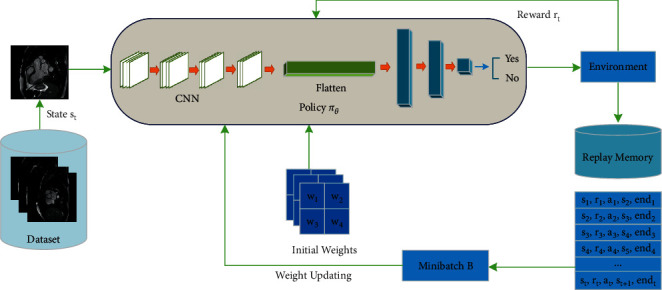
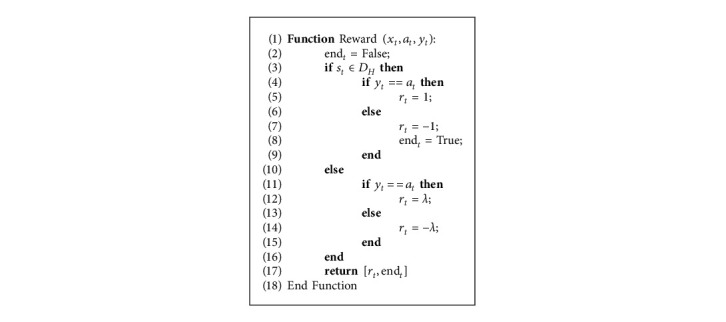
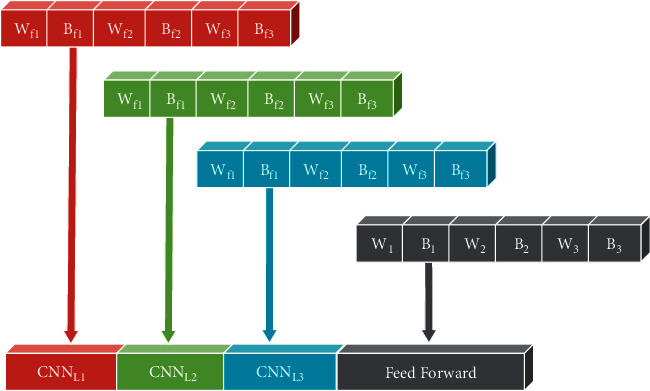
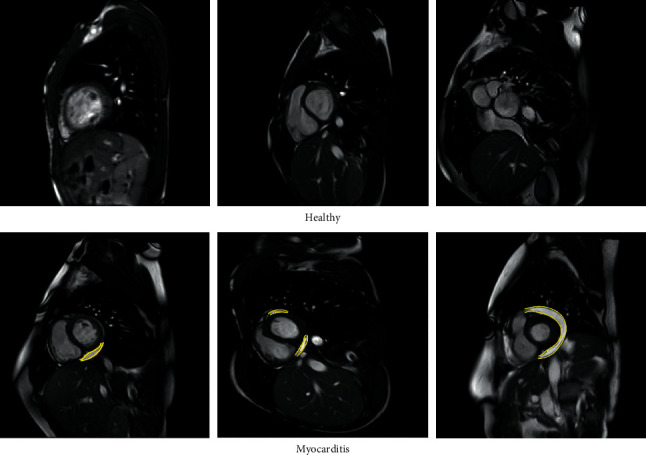
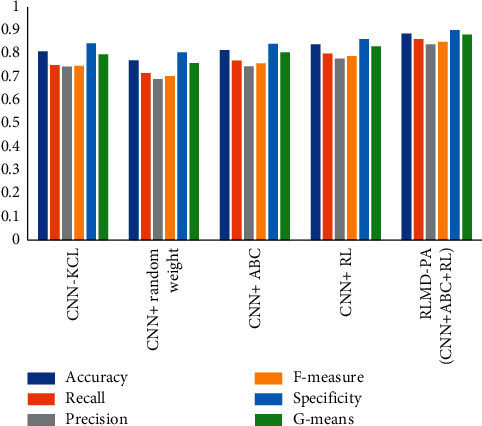
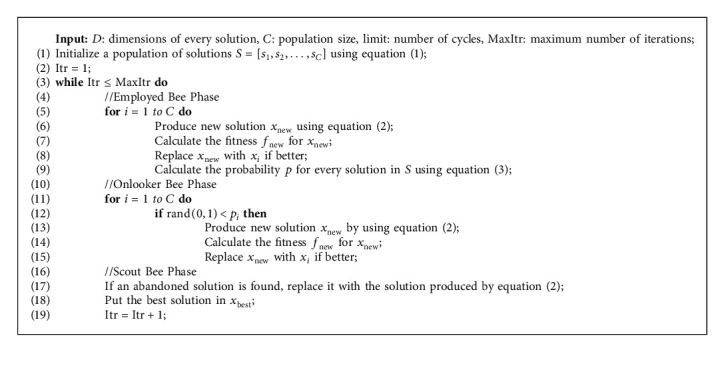
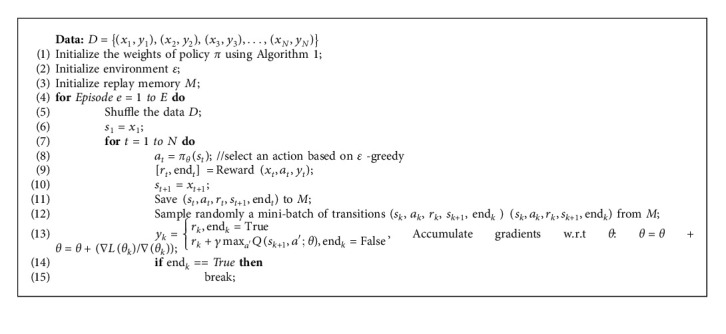
Myocarditis is heart muscle inflammation that is becoming more prevalent these days, especially with the prevalence of COVID-19. Noninvasive imaging cardiac magnetic resonance (CMR) can be used to diagnose myocarditis, but the interpretation is time-consuming and requires expert physicians. Computer-aided diagnostic systems can facilitate the automatic screening of CMR images for triage. This paper presents an automatic model for myocarditis classification based on a deep reinforcement learning approach called as reinforcement learning-based myocarditis diagnosis combined with population-based algorithm (RLMD-PA) that we evaluated using the Z-Alizadeh Sani myocarditis dataset of CMR images prospectively acquired at Omid Hospital, Tehran. This model addresses the imbalanced classification problem inherent to the CMR dataset and formulates the classification problem as a sequential decision-making process. The policy of architecture is based on convolutional neural network (CNN). To implement this model, we first apply the artificial bee colony (ABC) algorithm to obtain initial values for RLMD-PA weights. Next, the agent receives a sample at each step and classifies it. For each classification act, the agent gets a reward from the environment in which the reward of the minority class is greater than the reward of the majority class. Eventually, the agent finds an optimal policy under the guidance of a particular reward function and a helpful learning environment. Experimental results based on standard performance metrics show that RLMD-PA has achieved high accuracy for myocarditis classification, indicating that the proposed model is suitable for myocarditis diagnosis.
心肌炎是一种心肌炎症,近年来越来越普遍,尤其是在 COVID-19 流行期间。非侵入性影像学心脏磁共振(CMR)可用于诊断心肌炎,但解读耗时且需要专家医生。计算机辅助诊断系统可以促进 CMR 图像的自动筛选,以进行分诊。本文提出了一种基于强化学习的心肌炎分类自动模型,称为基于强化学习的心肌炎诊断与基于人群的算法(RLMD-PA),我们使用德黑兰 Omid 医院前瞻性采集的 CMR 图像的 Z-Alizadeh Sani 心肌炎数据集对其进行了评估。该模型解决了 CMR 数据集固有的不平衡分类问题,并将分类问题表述为一个序贯决策过程。该架构的策略基于卷积神经网络(CNN)。为了实现该模型,我们首先应用人工蜂群(ABC)算法来获取 RLMD-PA 权重的初始值。然后,代理在每个步骤接收一个样本并对其进行分类。对于每次分类操作,代理都会从环境中获得奖励,其中少数类别的奖励大于多数类别的奖励。最终,代理在特定奖励函数和有益学习环境的指导下找到最佳策略。基于标准性能指标的实验结果表明,RLMD-PA 对心肌炎分类具有很高的准确性,表明所提出的模型适合心肌炎诊断。