Center of Excellence for Rehabilitation Medicine, UMC Utrecht Brain Center, University Medical Center Utrecht, Utrecht University and De Hoogstraat Rehabilitation, Utrecht, the Netherlands.
Department of Rehabilitation, Physical Therapy Science & Sports, UMC Utrecht Brain Center, University Medical Center Utrecht, the Netherlands.
Dev Med Child Neurol. 2023 Mar;65(3):393-405. doi: 10.1111/dmcn.15338. Epub 2022 Jul 14.
To measure and describe the 24-hour activities (i.e. physical activity, sedentary behavior, and sleep) and to examine adherence to the 24-hour activity guidelines among children with cerebral palsy (CP) using actigraphy.
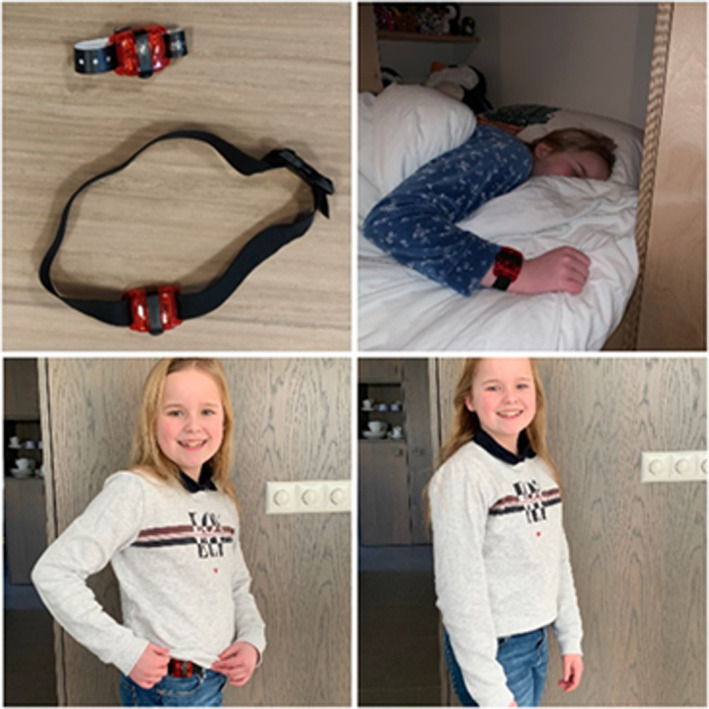
Children's 24-hour activities were recorded over 7 days using hip- and wrist-worn ActiGraph wGT3X-BT accelerometers.
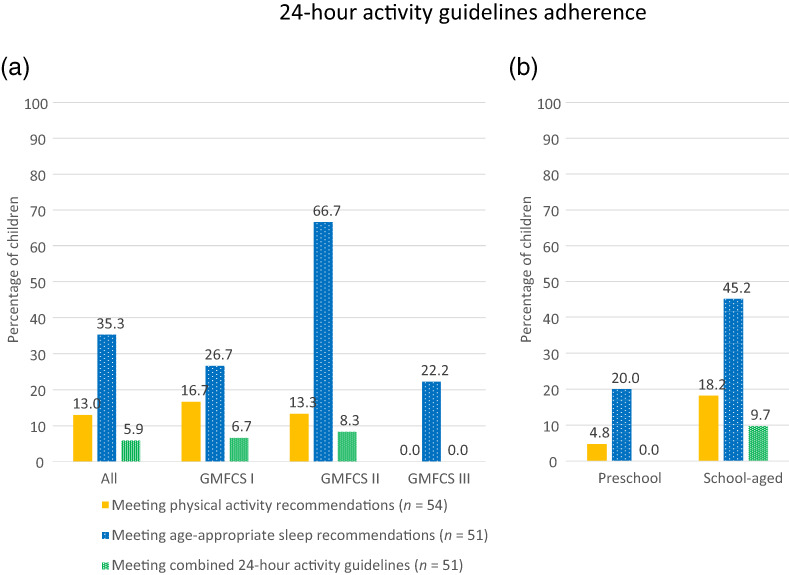
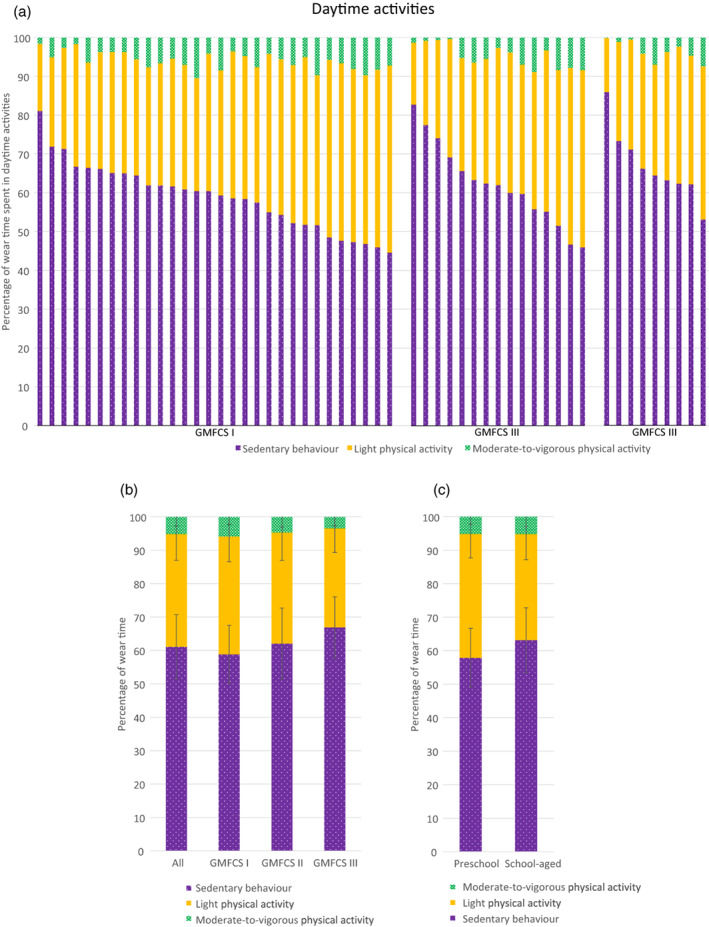
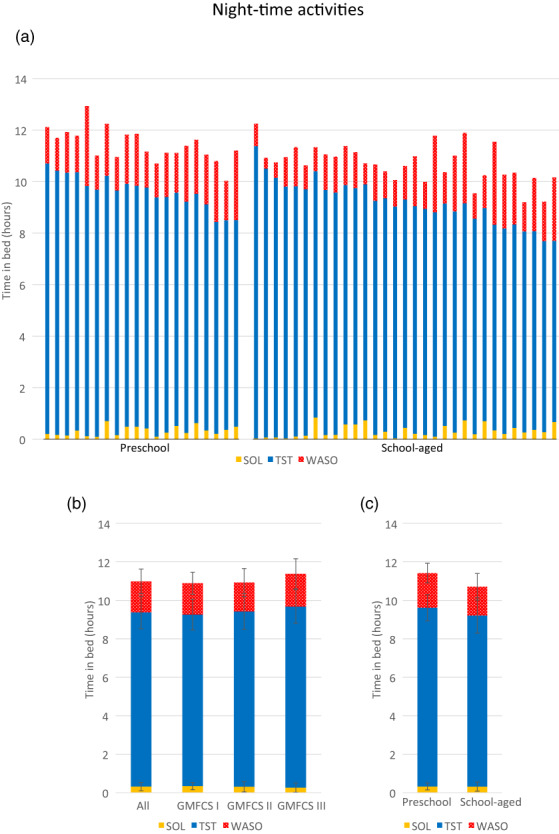
In total, 362 days and 340 nights from 54 children with CP (Gross Motor Function Classification System [GMFCS] levels I-III; 44% females; median age [range] 6 years 6 months [3-12 years]) were included. Mean (SD) daily wear time was 746.2 (48.9) minutes, of which children spent on average 33.8% in light physical activity (251.6 [58.7] minutes per day), 5.2% in moderate-to-vigorous physical activity (38.5 [20.1] minutes per day), and the remaining 61.1% being sedentary (456.1 [80.4] minutes per day). Physical activity decreased while sedentary behavior increased with increasing GMFCS level. In total, 13% of all children met the physical activity recommendations, and 35% met the age-appropriate sleep duration recommendation. The proportion of children meeting the combined 24-hour guidelines for physical activity and sleep was low (5.9%), especially in those classified in GMFCS level III (0%).
The observed low 24-hour guideline adherence rates emphasize the importance of considering the entire continuum of movement behaviors in the care of children with CP, in efforts to promote healthy lifestyle behaviors and prevent negative health outcomes.
使用加速度计测量和描述脑瘫儿童(CP)的 24 小时活动(即体力活动、久坐行为和睡眠),并检查其对 24 小时活动指南的依从性。
使用 hip-和 wrist-worn ActiGraph wGT3X-BT 加速度计记录儿童 7 天的 24 小时活动。
共纳入 54 名 CP 儿童(Gross Motor Function Classification System [GMFCS] 水平 I-III;44%女性;中位年龄[范围]为 6 岁 6 个月[3-12 岁])的 362 天和 340 个夜晚的数据。平均(SD)每日佩戴时间为 746.2(48.9)分钟,儿童平均每天有 33.8%的时间进行轻度体力活动(251.6[58.7]分钟),5.2%的时间进行中到剧烈体力活动(38.5[20.1]分钟),其余 61.1%的时间处于久坐状态(456.1[80.4]分钟)。随着 GMFCS 水平的升高,体力活动减少,而久坐行为增加。共有 13%的儿童符合体力活动推荐标准,35%的儿童符合年龄适当的睡眠时长推荐标准。符合体力活动和睡眠综合 24 小时指南的儿童比例较低(5.9%),尤其是 GMFCS 水平 III 的儿童(0%)。
观察到的低 24 小时指南依从率强调了在照顾 CP 儿童时考虑整个运动行为连续体的重要性,以促进健康的生活方式行为并预防不良健康后果。