Istituto Superiore di Sanità, National Center for Drug Research and Evaluation, Rome, Italy.
School of Medicine and Surgery, University of Milano-Bicocca, Monza, Italy.
J Crohns Colitis. 2022 Nov 23;16(11):1751-1761. doi: 10.1093/ecco-jcc/jjac084.
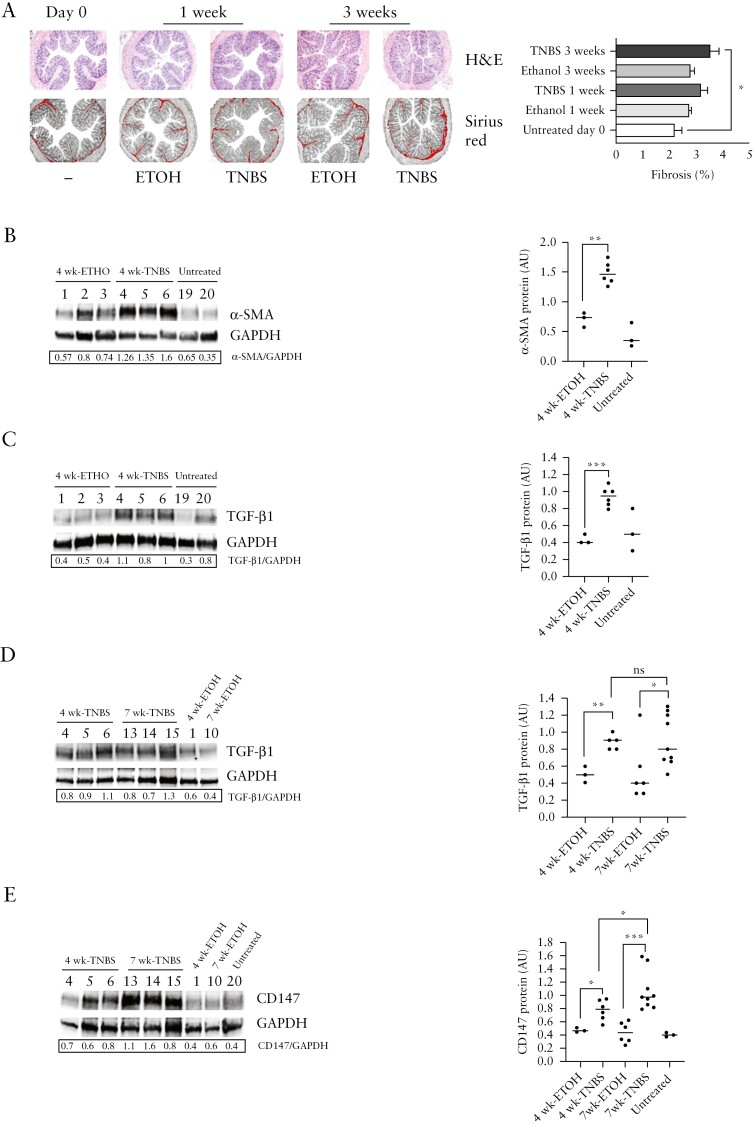
Intestinal fibrosis is a common complication of inflammatory bowel diseases. Medical treatment of intestinal fibrosis is an unmet therapeutic need. CD147 overexpression can induce myofibroblast differentiation associated with extracellular matrix deposition, favouring the development of fibrosis. To understand whether CD147 may promote intestinal fibrosis, we analysed its expression and blocked its function by using its specific inhibitor AC-73 [3-{2-[([1,1'-biphenyl]-4-ylmethyl) amino]-1-hydroxyethyl} phenol] in the murine TNBS [trinitrobenzenesulfonic acid]-chronic colitis model associated with intestinal fibrosis.
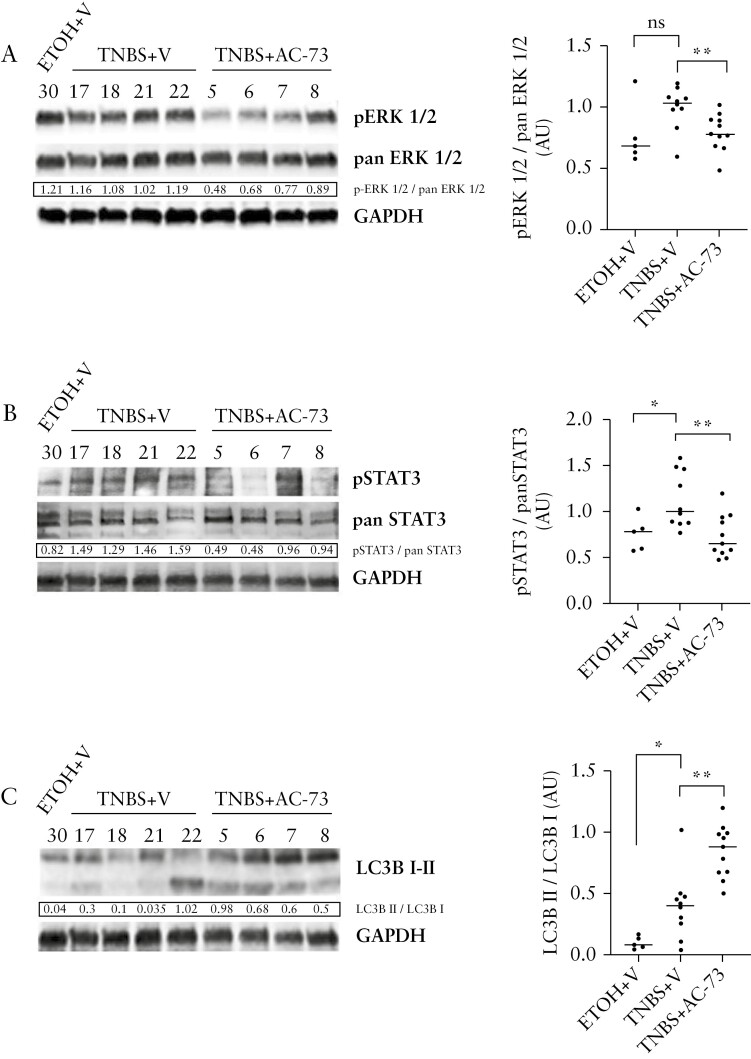
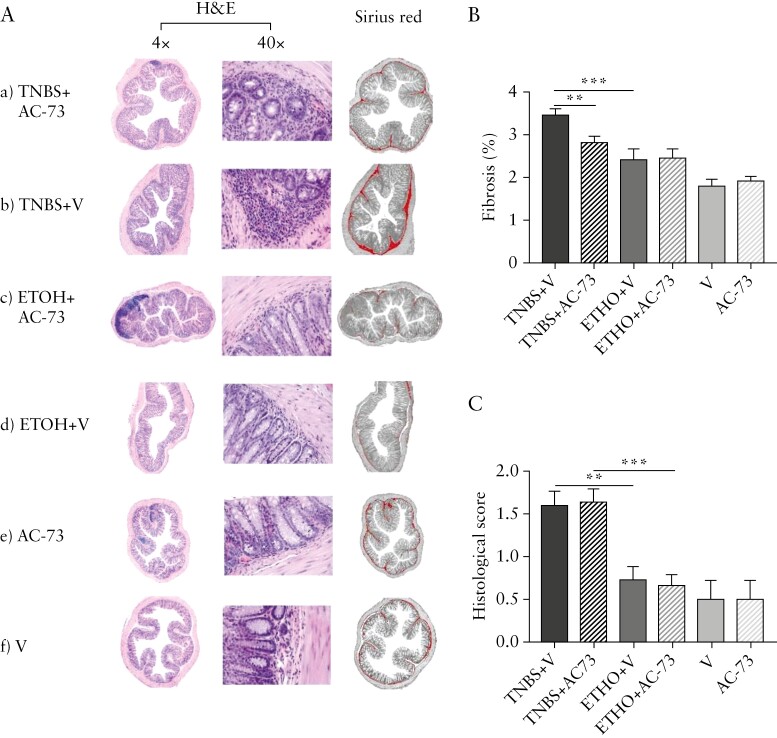
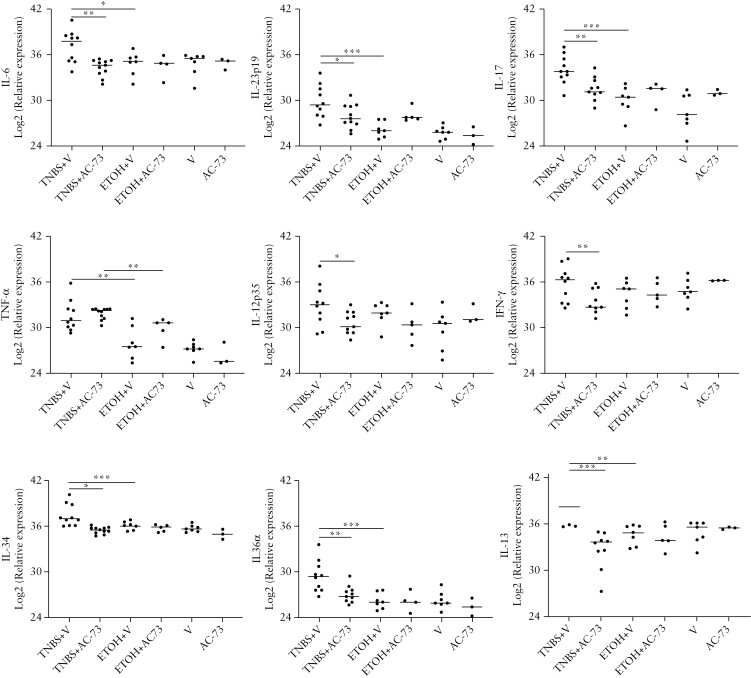
TNBS chronic colitis was induced by weekly intrarectal administration of escalating doses of TNBS. Ethanol-treated and untreated mice were used as controls. Separated groups of TNBS, ethanol-treated or untreated mice received AC-73 or vehicle administered intraperitoneally from day 21 to day 49. At day 49, mice were killed, and colons collected for histological analysis, protein and RNA extraction. CD147, α-SMA and activated TGF-β1 protein levels, CD147/ERK/STAT3 signalling pathway and autophagy were assessed by Western blot, collagen and inflammatory/fibrogenic cytokines mRNA tissue content by quantitative PCR.
In mice with chronic TNBS colitis, CD147 protein level increased during fibrosis development in colonic tissue, as compared to control mice. CD147 inhibition by AC-73 treatment reduced intestinal fibrosis, collagen and cytokine mRNA tissue content, without significant modulation of activated TGF-β1 protein tissue content. AC-73 inhibited CD147/ERK1/2 and STAT3 signalling pathway activation and induced autophagy.
CD147 is a potential new target for controlling intestinal fibrosis and its inhibitor, AC-73, might represent a potential new anti-fibrotic therapeutic option in IBD.
肠纤维化是炎症性肠病的常见并发症。肠纤维化的医学治疗是一种未满足的治疗需求。CD147 的过度表达可诱导与细胞外基质沉积相关的肌成纤维细胞分化,有利于纤维化的发展。为了了解 CD147 是否可以促进肠纤维化,我们在与肠纤维化相关的小鼠 TNBS(三硝基苯磺酸)-慢性结肠炎模型中分析了其表达,并使用其特异性抑制剂 AC-73 [3-[[(1,1'-联苯)-4-基甲基]氨基]-1-羟基乙基]苯酚]阻断其功能。
每周通过直肠内给予递增剂量的 TNBS 诱导 TNBS 慢性结肠炎。使用乙醇处理和未处理的小鼠作为对照。分离的 TNBS、乙醇处理或未处理的小鼠组分别从第 21 天到第 49 天接受腹腔内注射 AC-73 或载体。在第 49 天,处死小鼠,收集结肠进行组织学分析、蛋白质和 RNA 提取。通过 Western blot 评估 CD147、α-SMA 和活化的 TGF-β1 蛋白水平、CD147/ERK/STAT3 信号通路和自噬,通过定量 PCR 评估胶原和炎症/纤维化细胞因子的 mRNA 组织含量。
在患有慢性 TNBS 结肠炎的小鼠中,与对照小鼠相比,CD147 蛋白水平在结肠组织纤维化发展过程中增加。AC-73 治疗抑制 CD147 可减少肠纤维化、胶原和细胞因子的 mRNA 组织含量,而对活化的 TGF-β1 蛋白组织含量无明显调节作用。AC-73 抑制 CD147/ERK1/2 和 STAT3 信号通路的激活并诱导自噬。
CD147 是控制肠纤维化的一个潜在新靶点,其抑制剂 AC-73 可能代表 IBD 中一种新的潜在抗纤维化治疗选择。